



 Reading time: 4 minutes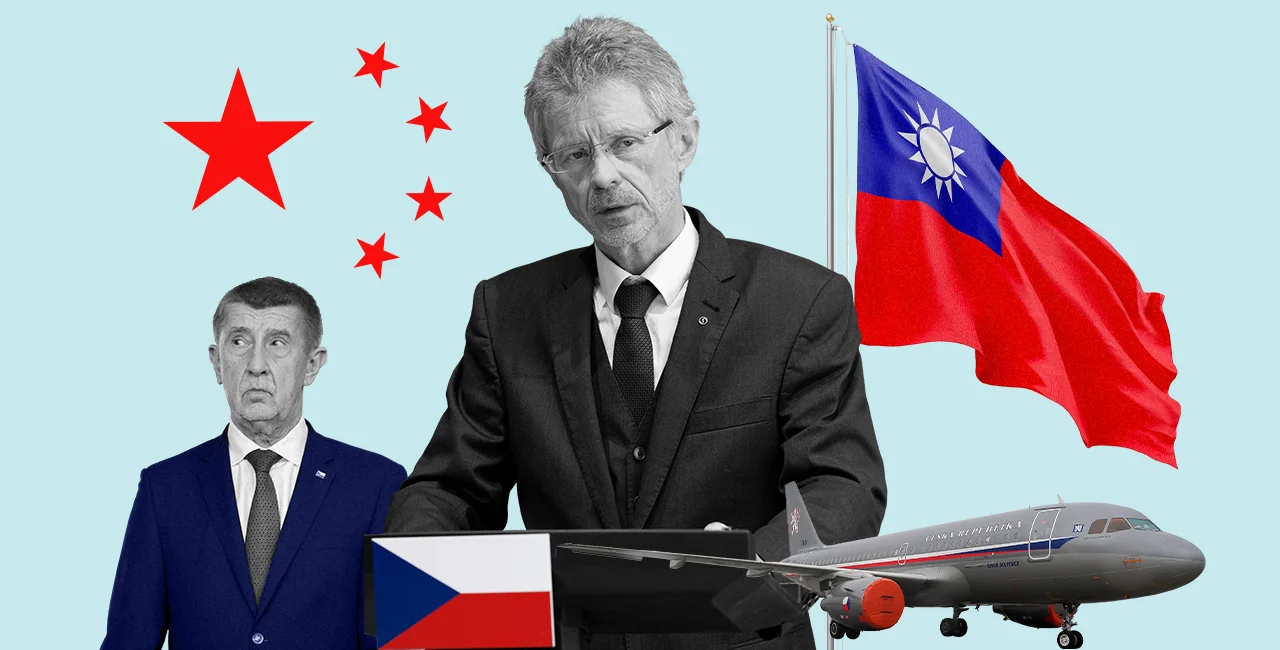

 Summary for: Has Czechia's Taiwan policy lost its wings? Plane row signals new approach to China
When Czech Senate Speaker Miloš Vystrčil addressed Taiwan’s parliament in 2020 and said “I am Taiwanese,” echoing JFK’s Berlin speech, it marked one of the more assertive moments in recent Czech foreign policy.
China’s Foreign Minister Wang Yi warned that Vystrčil would “pay a heavy price,” and state media criticized him sharply. Despite this, the visit went ahead, and Czechia managed the diplomatic fallout.
Five years later, Vystrčil is planning another trip to Taiwan. This time, the pushback isn’t coming from Beijing but from within the Czech government.

Prime Minister Andrej Babiš has declined to provide a government aircraft, arguing that doing so would signal official state backing.
China considers Taiwan a breakaway province and has repeatedly condemned official Czech contact with the island, which operates as a self-governing democracy.
The decision reflects the cabinet’s current foreign policy position toward Beijing, and the ongoing divide in Czech politics over how strongly to support Taiwan.
Government rejects aircraft request
Vystrčil, who leads the Czech Senate and is a member of the opposition Civic Democrats (ODS), is expected to travel to Taiwan at the turn of May and June with a business delegation.

According to Babiš, the Senate speaker requested the use of a government plane for the trip. The prime minister said the cabinet declined the request to avoid signaling official state-level support for the visit.
“He is flying to Taiwan, and we decided not to approve the plane, because that would give it a government stamp of approval,” Babiš said, as quoted by Blesk. The Senate speaker can still travel on a commercial flight, the prime minister added.

The decision drew immediate criticism from opposition politicians, who accused Babiš of overstepping into parliamentary affairs. ODS deputy leader Martin Kupka said the move reflected what he described as excessive centralization of decision-making within the government.
“We no longer just have centrally planned gasoline and diesel prices. Now even foreign trips of top constitutional officials are being regulated directly from the prime minister’s office,” Kupka wrote on X.
He also criticized the refusal to support the delegation’s logistics, calling it “narrow-minded” given the presence of Czech business representatives and ongoing economic cooperation with Taiwan.
Taking to social media on Sunday Babiš was more explicit about the reasoning. "We will pursue a pragmatic foreign policy," he said. "The value policy has brought more or less nothing and only harmed our companies."

Deputy Prime Minister Karel Havlíček went further, saying the visit "would close our path to China."
Long-running diplomatic sensitivities
Vystrčil’s planned visit comes against the backdrop of long-standing tensions between Prague and Beijing over official contact with Taiwan.
China has previously criticized Czech Senate activities related to Taiwan, including past parliamentary resolutions and delegations, describing them as interference in its internal affairs.
The Czech embassy in Beijing has also objected to official visits involving Taiwanese institutions, in line with China’s “One China” policy. Vystrčil’s first visit to Taiwan in 2020 remains one of the most high-profile Czech diplomatic moves in recent years.
The Czech government has refused to provide Senate Speaker Miloš Vystrčil with a state plane for his planned visit to Taiwan, with Prime Minister Andrej Babiš justifying the refusal by citing the government’s different foreign policy toward China. What do you think?
Despite warnings from China and criticism from then-president Miloš Zeman, Vystrčil led a large delegation of senators and business representatives to Taipei, where he delivered a speech emphasizing democratic values and international cooperation.

At the time, he said the trip reflected the need to prioritize principles over short-term economic considerations. The visit led to heightened diplomatic tensions with Beijing and a temporary freeze in some high-level contacts.

This year’s planned trip, scheduled for May 31 to June 4, is expected to include representatives from Czech industry and trade organizations, including the Czech Confederation of Industry and the Czech-Taiwanese Chamber of Commerce.
The contrast with 2020 is clear. At the time, Vystrčil went ahead with the trip despite opposition from the president, prime minister, and foreign minister, presenting it as a matter of principle rather than economic interest. He argued that yielding to Beijing could ultimately undermine both.
Business decision or political pressure?
Political commentator Lukáš Jelínek, writing in Právo, says Babiš’s decision has been seen as a strong use of government power over a symbolic parliamentary trip, and as a form of pressure on constitutional institutions.
Jelínek also notes that Czech business ties with Taiwan are long-standing and legitimate, and that economic cooperation has developed separately from the current political dispute.

He adds that leaders who put short-term interests ahead of principles represent what he calls “unprincipled politics,” mentioning Donald Trump as an example.
Vystrčil appears to have anticipated the refusal and according to Deník N, the Senate had already reserved commercial airline seats for the delegation as a backup. But the lack of state support will be noted in both Taipei and Beijing.