



 Reading time: 3 minutes

 Summary for: Inside Prague’s new zoning plan: Space for 350,000 new apartments
Prague has approved a sweeping new zoning framework that will shape how the Czech capital grows over the coming decades, setting the stage for potentially hundreds of thousands of new homes while also triggering concerns over schools, healthcare, and public services.
The Metropolitan Plan was approved by city councilors on Thursday after a lengthy debate. It is set to replace Prague’s outdated 1999 zoning document and take effect on Sept. 1, 2026. City officials say the new rules are designed to speed up development, particularly in underused industrial areas and brownfields.

The plan is expected to have the most visible impact on housing supply, with city planners estimating space for up to 350,000 new apartments within Prague’s existing boundaries. For residents, it will determine what can be built in their neighborhoods, how dense development can become, and where green space will be preserved.
A blueprint for decades of change
The Metropolitan Plan, which can be viewed in English online, is not a political vision statement but a legally binding document that defines what can be built across every part of Prague. It replaces a system that city officials argue has become outdated and too restrictive for a rapidly growing capital facing a long-term housing shortage.
Preparation of the plan began in 2012, with the first draft published in 2018. Since then, it has gone through multiple rounds of revisions, consultations, and public comments. The final version was published on May 19, just days before the decisive vote in the city assembly.
The plan was approved by 50 of 65 councillors. It has been politically led by Deputy Mayor for Spatial Development Petr Hlaváček, with backing from Mayor Bohuslav Svoboda and coalition partners. A portion of Prague’s Pirate Party also supported the proposal, particularly its focus on transport infrastructure and redevelopment of brownfield sites.
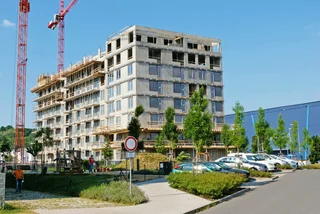

City officials say the plan will improve predictability for both developers and residents while directing growth inward rather than expanding into surrounding countryside. It also introduces citywide height limits intended to protect Prague’s historic skyline while allowing taller construction in selected development zones.
Support, criticism, and concerns
Critics across political and civic groups have raised concerns about whether the plan sufficiently guarantees public services to match future housing growth. Opponents argue that Prague already lacks enough kindergarten and school places, as well as healthcare and senior care facilities, and warn that large-scale development could deepen these shortages.
Prague has approved a new zoning plan that will guide the city’s development for decades, opening space for up to 350,000 new apartments. Supporters say it will help solve the housing shortage, while critics warn it could strain schools, healthcare, and public services. What is your view?
City officials and the Institute of Planning and Development (IPR Prague), which prepared the technical design, reject those concerns. They say the plan includes mechanisms to ensure infrastructure is delivered alongside new development, including planning agreements with developers requiring contributions to schools, transport, and public amenities.
However, some opposition voices also pointed to the speed of approval. More than 100,000 pages of documentation were made available only days before the final vote, leaving councillors, districts, and the public limited time for review.


Public participation took place in several phases, with tens of thousands of comments submitted through Prague’s online portal. City data shows that over multiple rounds, tens of thousands of objections were processed, with varying levels of acceptance depending on the stage of consultation.
While supporters describe the plan as a necessary step to unlock housing and streamline development, critics remain unconvinced that it strikes the right balance between construction, infrastructure, and livability in one of Europe’s fastest-growing capitals.