



 Reading time: 4 minutes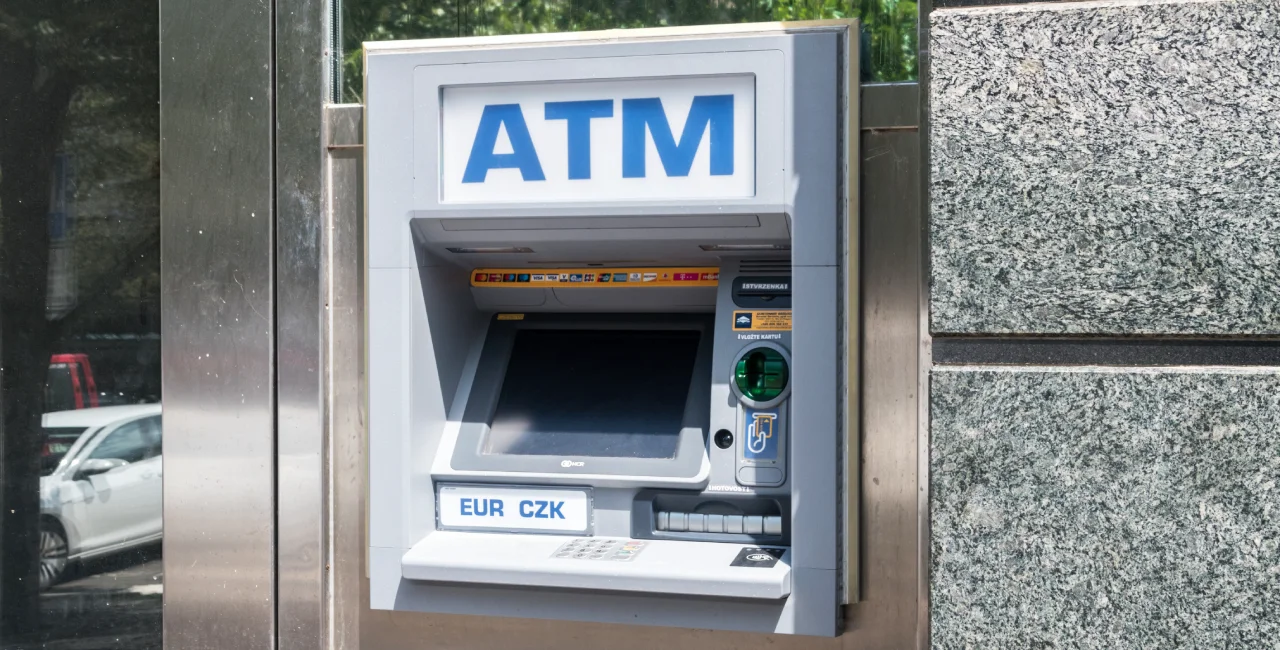

 Summary for: ATM bombings are spreading in Prague: Why Czechia is being targeted
A series of ATM explosions in Prague has raised concern among police and security experts, with investigators increasingly treating the incidents as part of a broader pattern of organized crime seen across Europe.
The latest attack on May 7 in the Kunratice district, where an ATM was blown up and roughly CZK 300,000 stolen, followed a similar incident in nearby Opatov just weeks earlier. Both cases involved explosives and escape on electric scooters, suggesting a coordinated and repeatable method.

While Czech police are still investigating individual suspects, the recent incidents in Prague follow a wave of cases that have been linked to wider criminal networks operating across borders throughout Europe.
What is happening in Prague?
The May 7 explosion occurred at a shopping center on Dobronická Street in Prague 4 around 3:30 a.m. Police say the attackers used explosives to destroy the ATM before fleeing the scene.
A near-identical method was used in an April incident in Opatov, where three foreign suspects were later taken into custody and charged with burglary. In that case, police also recovered explosives and detonation devices during searches of suspects’ homes.
V Dobronické ulici v Praze 4 v obchodnÃm centru nad ránem nÄ›kdo odpálil bankomat. Po pachatelÃch pátral psovod a vrtulnÃk s termovizÃ. Na mÃstÄ› pracujà kriminalisté a pyrotechnik. Å koda zatÃm nebyla vyÄÃslena. Kolik penÄ›z se pachatelům podaÅ™ilo odcizit, zjiÅ¡Å¥ujeme. #policiepha pic.twitter.com/97LgDak0Ko
— Policie ÄŒR (@PolicieCZ) May 7, 2026
Investigators say the similarity in timing, technique, and escape routes strongly suggests a coordinated approach rather than unrelated acts of vandalism or opportunistic theft.
Police have appealed for witnesses who may have seen individuals on scooters in the early hours of May 7 around the Kunratický and Krčský forests in Prague 4 following the latest explosion.

Pattern emerging across borders
The Prague ATM attacks follow a wider European trend of ATM bombings carried out by highly mobile, organized groups.
According to Eurojust, a Dutch criminal network suspected of carrying out ATM bombings in Germany and Switzerland has recently been dismantled following coordinated international investigations supported by Eurojust and Europol. Authorities say the group is linked to around 10 attacks.
The operation involved joint investigation teams across multiple countries, enabling real-time coordination between prosecutors and police in France, Germany, the Netherlands, and Switzerland. Nine suspects were arrested.
Investigators in that case reported that the group used explosive mixtures designed to destroy ATMs and shift operations across borders in response to tightening security measures in individual countries.
A similar trend has been documented in Germany, where ATM explosions have become a persistent issue in recent years. Criminal groups have targeted cash machines using solid explosives, causing not only financial losses but also severe structural damage to surrounding buildings.
Are certain ATMs more at risk?
Security experts consistently point to location as a key risk factor. Standalone ATMs in shopping centers, petrol stations, or residential areas are generally more vulnerable than machines located inside bank branches or secured indoor environments.
 English
(Advanced)
English
(Advanced) Slovenian
(Proficient)
Slovenian
(Proficient)
External machines are easier to access at night and allow quicker escape routes, particularly when attackers use vehicles such as scooters, as seen in Prague.
Banks have introduced reinforced casings, alarm systems, and anti-explosion technologies designed to limit damage and render stolen cash unusable. However, officials acknowledge that determined groups can still cause significant destruction before law enforcement can respond.
What happens if you use a targeted ATM?
If an ATM is attacked after you have used it, your personal funds are not at risk once the transaction is completed and the cash has been dispensed.
However, authorities stress that the greater concern is physical safety rather than financial loss. As seen in European cases, ATM explosions can cause serious structural damage to nearby buildings and pose risks to anyone in the vicinity, including bystanders or residents above or near the machine.
In some cases, such attacks have resulted in injuries during the explosion itself or the chaotic aftermath of high-speed escapes. For users, the main risk scenario is therefore not account security, but proximity to an active or recently targeted machine during an attack.

What should you do if you notice something suspicious?
Police advise avoiding any ATM that appears damaged, tampered with, or unusual in appearance, such as exposed panels or suspicious attachments.
If you notice people lingering around an ATM without using it, or see potential interference with the machine, you should leave the area immediately and contact police on 158.
Authorities strongly advise against attempting to intervene, particularly given the possibility that explosives or organized groups may be involved.
Police response and ongoing investigation
Czech police say they are actively investigating both Prague incidents and working to assess possible links to cross-border criminal networks.
Three suspects from the April case remains in custody, while another individual was released due to insufficient evidence. All four are foreigners, and suspected of carrying out similar attacks in Slovakia.

Banks in Czechia say ATM attacks remain rare but acknowledge they continue to invest in security systems designed to reduce both financial losses and physical damage in the event of an explosion or attempted breach.
For now, investigators are treating the Prague cases as part of a wider European pattern that has prompted coordinated law enforcement action across multiple countries.