 Reading time: 4 minutes

 Summary for: This English-taught business diploma expands secondary options in Prague
For expat families in Czechia, secondary school is one of the biggest educational decisions they will make. Students enter this stage as children and leave it as young adults, with a qualification that can shape where they study, work, and build their future.
The choice usually comes down to the Czech Maturita, English A Levels, or the International Baccalaureate. Each has clear strengths, but these routes can leave less room for the practical, career-focused skills students need beyond the classroom. For students who learn best through projects, presentations, and steady feedback, that difference can matter.
Obchodní akademie Praha, with campuses in Vinohrady and Satalice, offers another route. Its new three-year Business and Technology Education Council (BTEC) Level 3 Business Extended Diploma, accredited by British institution Pearson Edexcel, combines academic learning with applied business training and leads to an International English Maturita.
The school’s website describes the program as English-taught study that connects theory with practice, with a focus on business thinking, teamwork, and practical skills for further study or work in business and management. Here’s how it stands out from traditional secondary school programs, who may be a good fit for it, and what pathways are available after graduation.
How BTEC’s coursework-based model works
In simple terms, BTEC is a British qualification built around applied learning, where students show what they know through assignments and practical work rather than relying mainly on final exams.
Obchodní akademie Praha’s BTEC in Business Extended program builds on that model by developing career-focused skills that can receive less attention in traditional secondary programs, especially through practical application.
“The course supports students who thrive in applied learning environments and prefer coursework-based evaluation over high-stakes examinations,” explains Diane Freeman, BTEC Administrator for the Vinohrady campus. “It’s particularly suited to those seeking an internationally recognized qualification that balances academic theory with real-world business skills.”
The assessment model gives students regular opportunities to build, revise, and demonstrate their knowledge over time, helping them develop the discipline, confidence, and working habits needed beyond school.
The curriculum features a plethora of multi-disciplinary topics. According to the school’s website, the wider BTEC diploma includes units such as Business Finance, Managing an Event, Business Decision Making, Digital Marketing, and Training and Development. The first year alone covers modules such as Exploring Business, Branding, Visual Merchandising, Principles of Management, and Investigating Customer Service.
Studying five subjects a year, students gain insights into business theory as well as crucial hands-on experience.
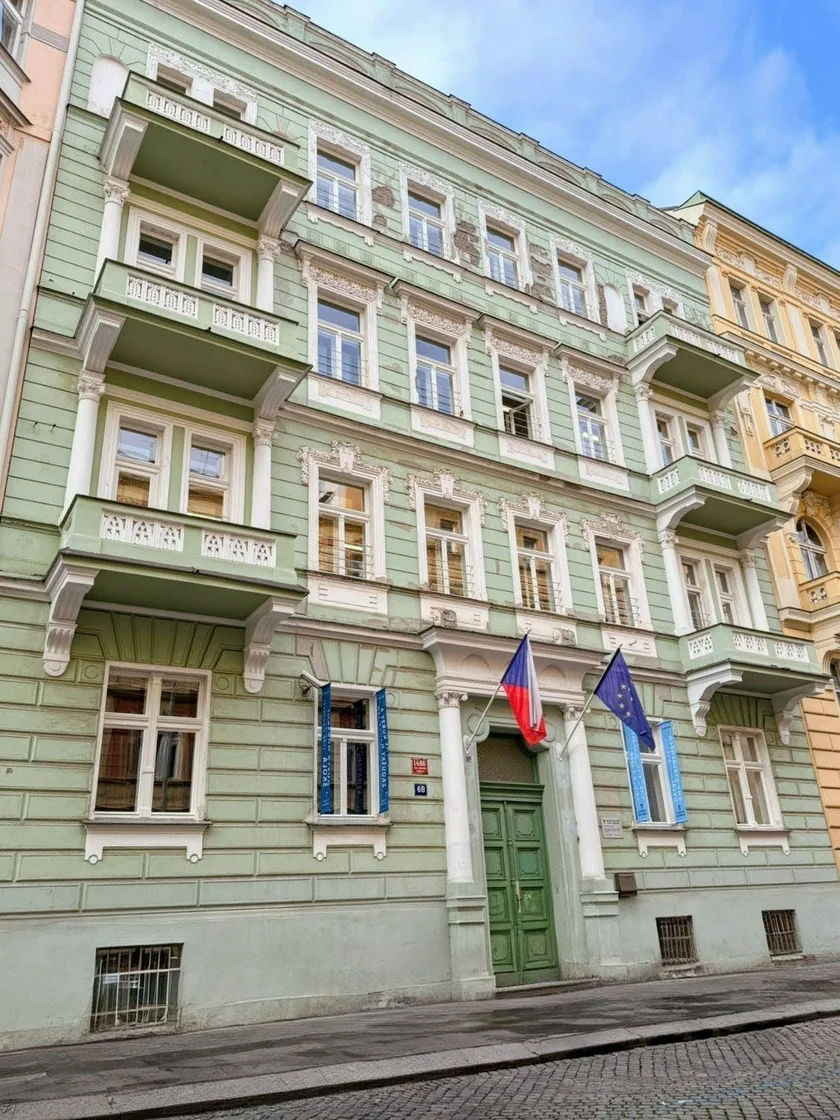
The school ensures the day-to-day learning experience is highly interactive, emphasizing collaboration, case studies and real-world application. According to their experts, this encourages critical thinking, independence and professional skills directly relevant to future careers.
Where the BTEC business diploma can lead
The program will appeal to students from international backgrounds who recognize the critical importance of business acumen in cross-border life, and may be especially relevant for those interested in business, marketing, management, entrepreneurship, or international university study.
On top of their International English Maturita certificate, each gains a personal portfolio of work, developed throughout the program, which can act as further evidence when applying for higher education or jobs at home or abroad.
“As the diploma is equivalent to three English A Levels, graduates are well-prepared for university, particularly in the UK and other international destinations,” Freeman points out. “They’re also equipped with the communication, analytical, and organization skills needed for life and study abroad.”
While the course opens up the possibility of further study across the globe, the British nature of the curriculum makes UK universities and colleges a natural fit. The lower fees charged by Obchodní akademie compared to other Prague international schools may, meanwhile, enable greater freedom in deciding students’ next steps.
For parents comparing options, the practical questions will likely be how the qualification is recognized by universities outside the UK, what support students receive with applications, and whether the pathway suits a student who may stay in Czechia after graduation.
A supportive school setting for Czech and international students
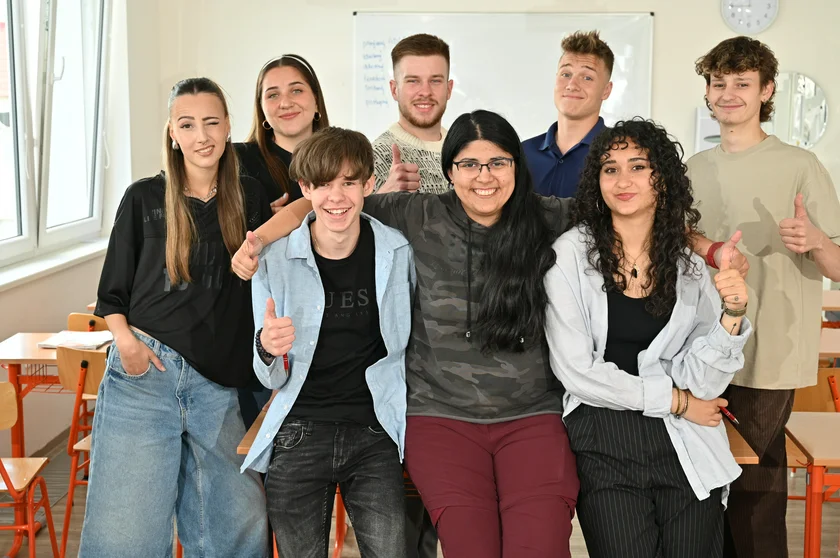
Thanks to Obchodní akademie’s range of courses in English and Czech, international students make friends with Czech and expat peers, fostering their international potential while staying grounded in local life. As one student described, the school “creates a friendly atmosphere which means every student feels happy and can better develop their potential.”
The importance of this supportive approach is attributed to the new BTEC in Business Extended program: “We place strong emphasis on maintaining high academic standards while delivering a supportive, student-centered learning environment. Continuous assessment, structured guidance and personalized feedback ensure that each student can reach their full potential.”


For parents, regular catchups with diverse, multilingual teachers provide peace of mind that their child is on the right track. Building trust with families is a priority for staff and administration, and is often achieved through transparent communication, regular progress updates, and clear commitment to student success.
“This is key to our long-term vision,” Freeman shares. “To establish a leading pathway for business education in Prague, providing international and Czech students with the skills, knowledge, and confidence to succeed in higher education and beyond.”
For more information on this program, please contact: Ing. Mária Václavíková – principal (maria.vaclavikova@oapraha.cz, tel.: +420603958814) or Diane Freeman — Programme Coordinator.