



 Reading time: 3 minutes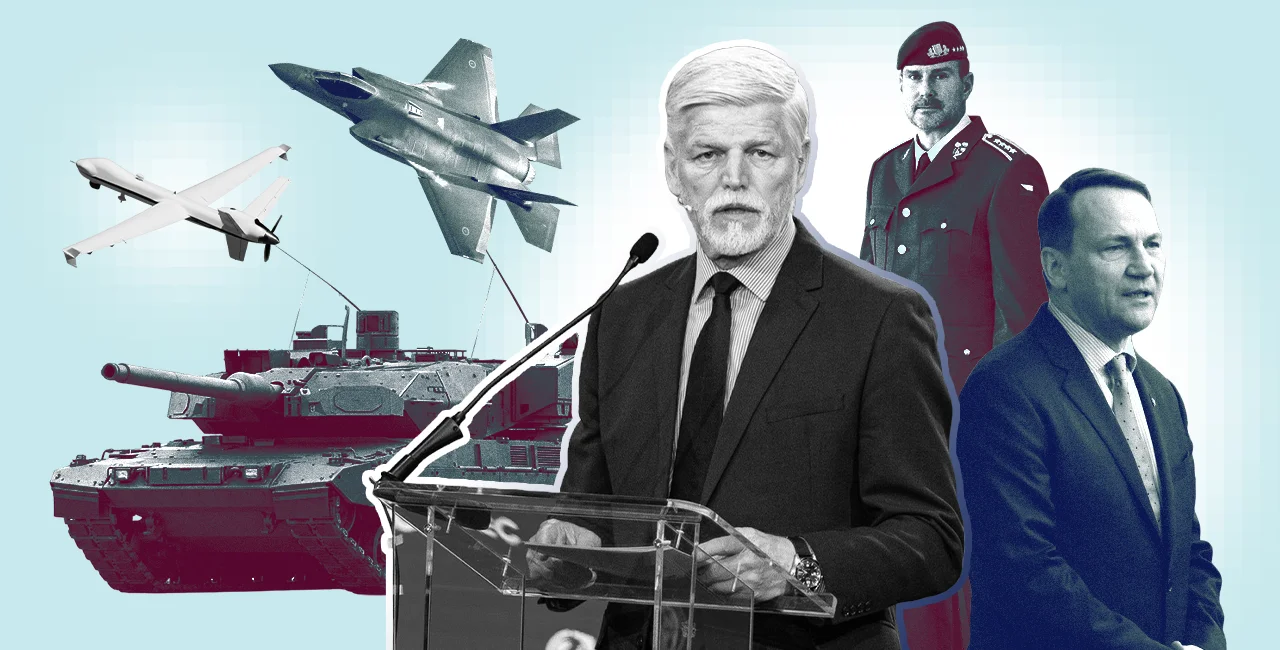

 Summary for: Czechia and Europe’s new security reality: What you need to know
At last week's meeting of the global security elite in Prague, European security officials warned that the continent is entering a more dangerous and unpredictable period, even if the war in Ukraine eventually ends.
In addition to the GLOBSEC Forum, last week saw Czech military leaders and intelligence officials convening at related conferences to assess where Czechia sits in the larger world order.

Here’s what they are concerned about and what it could mean for people in Czechia.
What are officials worried about?
Speaking at a security conference in the Czech Chamber of Deputies on May 25, outgoing Czech Army Chief of Staff Karel Řehka noted that Europe is currently facing multiple threats: the war in Ukraine, cyberattacks, sabotage, and rising tensions between Russia and the West.
"Russia will not become friendlier," Řehka said. "It has chosen a strategy that focuses more on confrontation with the West."
He added that the continent is facing its most serious threat since the Cold War.
At the same event, the head of the Czech intelligence agency BIS, Michal Koudelka, stated that the most likely risk is not a full-scale invasion of Europe but a limited Russian attack on one NATO country, probably in the Baltic region. This attack would aim to test how quickly the alliance responds.
Their remarks came as Russia launched one of its largest recent assaults on Ukraine, using drones and missiles during the night on Sunday.

Why are US troops in Europe part of the debate?
Security officials also express concern about the uncertainty surrounding the US military presence in Europe.
Recently, Washington canceled a planned troop deployment to Poland and quickly announced a different deployment instead. NATO allies reportedly were not informed in advance.
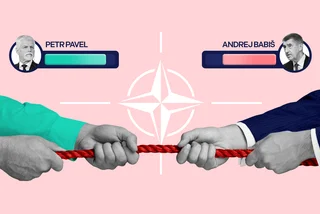
Czech President Petr Pavel raised this issue at GLOBSEC. He said the problem is not just the number of troops but also the unpredictability. For countries like Czechia, US forces stationed in Poland and the Baltic states are viewed as vital to NATO’s defense system.
If allies begin to doubt US commitments, European countries may need to take on more responsibility for their own defense.
At a separate debate at CEVRO University in Prague on May 26, senior NATO commander Alexus Grynkewich noted that the US faces increasing pressure in Asia, especially from China, and cannot handle European defense alone indefinitely. Řehka, also at CEVRO, added, "This is not about Donald Trump or any single administration. It is a geopolitical reality."
How close is the war to Czechia?
Earlier this month, Russian drone strikes targeted the Ukrainian city of Uzhhorod, near the Slovak border, prompting Slovak authorities to close nearby border crossings temporarily during the attack. Uzhhorod is about 600 kilometers from Prague.
At GLOBSEC, drones were highlighted as one of the major lessons from the war in Ukraine. Pavel mentioned that Ukrainian companies can now design, test, and improve military drones in just days, much faster than most NATO countries.
Ukrainian drones are responsible for a significant share of Russian battlefield losses. He cautioned that European countries risk falling behind due to slow procurement systems and bureaucracy.
What could this mean for people in Czechia?
Officials believe that a direct military attack on Czechia is not the most likely scenario. Instead, they are more concerned about hybrid threats, including cyberattacks, disinformation campaigns, sabotage, and attacks on critical infrastructure.
At GLOBSEC, Juraj Šedivý, whose company manages much of Czechia's telecommunications infrastructure, warned that a major long-term communications outage could disrupt daily life, government services, and the economy within 24 hours.

Koudelka mentioned that Russian activities already include disinformation campaigns, efforts to spread fear, and attempts to undermine trust in democratic institutions.
Is Czechia increasing defense spending?
This issue remains politically divisive. Pavel, in his opening speech at GLOBSEC, argued that supporting Ukraine and increasing defense spending are vital for Czech and European security, urging Europe to strengthen its role within NATO.
However, the Czech government has taken a more cautious stance. The government led by Andrej Babiš approved a budget for 2026 that allocates just over 1.7 percent of GDP for defense, below NATO's target of 2 percent.
Babiš has contended that healthcare and living costs should come first. His administration also blocked a proposal backed by Pavel to send Czech L-159 aircraft to Ukraine for air defense support.
NATO has confirmed that Czechia will miss the alliance's 2 percent defense spending target this year. At CEVRO, Řehka ended what was effectively his final week of public appearances as army chief with a warning: Europe’s situation could worsen, but the outcome hinges on how countries respond now.