 Reading time: 3 minutes


 Summary for: Prague homes cost nearly 17 annual salaries, among EU's least affordable
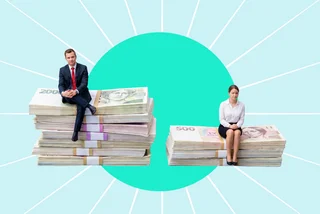
A new 70-square-meter apartment in Prague costs the equivalent of nearly 17 average gross annual salaries, up from approximately 15 a year ago, according to Deloitte’s latest Property Index analysis.
Prague now ranks second least affordable among the European cities surveyed, behind Albania’s coastal city of Vlora. Athens follows Prague, while Brno and Ostrava also appear among the ten least affordable locations.
The findings underline a problem familiar to prospective buyers: salaries are rising, but housing prices are moving further out of reach. Even cheaper Czech cities can be difficult places to buy when local earnings are taken into account.
Why lower prices do not always mean affordable homes
In Vlora, a standard new apartment costs 21.3 gross annual salaries according to the Deloitte Index. Prague requires nearly 17, Athens 16, and Brno and Slovakia’s Košice approximately 15. Ostrava’s figure is 14.1.
At the more affordable end of the comparison, Turin requires 4.7 average gross annual salaries.

These ratios compare property prices with earnings. They are not estimates of how long a household will actually take to save: taxes, everyday expenses, existing savings and the number of earners all affect that calculation. Nor do they represent a mortgage repayment period.
Deloitte financial advisory managing partner Miroslav Linhart said the central problem was the mismatch between prices and household incomes, rather than property prices alone.

“The combination of strong demand, slow construction and still relatively expensive financing is therefore further worsening access to homeownership,” says Linhart. Without a substantial expansion of supply, he said, a major improvement was unlikely.
The pressure is also spreading beyond Prague, Linhart added, making entry into the market harder for younger households and first-time buyers.

Across the countries surveyed, Czechia’s average new-home price reached approximately CZK 132,000 per square meter, second only to Luxembourg. That is a national figure, not the price of a typical Prague apartment.
A separate Deloitte Develop Index illustrates the capital’s premium. Asking prices for available apartments in Prague development projects averaged CZK 182,700 per square meter in the second quarter of 2026.
At that rate, a 70-square-meter apartment would have an indicative asking price of CZK 12.79 million. This is a calculation using a separate dataset, rather than the apartment price underlying the European affordability ranking.
The savings hurdle comes before the mortgage
High prices create a challenge even before monthly repayments begin: the amount buyers must contribute themselves.

The Czech National Bank’s current loan-to-value limit generally caps mortgages at 80 percent of the property’s collateral value. For applicants younger than 36 buying their own home, the limit is 90 percent. Banks still assess applications individually.

For the illustrative CZK 12.79 million apartment, assuming its valuation matched the purchase price and no additional collateral was provided, financing at those limits would leave approximately CZK 2.56 million or CZK 1.28 million to cover from other funds.
That upfront hurdle helps explain why rising wages alone may not quickly improve access to ownership.
Deloitte says expensive new homes and mortgages are also increasing demand for rentals. Prague ranks less severely on absolute rents than on purchase affordability: it is 18th among the cities surveyed, with rent averaging approximately CZK 470 per square meter per month.
For a 70-square-meter apartment, that implies CZK 32,900 monthly. The lower European ranking does not itself establish that renting is affordable relative to local income.

For international residents comparing options, the useful distinction is between three figures: the property’s price, the savings required to obtain financing and the ongoing housing cost. Deloitte’s ranking captures the growing gap between homes and earnings; an individual household’s budget determines how that gap translates into its choices.