 Reading time: 4 minutes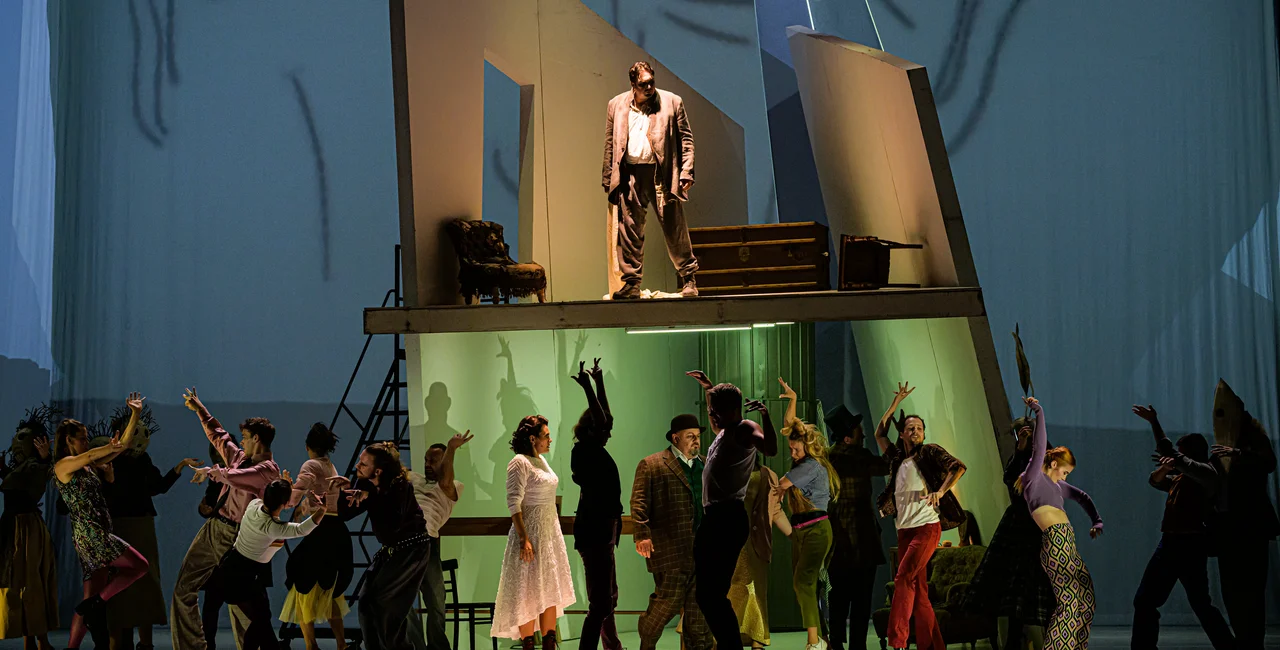

 Summary for: Can you enjoy a musical in Czech without understanding every word?
What is it like to watch a musical you know by heart in Czech?
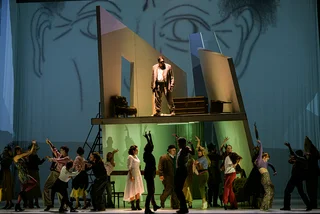
The barber on stage is tending to his customer, singing soothingly as he prepares his razor. Then, with a deft flick of the blade, he cuts the man’s throat and drops the bloody body through a trapdoor. Downstairs, it will be turned into a meat pie.
This is all part of Sweeney Todd: The Demon Barber of Fleet Street, one of Stephen Sondheim’s most famous musicals and a show I have seen more than 12 times in my life (I did grow up on Broadway, after all).
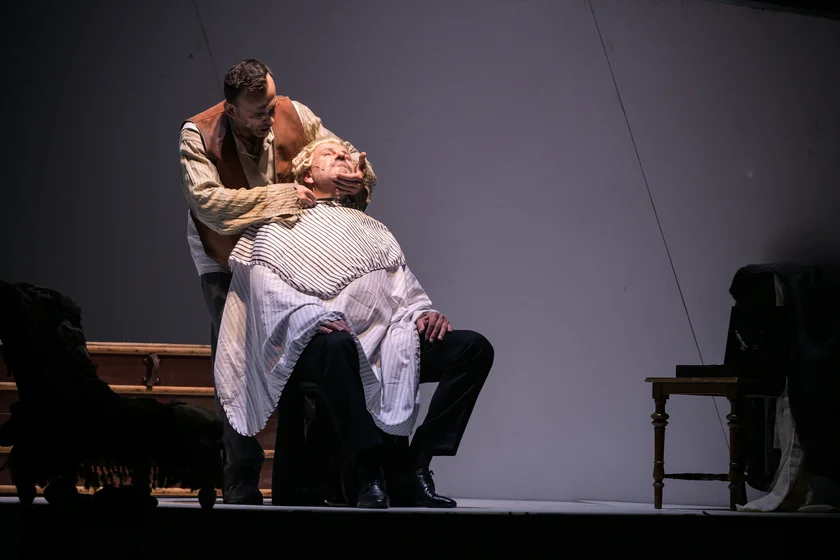
I know the songs. I know the jokes. I certainly know what happens to anyone who sits in that barber’s chair. This time, however, there is something I haven’t experienced before: Everyone is singing in Czech.
My brain keeps supplying the lyrics I know by heart, while my ears are trying to follow the Czech, and any words I do recognize made me wonder: How do you make Sondheim’s lyrics work in a language with different rhythms, longer words, and considerably more grammatical endings?
What changes when a performance is translated into another language
“The aim in modern translation for the stage is not to transform the story, but rather to enable audiences to experience the author’s intended effect.”
Hana Nováková, whose translation is being performed at Prague’s State Opera, has spent plenty of time considering that question. She was first commissioned to translate Sweeney Todd almost 10 years ago for the J. K. Tyl Theatre in Plzeň. The text was later used at the National Moravian-Silesian Theatre in Ostrava before reaching Prague.
My first question for her was, why translate it at all? It’s easy to think of the original English words and lyrics as inseparable from the show, but leaving them creates a very different experience for an audience that isn’t fluent in the language.
Nováková points out that straight plays and musicals are almost always translated in Czechia. The audience needs to understand a joke, an insult, or an unsettling proposition when it happens.
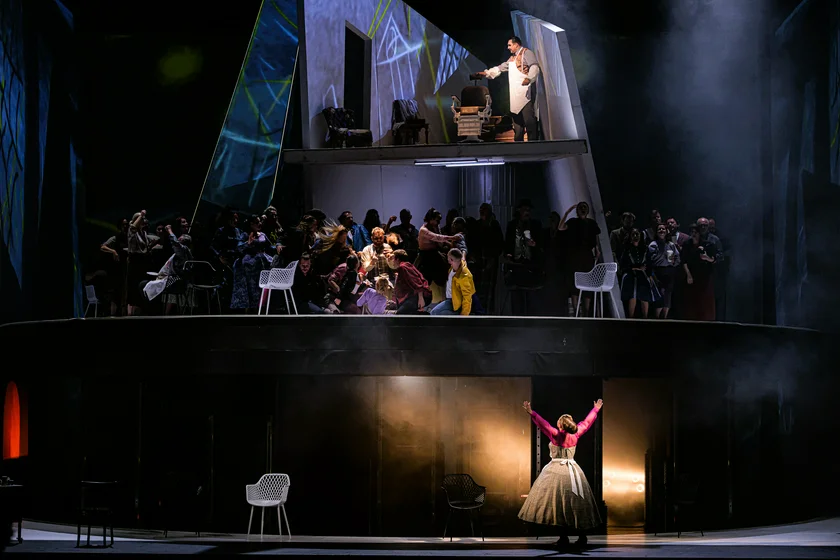
Her translation keeps the original names of cities and places in English. Older language suggests the historical period, while differences in speech help establish who these people are.
“The most pompous and old-timey language comes from Judge Turpin and people trying to appeal to him,” she says. “Mrs. Lovett is more colloquial, the young lovers more lyrical.”
Sondheim’s use of 19th-century character archetypes gave her room to make those differences more pronounced than they might be in a realistic play. But translating his words also means understanding what each character wants from the person listening.
“Are they provoking someone, are they buttering someone up, are they wooing them… All of that affects his word choices.”
“The action is actually what makes Sondheim’s songs such rich material to perform,” Nováková continues. “I would not expect anyone to get everything on the first hearing of the English original.”
That is reassuring for anyone concerned about missing something in Czech. Sweeney Todd asks a lot of its audience in either language.
Longer words, the same music
Czech presents particular difficulties. Words are generally longer than in English, which leaves less room to convey meaning within a musical phrase. Stress falls on the first syllable or a preceding preposition, and vowel length creates further restrictions. Add declensions and conjugations, and finding a sentence that fits the rhythm and rhymes becomes quite a task.
Nováková starts with the repeated key lines in each chorus, looking for the closest equivalent that will work within those limits. Occasionally, a character provides a welcome exception. Once she decided that Pirelli would make grammatical mistakes, his number became a joy to translate.
“I was suddenly able to rhyme much more freely,” she describes.
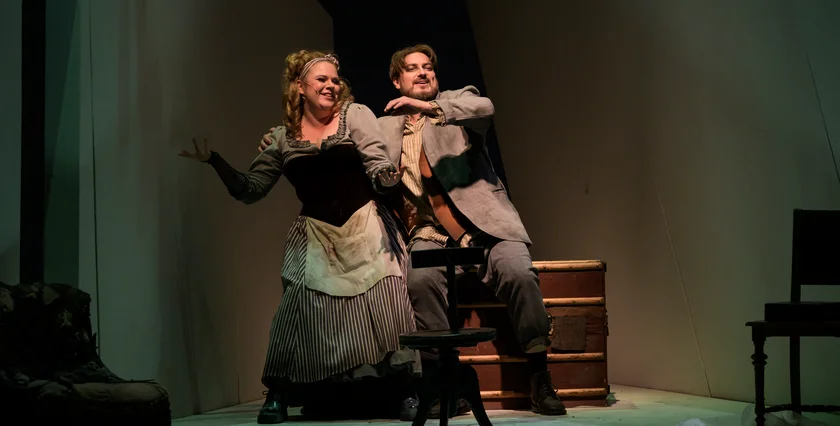
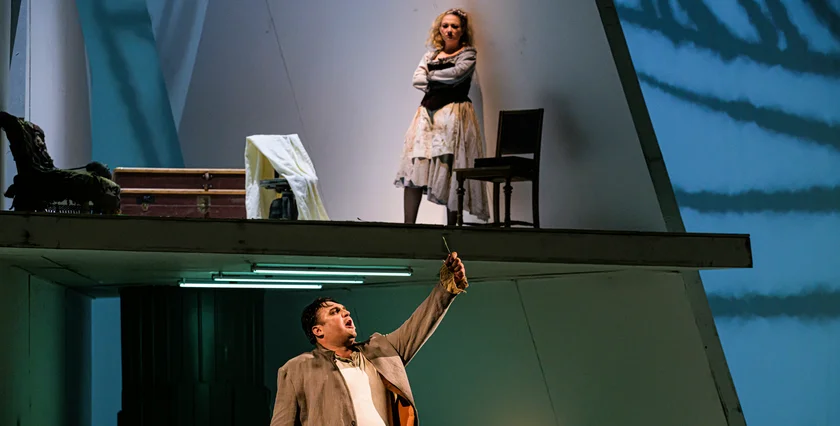
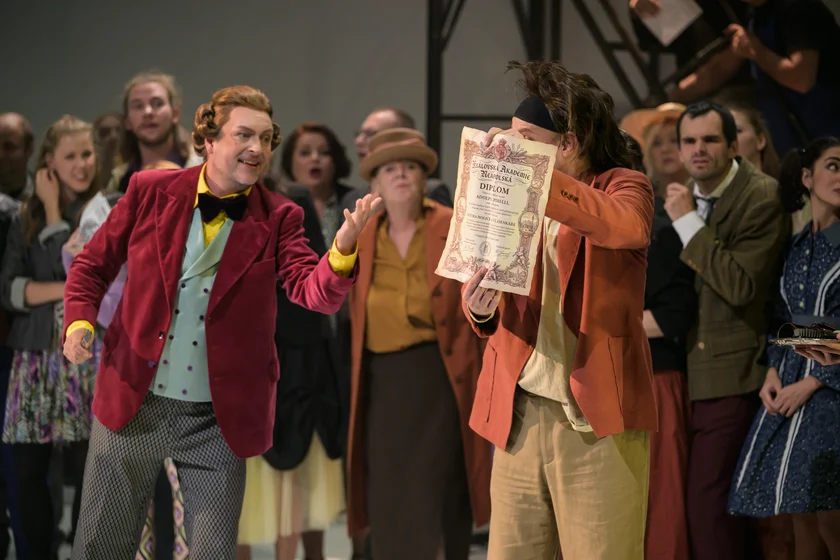
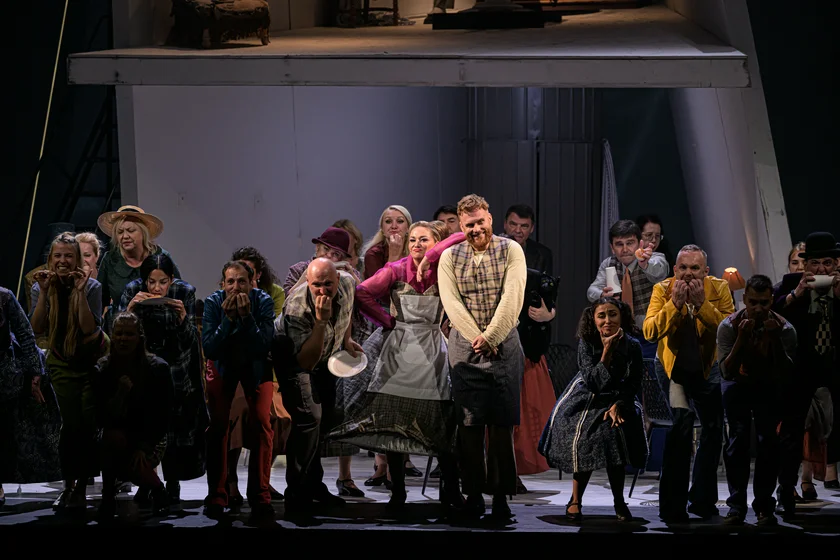
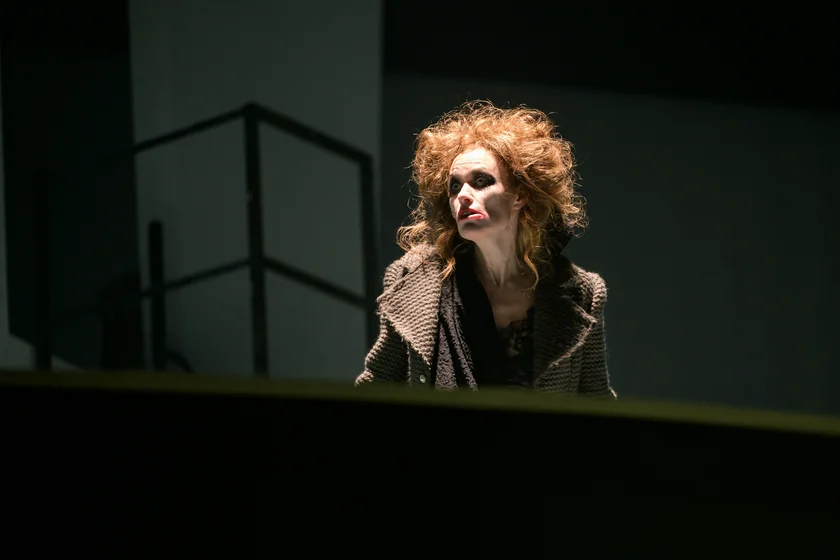
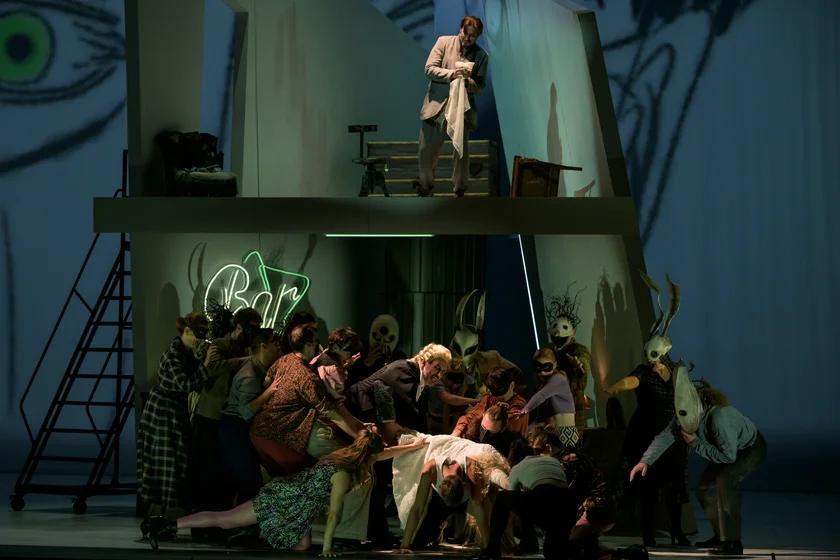
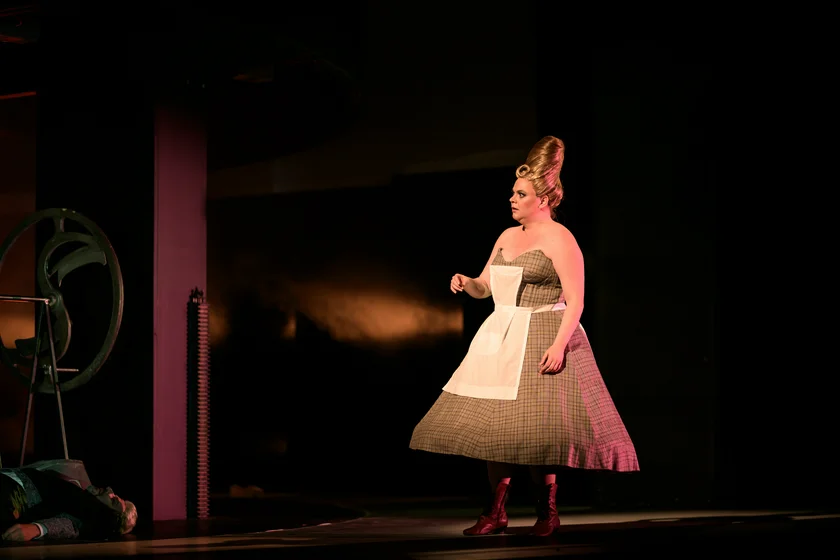
Mrs. Lovett’s solos were another pleasure, but A Little Priest was a different matter. The number, in which Todd and Mrs. Lovett discuss which professions might make the tastiest pies, was one of the last things Nováková worked on.
“I found its brilliance almost intimidating,” she says. “But as soon as I started working on it, the metaphors started falling into place and I discovered that a lot of them do work very similarly in both languages.”
Nováková recommends knowing the plot before watching a performance in an unfamiliar language. English surtitles can help, too, although there is pleasure in simply watching the performers and listening.
I don’t think hearing Sweeney Todd in Czech diminishes the experience, and I’m grateful to see a show I love from a different viewpoint. I still know what is coming when the razor comes out, but for once, I don’t know exactly how every line will sound.
And that gives me a reason to listen again.
Tickets are currently available for Oct. 22 at 7 p.m., and Oct. 25 at 2 p.m. and 7 p.m. Further performances are scheduled for June 27, 2027, at 2 p.m. and 7 p.m., currently available through subscriptions only. The recommended age is 12 and older.