 Reading time: 2 minutes

 Summary for: Flooded Czech village reemerges as drought drains Orlík reservoir
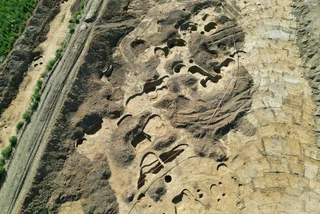
House foundations, abandoned roads and remnants of a river crossing have reappeared at Czechia’s Orlík reservoir as prolonged drought exposes a landscape largely hidden beneath the water for decades.
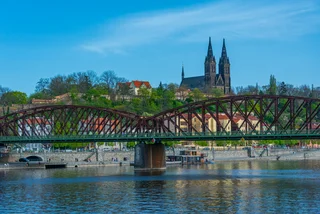
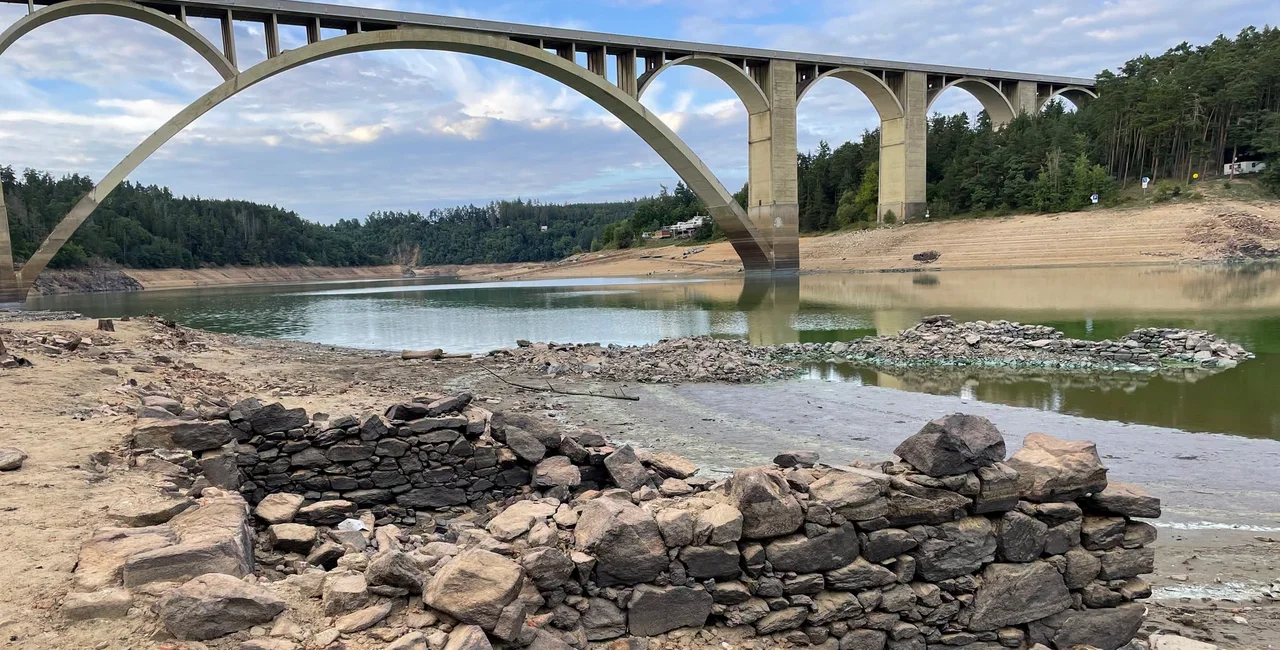
At Podolsko, beneath the towering concrete arch of the Podolský Bridge, visitors have been exploring the remains of a settlement sacrificed to the reservoir. The exposed foundations trace places where families once lived beside the Vltava, before the valley became part of one of the country’s largest water projects.
The discoveries follow a summer of falling water levels. In early September, Czech media reported that Orlík had reached a historic low, with the water roughly 15 meters below its usual level. The retreat has revealed remnants of several former communities, alongside weirs, industrial structures and wartime fortifications.
A village returns in foundations and memories
At Podolsko, the outlines of buildings and old roads offer a glimpse of the valley before the dam.
Reporting from the site in September, Czech Radio revisited the memories of former resident Pavel Smrt, who had previously shown its reporter where his childhood home stood. He could identify the kitchen, cellars and garage entrance among the remains, recalling how residents dismantled their homes as the water approached.
The settlement also stood beside a historic chain bridge. That crossing escaped submersion: it was dismantled and later rebuilt over the Lužnice River, where it survives as the Stádlec Bridge. Due to the low water levels, remnants of its original crossing have become visible at Orlík.
The reservoir transformed more than a single village. An earlier historical account published by iDNES.cz estimated that approximately 1,600 people had to move and that the flooded area encompassed between 500 and 600 buildings. Many homes were demolished before the valley filled, explaining why visitors now encounter foundations rather than intact streets of houses.

Elsewhere around the reservoir, falling water has exposed traces of a settlement below Zvíkov Castle, the foundations of a former hotel near Červená nad Vltavou and remains of a hydroelectric plant that once supplied the Protivín brewery.
The exposed past reflects a present water shortage
The unusual views come as water managers face a prolonged shortage across the Vltava basin.
Orlík helps sustain downstream river flows during dry periods, releasing stored water when natural inflows are insufficient. By early September, its falling level had prompted the use of reserves from the Slapy reservoir to support that role.
The pressure continued into October. On Oct. 7, Central Bohemian authorities declared a water-shortage situation affecting the Vltava and Elbe in the relevant part of the region.
They approved measures allowing the minimum release at Vrané to fall from 35 to as little as 20 cubic meters per second if needed. The Agriculture Ministry said the aim was to slow further declines at Slapy and potentially Orlík until rainfall improved conditions. Existing permitted water uses remained unrestricted at the time of the announcement.

For visitors, the exposed foundations provide a rare encounter with the Vltava valley’s lost communities. For water managers, the same bare shoreline shows how much stored water has already been used to keep the river flowing.