 Reading time: 5 minutes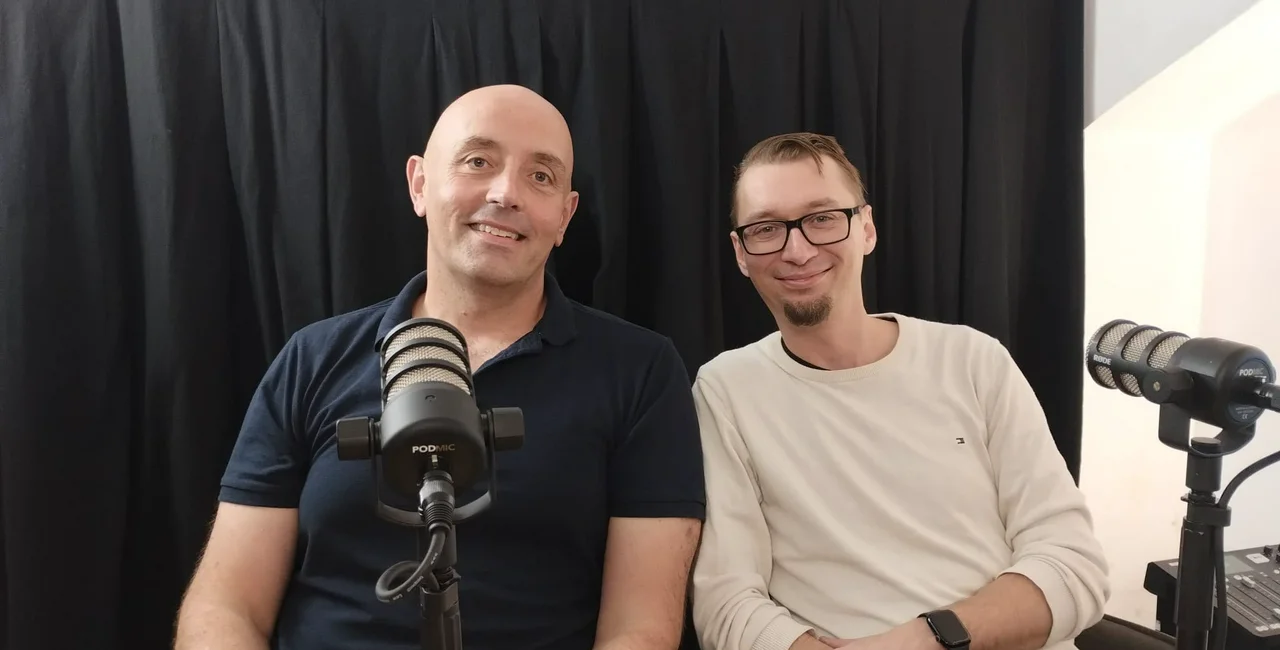

 Summary for: Meet the podcast hosts sharing Czech stories you won’t usually hear in English
So many Czech stories never make it into Prague’s English-speaking world. That’s where the Henry & Simon podcast sees an opportunity.
When I first sat in on Henry and Simon’s podcast, recording an episode with Tereza Texl and Kamila Olexa, I saw two young women working in AI and online marketing who had come to talk about what they did. But as the conversation went on, Henry and Simon seemed less interested in what they had achieved than in how they had ended up there in the first place.
Through their questions, the conversation became less about who these people were and more about how they became those people. That’s probably the simplest way to explain what makes Henry & Simon distinctive.
Simon describes the podcast as an opportunity to create something currently missing from Czech media: an English-language show that champions people in Czech culture and business while focusing on their personal stories.
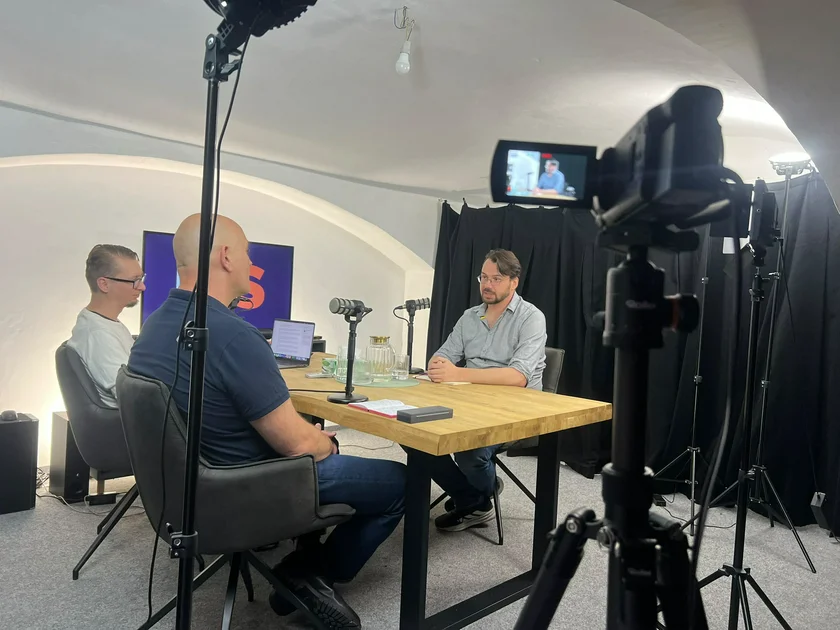
“I feel that there is an opportunity to get deeper and also make it more personable,” Simon says. But getting there came with its share of hurdles.
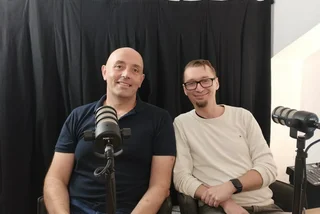
The podcast hosts first met seven years ago while working at the same startup. Simon was doing business development part time, and Henry stood out to him as thoughtful, creative and technically minded. Around the same time, Simon was working as a moderator and emcee and had already become comfortable in front of an audience. Between the two of them, the idea of a podcast emerged.
A podcast built around Prague personalities
Their first breakout guest was Alžběta Trojanová, a popular Czech journalist and TV presenter. The episode reached around 1,000 downloads on Spotify, which seemed extraordinary – until they realized most of those listeners weren't their own.
“Turns out that was Alžběta’s audience," says Simon. "Of course they love her.”
The realization only pushed them to develop the podcast further and build an audience that connected with their content. They interviewed comedians, entrepreneurs, artists and founders, talking to people with stories to tell.
In 2020, Covid-19 arrived and changed the process. Recording moved online, the workload grew, and the Henry & Simon podcast came to a halt.
“The sheer work to actually put this together and edit it was actually too much and too hard to coordinate,” explains Simon.
Throughout the pandemic, though, they knew there were stories they had yet to tell. They used this downtime to strategize how they could enhance the podcast further. In 2026, Henry & Simon returned with a studio, an editor, better equipment and a clearer understanding of what they wanted to be and whose stories they wanted to champion.
Guests should be interesting, not necessarily famous
When Simon talks about choosing guests, the emphasis is almost always on what somebody knows, what they have experienced or what they might reveal. Recent guest Fergus O’Sullivan, for example, has an unusual connection to Ukraine and the Czech business community, while Tereza Texl and Kamila Olexa have deep knowledge of a field that barely existed a few years ago.
And fame, as Simon puts it, isn’t necessarily the point.
Take Czech composer Jiří Hájek, for example. An award-winning composer known for scoring films such as Teroristka and Kurz manželské touhy, Hájek had never been interviewed in English before appearing on the podcast. For Simon, that was a reason to invite him.
“I'm not sure that it specifically matters how famous the composer is,” Simon tells me. The interview gave English-speaking listeners a chance to hear Hájek discuss his work firsthand.
My favorite example of this philosophy comes from an artist called Michael Azgour. Simon once bought a painting from Azgour, expecting something approaching the usual romantic stereotype of an artist’s life: spontaneous, chaotic and probably involving a fair amount of staring into the middle distance.
Instead, Azgour presented an Excel spreadsheet tracking 10 pieces of work in progress. When Simon wanted to purchase one of his paintings, Azgour informed him that it was exactly 70 percent finished. Simon bought it anyway.
“Artists aren't where you think they are," Simon says.
Henry calls it the “nitty-gritty” of the podcast. “My goal is to get people to learn about the details of how this person works, how they operate in a way that they wouldn't think to even ask," he explains.
The questions, then, can be surprisingly straightforward. Here are some of my favorites:
"What order do you put comedians on stage?"
"What does it actually take to get your first customers?"
"How did you learn to do this?"
"What does a successful artist actually do all day?"
They’re not necessarily profound questions, but they’re questions people don’t usually think to ask. When answered honestly, these more unassuming questions gave me a better idea of who I was learning about.
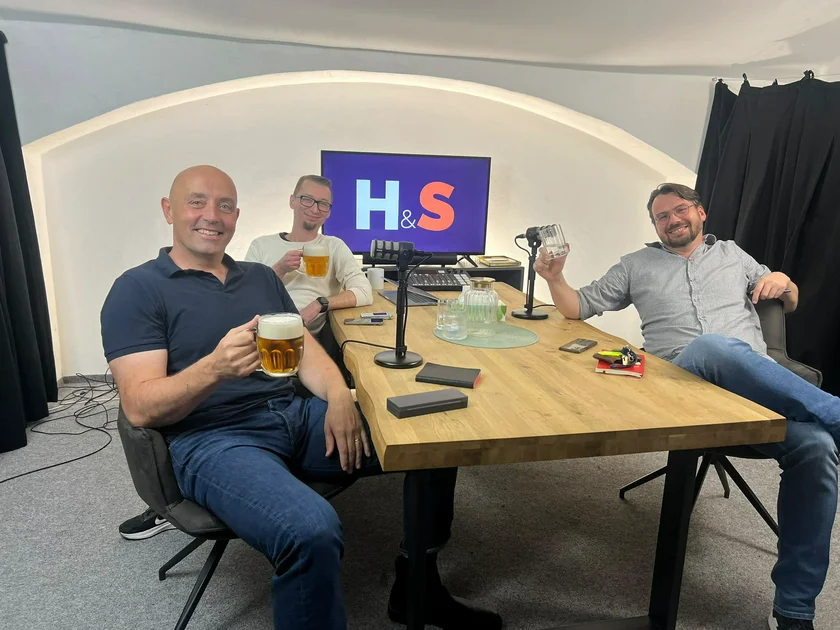
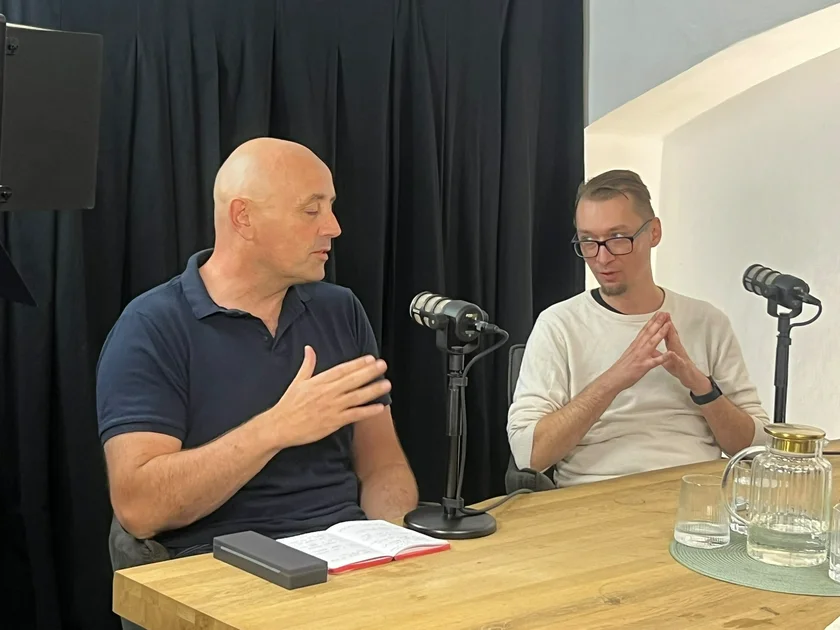
Simon is naturally concerned with the person sitting opposite him: whether they are comfortable, whether the conversation is flowing and whether the guest is enjoying themselves. Henry is more interested in getting something useful from the conversation. He talks about asking questions that offer listeners something new, even if they aren’t the questions a guest expects.
Simon keeps the conversation relaxed. Henry keeps asking for more detail. It's an unusual balance, but that’s also why the two hosts work as well as they do together.
Why the room itself also matters
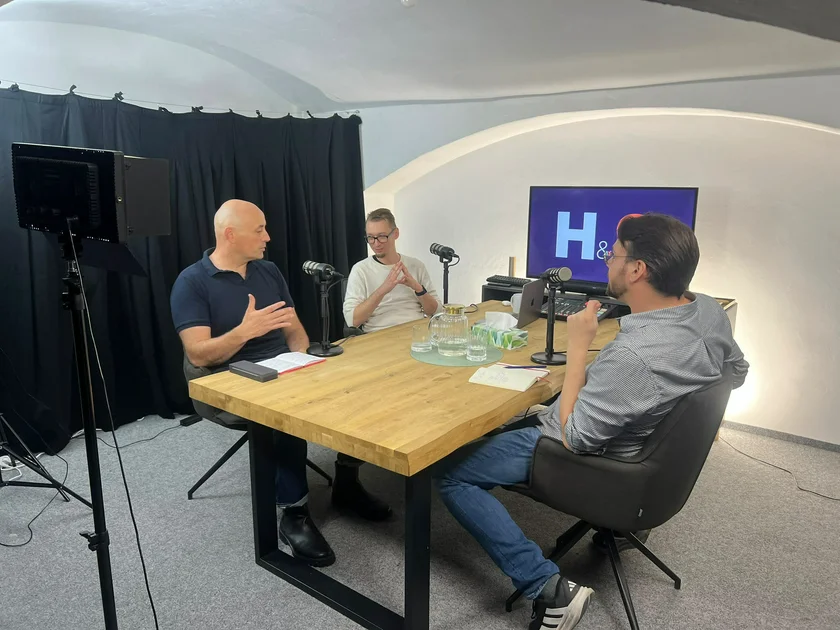
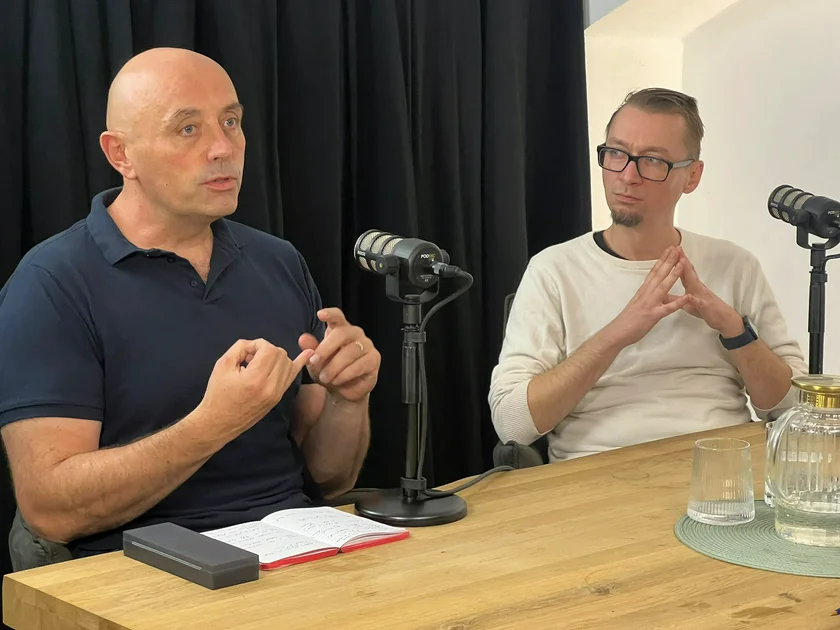
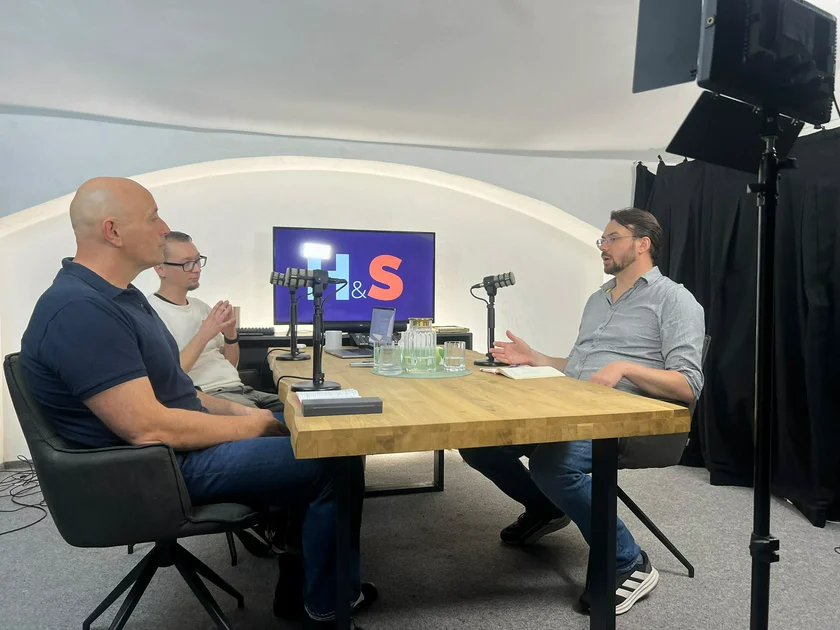
They’ve already turned down interesting people who couldn’t record in person. Remote interviews, in their words, are basically “glorified Zoom calls.”
That might sound unnecessarily stubborn in an industry that has spent the past few years making remote interviews normal. But Henry & Simon see that in-person connection as essential to their work. The studio gives hosts and guests space to build a relationship as they record.
And despite Simon’s insistence that the audience is secondary, this isn’t because he doesn’t want anyone listening.
“Of course I want thousands of people to listen, but we're not making the podcast now for the audience,” he explains. “We make it for the guests and we make it for ourselves.”
It’s a surprisingly honest position, but one that makes sense coming from a startup specialist like Simon. They recognize that reach matters, but they believe the content needs to come before attempts to build an audience.
Henry & Simon describe themselves as a media company, and their ambitions extend beyond the podcast to corporate podcasts, event activations and other forms of media production. But Prague remains central to their work.
Simon often comes back to the city as both setting and subject. His focus is on the people who inhabit it every day, rather than tourism or the practical advice of an Expat Survival Guide, which I still miss. The plan is to expand and share more unheard stories with English speakers everywhere.
For now, though, two friends are sitting in a studio in Letná, asking people questions they may never have been asked before.
As Simon puts it: “Prague and out, not Prague and in.”