



 Reading time: 4 minutes

 Summary for: 'Totally absurd': Americans in Czechia react to proposed bill to restrict dual citizenship
A newly introduced U.S. Senate bill restricting dual citizenship has sent ripples through expatriate communities worldwide, including Americans living in Czechia.
Senator Bernie Moreno’s proposed Exclusive Citizenship Act of 2025 would affect U.S. citizens born abroad to U.S. parents and naturalized citizens who later acquire a foreign citizenship, while those born in the United States would be exempt.
The bill would require current dual citizens to renounce one of their nationalities within a year, while anyone who acquires a foreign citizenship after it takes effect would automatically lose their U.S. citizenship.

To understand the real-world impact of the proposal, Expats.cz spoke with U.S. citizens in Czechia, legislative and legal experts, and conducted a reader survey that found the majority of respondents felt shaken merely by the principles the bill represents.
Half of respondents say they’d stay European
Our reader poll asked a hypothetical question: If you had to give up one of your citizenships, which would you choose? Nearly half (48.7 percent) of the 117 respondents said they would retain their European citizenship and relinquish their U.S. citizenship, compared with just 10.4 percent who would choose to keep their U.S. passport.
Reactions were emotional, with 31.6 percent of respondents saying the proposal made them feel primarily “Angry.” Notably, 50 respondents identified as current dual citizens, the group most directly affected by the potential forced choice.
For many, the reasoning would be pragmatic rather than ideological, driven by frustration with U.S. tax obligations, political disillusionment, and a belief that their lives abroad offer greater stability.

“My home country is heading in the wrong direction,” said Emily, an American living in Czechia. “I love my country despite not living there for almost a decade, but it’s clear it loves me less and less each year.”
Impossible choice for US citizens born abroad
The proposed bill could compel many Americans living in Czechia and elsewhere abroad, including U.S. military members, diplomats, and public servants with foreign nationality, to make that choice.
“Being forced to choose is wrong,” said Chris W., a U.S. Marine Corps veteran. “Freedom of movement is a basic human right, and dual citizenship makes me no less a patriotic American.”
Parents expressed particular concern about the impact on children. “My children have held both citizenships since birth,” one respondent said. “I don’t want to make that decision for them. It’s far too early in their lives.”
Immigration lawyer Juan Chaves Pernett explained that, in practice, the legislation would primarily affect European dual citizens, including dual Czech-American citizens and their families, depending on their circumstances.

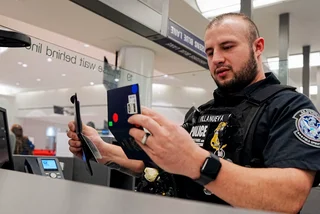
“Many live in Europe and may choose to keep Czech citizenship rather than U.S. citizenship. Renouncing U.S. citizenship would subject them to increased scrutiny when entering the United States on a visa or ESTA, especially for frequent or long-term travelers."
According to Chaves, minors would be particularly affected. “Losing U.S. citizenship would also mean losing future access to visa-free study in the United States, making long-term educational planning far more difficult; it’s hard to plan for that kind of future when you’re only ten years old.”

He goes on to say that U.S. border officials may view former citizens as potential immigrants, leading to secondary inspections, revoked visas or ESTAs, or denied entry.
The financial implications are also significant. Losing U.S. citizenship would trigger standard expatriation rules, including complex tax filings and, in some cases, an exit tax. The current cost to formally renounce U.S. citizenship, nearly USD 2,500, adds another layer of administrative and financial burden.
Any renunciation would require a formal, affirmative statement sent to the State Department, or, under the proposed legislation, to Homeland Security. The process must be completed through the embassy, which generally offers consular appointments only twice a week, meaning people would likely need extensions, said Chaves Pernett.
Will the bill pass?
Julia Bryan, Global Chair of Democrats Abroad, told Expats.cz the bill is extremely unlikely to become law. “Thousands of bills are introduced every two years, sometimes as many as 15,000 in a single year, and only about 0.25 percent actually pass,” she said.

Bryan described the proposal as political messaging rather than serious legislation, noting it feeds into longstanding “America First” narratives targeting Americans living abroad. The bill is currently stuck in committee and has no co-sponsors, both strong indicators of its limited viability.
But for Americans born in Czechia and elsewhere abroad, the message is clear: even if the bill never becomes law, its impact is already being felt, reopening deep questions about belonging, loyalty, and the cost of living a truly global life.
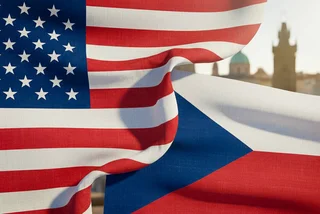
“It’s a mean-spirited bill that doesn’t reflect how families actually live in today’s global world,” Bryan said. “And it’s a distraction. There are far more consequential proposals on the table right now.”
Still, Bryan warned that fear itself can have real consequences and urged Americans abroad not to disengage. “If you’re willing to pick up the phone, make sure you’re also voting. Voting is still working. Tell them you're not going to be scared or dissuaded.”
For dual citizens whose very identity is wrapped up in being both nationalities no matter which side of the Atlantic they were born on, the bill's existence feels less like policy and more like a personal attack. Jan Stransky, who holds both U.S. and Czech citizenship, echoed that sentiment.

“I am a proud American as well as a proud Czech. Both countries are part of my identity and have been for my entire life. The idea that I should have to renounce one to prove loyalty to the other is totally absurd.”