



 Reading time: 4 minutes

 Summary for: 'Integration is essential’: Therapy helped her make Prague home. Now she helps hundreds
When Amanda Mataija moved from Croatia to Prague in 2015, she expected the usual challenges of life abroad: a new language, a new job, and a new social circle. What she didn’t expect was how difficult it would be to find mental health support in English; especially as her own struggles with ADHD, anxiety, and depression intensified.
“It wasn’t that therapists didn’t exist,” Mataija told Expats.cz “But English-speaking services weren’t clearly visible or accessible, especially for foreigners who didn’t yet speak Czech.”
For years, she pushed through without therapy. When she finally sought help in 2018, the experience was transformative. It also revealed a lot about the services available, or lack thereof. Prague’s population of internationals was growing rapidly, yet mental health care hadn’t kept pace. The issue became impossible to ignore when the Covid-19 pandemic hit.
Covid exposed a mental health gap for foreigners
In early 2020, Mataija was following Prague-based Covid Facebook groups when she noticed a surge of panic, fear, and uncertainty among expats. People were worried about their health, their families abroad, and their jobs, all while isolated in a foreign country.
“At the same time, I saw more and more people actively looking for English-speaking counselors,” she said. “The demand was urgent.”

She started small with online webinars like How to Deal With Mental Health During Covid-19. But it quickly became clear that one-off events weren’t enough.
In April 2020, Mataija reached out to two psychologist friends, Lea Micic Savic and Ross Van Slambrouck, to launch online support groups. They operated on a donation basis and expanded quickly as demand surged.

What was an emergency response grew bigger
At the time, Mataija wasn’t planning to become a founder. She was working a corporate job, newly shifted to remote work, with unexpected time on her hands.
“I had no idea how to build a website, how to legally run counseling services, or if this would even work,” she said. “But I decided to invest EUR 1,000 and try.”
She taught herself entrepreneurship on the fly, reading obsessively and learning as she went. She credits her ADHD with helping her move fast and adapt in chaos; a crucial skill during a pandemic when rules and conditions changed constantly.
Everything was online. There were no café meetings or in-person planning sessions. Therapists and clients had to adapt to deeply personal conversations over screens. At the same time, Amanda had to vet credentials, licenses, and legal permissions while government offices operated on limited hours.
Despite the uncertainty, the project grew
Today, Prague Integration has 38 colleagues, several departments, more than 500 clients, and multiple programs serving both expats and locals.

Through her work, Mataija has seen firsthand who is most affected when mental health care isn’t accessible: single parents, refugees, particularly those displaced by the war in Ukraine, teenagers, and people with clinical diagnoses like depression, OCD, or borderline personality disorder.
“Many of them have gone without care for long periods, especially psychiatric support,” she said.
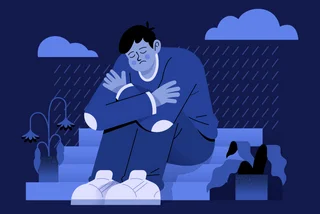
Some stories have stayed with her. One is a single mother of three from Ukraine, raising her children alone in a foreign country after fleeing a war zone. Another is a student struggling with borderline personality disorder who had no financial means to access therapy despite urgent need.
Prague Cares cuts costs for therapy
While Mataija is encouraged by how much attitudes toward therapy in Czechia have improved, she remains concerned about systemic limits, especially in psychiatric care.

“Czechia has one of the lowest rates of child psychiatrists in Europe,” she said. “About six per 100,000 children and adolescents. That’s alarming.”
To address this, Prague Integration launched Prague Cares, a donation-based solidarity fund designed to subsidize therapy for those who can’t afford it.
The model is simple: individuals, companies, and foundations donate; therapists agree to reduced rates; and clients receive up to five sessions of professional, multilingual support. A standard EUR 60 session is reduced to EUR 35, allowing funds to stretch further.
“So far, we’re supporting 21 people,” Mataija said. “My hope is to reach 50.”
Integration goes both ways
Mataija has seen progress since she started. Therapy is more openly discussed, new clinics are opening, and Prague Integration’s programs, including men’s mental health support and ADHD testing, have been widely embraced.

For her the journey has also reshaped how she thinks about life abroad.
“At some point, integration is essential,” she said. “Even basic Czech can open doors. Don’t stay only in the expat bubble.”
Leading Prague Integration has helped her build deep ties with local professionals, improve her Czech, and feel rooted in the city she now calls home.
“I genuinely love this work,” she said. “It’s fulfilling to see people feel supported. Prague is my home now; and this story needed to be written.”