For years, many EU nationals in Czechia have lived comfortably without formal paperwork, working, studying, running businesses, all while technically "invisible" to the state. That's about to change, and while the shift won't restrict anyone's right to live and work here, it will formalize what's been an informal arrangement.
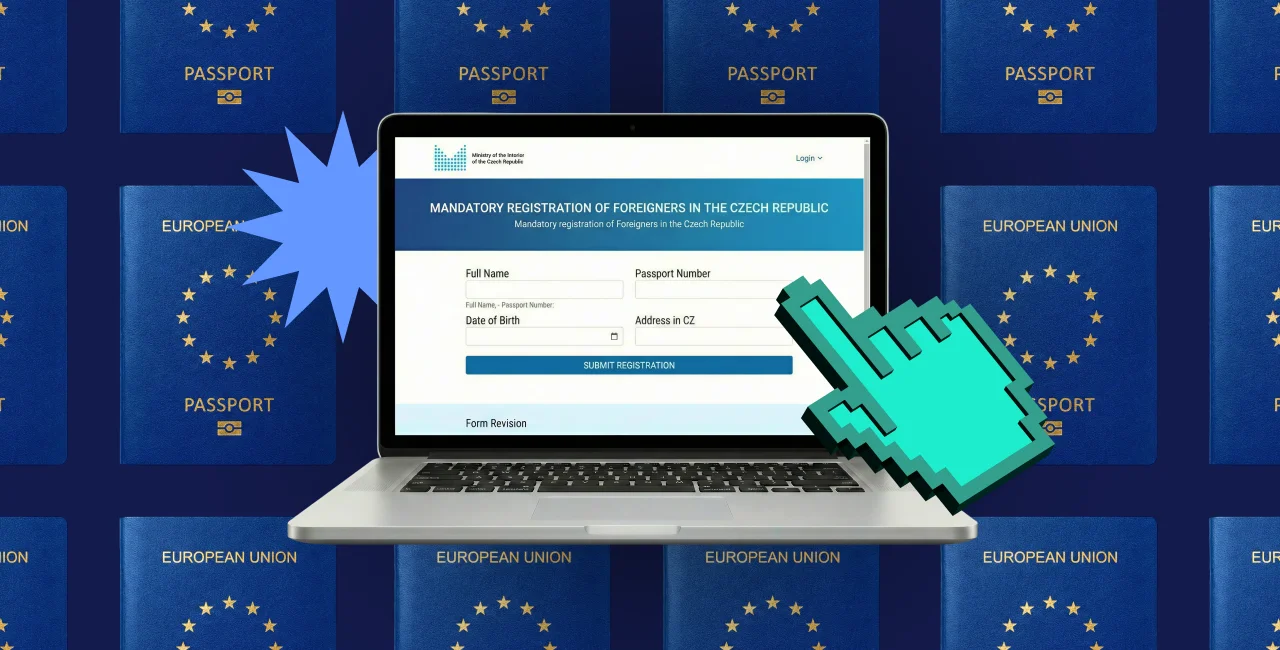
Starting in 2027, EU citizens who stay longer than 90 days will be required to register with Czech authorities. The government is opening a voluntary registration window this year to give people time to comply before enforcement becomes stricter.
What this actually means
Right now, EU nationals can live in Czechia indefinitely without paperwork, a privilege stemming from freedom of movement rules. But unlike non-EU foreigners, who've always had to register, EU citizens have existed largely outside official databases.
According to the Ministry of the Interior (MOI), the new system will require EU nationals to register their place of residence and receive a Registration Certificate, creating a formal record similar to what already exists for non-EU residents. This doesn't change your right to live and work here, but it does mean the Czech government will know you exist.
Despite this, he clarified that the new legislation does not significantly alter the conditions for obtaining a residence permit; the primary transformation lies in the digitization process.
How to do it
The process is almost entirely digital. You can create an account on the Information Portal for Foreigners (IPC) right now; though this system will eventually be replaced by the Integrated Foreigners' Agenda Information System (ICAS), which will require a Czech electronic identity like BankID or a data box.
Once logged in, you'll upload scans of your ID, proof of address, and documents confirming your purpose of stay, whether that's a work contract, university enrollment, or proof of self-employment.
The timeline
Mandatory registration takes effect in 2027, but the government is giving EU nationals two full years, 2026 and 2027, to comply. The voluntary phase starting this year is essentially a grace period, though officials are strongly encouraging early registration.
The MOI suggests you don't wait until 2027. The system is likely to get busier as the deadline approaches, and getting this sorted early avoids last-minute headaches.
What if you don't register?
The Ministry of Interior hasn't specified exact penalties yet, but based on enforcement of similar requirements for non-EU nationals, expect administrative fines and potential complications with employment, healthcare access, and other official interactions.
An official registration record simplifies access to BankID, now widely used to interact with banks, utilities, and government portals. It can also make a decisive difference when applying for a mortgage, where proof of long-term residence is increasingly expected.
In cities like Prague, registration may also be the difference between qualifying for a resident parking permit or being treated as a short-term visitor. Similar issues arise with healthcare administration, school enrollment for children, and communication with authorities.
From the state's perspective, the change is about clarity, fairness, and data. Czech authorities estimate that tens of thousands, possibly hundreds of thousands, of EU nationals live in the country without being officially recorded, complicating everything from urban planning to healthcare funding.
The move also aligns Czechia with broader EU trends toward more accurate population registers, especially as digital public services expand. As systems become interconnected, unregistered residents create gaps that governments are increasingly unwilling to tolerate.
For EU nationals who've been here for years, this might feel like an unwelcome shift. But in practical terms, it's formalizing a status most people already have, but on paper.
Source: Ministry of Interior