



 Reading time: 9 minutes

 Summary for: PODCAST: A Pirate's playlist, unpacking Dan Brown mania, and Prague gets pixels
Introducing a new podcast from Expats.cz, Expats Extra. Think of it as the cutting board of our newsroom—where snippets from our stories, behind-the-scenes reporting, and surprising soundbites come together each week. You can listen to the podcast on Spotify, Apple Music, or Podbean.
ELIZABETH ZAHRADNÍČEK-HAAS:
A Prague art exhibit the way Nolan would have intended. This week on Expats Extra, we step into the Inception-style matrix that is the Czech capital's newest—and only—permanent digital art space. We’ll make sense of the Czech election aftermath and get a Czech mystery anthologist’s take on Dan Brown.
This is Expats Extra, a news podcast from Expats.cz — fresh stories, surprising soundbites, hidden gems, and extra insights beyond the headlines. I’m Elizabeth Zahradníček-Haas, editor at Expats.cz.
On today’s episode, we’ll discuss pop hits and political shifts and unpack the Secret of Secrets’ set-jetting appeal. But first, we’ll take a walk through Signal Space, the Czech capital's first immersive art gallery.
SHOWNOTES Bits and Bytes for Oct. 9, 2025
- Visit the newly opened Signal Space in Prague’s Old Town
- Head to Signal Festival beginning Oct. 16
- Listen to Ivan Bartoš's election playlist on Spotify
- Read more about Prague Noir
- Head for a Robert-Langdon-inspired cocktail at Black Angel's bar
Signal Festival: To Infinity and Beyond
ANICA:
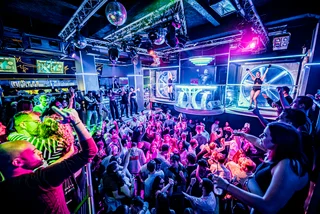
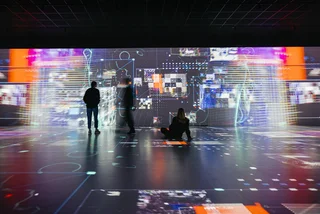
I’m entering the Infinity Room — a glittery expanse of mirrors and 180 crystal cubes backlit by shifting colors. The narrow passages, the dizzying reflections, the beauty — it feels like a kaleidoscope or a Christopher Nolan film.
But we’re neither in a child’s toy nor on the set of Inception. We’re in a 19th-century marketplace in Prague’s Old Town, home to the city’s first permanent digital art gallery.
MARTIN POSTA (founder and curator of Signal Space):
We are still in the visual arts department. Although, you know, it’s the 21st century and we have the internet, so the perception of these types of works should be more and more common.
ANICA:
The Infinity Room is just one of eight rooms in Signal Space, covering 2,500 square meters and showcasing Czech and international digital works.
Visitors also encounter immersive spaces by Istanbul’s NOHLAB, Japanese artist Shohei Fujimoto (Intangible Forms), and Zach Lieberman’s Body Sketches, which turn your movements into live digital drawings.
POSTA:
We try to take the best artists that we think currently exist in the digital or new media sphere—artists who work with different technologies and creative approaches—and place them in this beautiful new endeavor of ours called Signal Space.
ANICA:
The Infinity Room nods to Japanese artist Yayoi Kusama, whose breakthrough 1965 installation Infinity Mirror Room created a sense of endlessness with no top or bottom, beginning or end.
Here, Czech glass culture joins the mix — handmade crystal cubes by Preciosa refract and reflect light. Visitors walk among crystal pixels, becoming part of the light field — every step and breath shifting the installation.
Kusama’s groundbreaking work, first shown in New York, helped spark today’s appetite for immersive, experiential art, paving the way for virtual galleries and permanent spaces like Signal Space.
This year’s Signal Festival runs October 16–19, with 20 installations across two routes — 13 outdoor works free to the public, and seven ticketed indoor locations.
POSTA:
It’s great that Signal Festival is so popular, but it comes with some drawbacks. It’s free, so everybody can go — and it’s popular, so there’s a lot of people.
ANICA:
For fans of digital art, Signal Space offers a chance to step into the magic of the annual festival on your own terms — an endless, Nolan-style maze of light, mirrors, pixels, and sound.

POP HITS & POLITICAL SHIFTS
ELIZABETH:
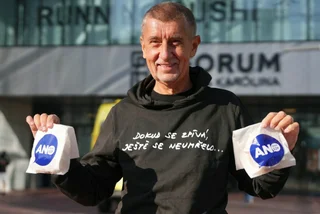
That was Sarà Perché Ti Amo by Ricchi e Poveri, a classic Italian hit from 1981 — and yes, Andrej Babiš, often called the “Czech Trump,” chose it as his victory anthem after ANO’s win in this weekend’s parliamentary elections.
Romantic, upbeat, and a little puzzling for a populist whose combative politics leave little room for love.
While ANO came first, they fell short of a majority, meaning Babiš will now need to negotiate with smaller, more rigid parties like SPD and Motoristé. Coalition math is tight, and policy priorities vary — forming a stable government will be challenging.
To help make sense of what happened, we spoke with Benjamin Curtis, political analyst and researcher with MIGACT.
BENJAMIN CURTIS:
ANO had a very strong showing, even increasing its votes in Prague and Brno, which aren’t its home turf. But what surprised me most is that Piráti and STAN also did better than expected.
For example, Piráti got more than in the 2021 election, and there are 15 women in their delegation and only three men. That’s part of a broader surprising trend — the highest number of women ever elected to a Czech Parliament. About half of all representatives will be new members of parliament.
ELIZABETH:
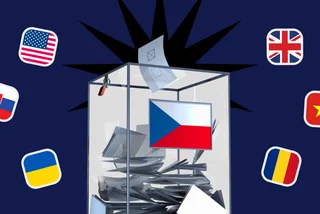
So what does all this mean for people who couldn’t vote — residents with a migration background?
CURTIS:
That population isn’t homogenous, but in general, there’s not a lot of good news. Right-wing populist trends like those of Babiš and his coalition partners often foster resentment towards migrants.
There’s a danger of the normalization of the extreme right. For example, under Babiš, Czechia may reduce its support for Ukrainian refugees and their integration. And for people from the Global South, if intolerance and scapegoating increase, that’s a clear sign politics have veered sharply to the right.
ELIZABETH:
So what’s the best-case scenario?
CURTIS:
A government that doesn’t dramatically weaken Czechia’s EU position, roll back LGBTQ+ rights, sabotage green policies, or attack media and judicial independence — essentially, a government that maintains a reasonably well-functioning state and open economy, even if tensions rise.
ELIZABETH:
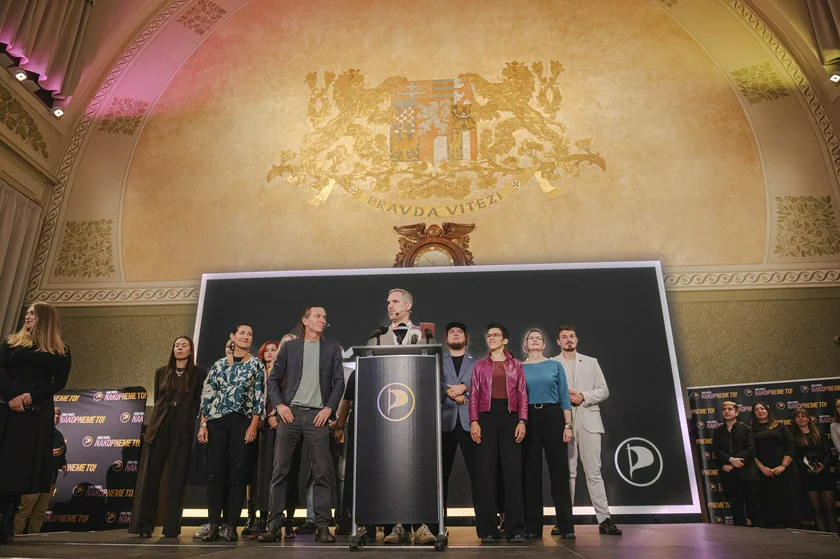
For those who align with liberal democratic values, the Pirate Party may offer some hope. We ran an informal poll of Expats.cz readers — over 400 people responded, and more than half said the Pirates best match their values.
I spoke to Ivan Bartoš, leader of the Pirate Party, about why his party resonates so strongly with the international community.
IVAN BARTOŠ:
We are really open-minded towards foreign influence — not only from Europe, but globally. We are open for international cooperation. Most people who come to Czechia are liberals looking for opportunity, and we are the only real liberal party. Whoever loves freedom and democracy usually loves the Pirates as well.
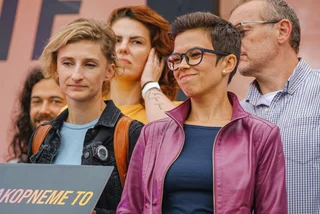
We don’t abuse politics to spread a populistic or xenophobic agenda — that’s quite a loud voice in the Czech Republic, of course, multiplied by Russian influence and disinformation.
SPD and Motoristé, for example, are kind of pro-Russian parties all the time, especially SPD — and Tomio Okamura, it’s been proved by the court, can actually be called fascist.
ELIZABETH:
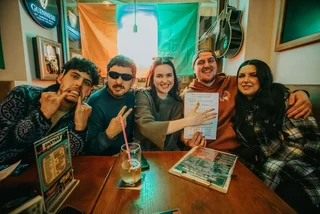
Bartoš doesn’t just talk about supporting the international community — he’s part of it. He lives in Prague’s Vinohrady district and regularly joins events organized by the city’s expat community, including the annual Halloween Trick-or-Treat Charity Walk.
BARTOŠ:
Each year since my wife and I moved to Prague 2 about eight or ten years ago, we’ve participated in the Halloween Trick-or-Treat event — it’s a fundraising walk from bar to bar organized by expats in Prague.
ELIZABETH:
And keeping with our musical theme, when we asked what song represents the Pirates’ campaign, Bartoš didn’t hesitate.
BARTOŠ:
Black Sails — a pirate song from Dropkick Murphys [Ed note: The O’Reillys and the Paddyhats] I’m an accordion player, so I’m a lot into this Irish punk thing.
ELIZABETH:
Raucous, rebellious, and unapologetically outsider — sounds about right.
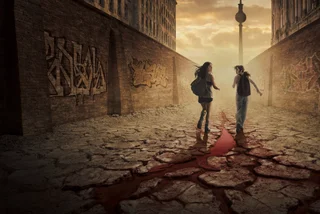
The Secret of Secrets: Dan Brown in Prague
ELIZABETH:
When The Da Vinci Code hit shelves in 2003, it wasn’t just a bestseller — it was a phenomenon. More than the plot, readers remember how Paris came alive — monks, codes, demons, omens, and the Madonna of the Rocks.
Two decades later, people are still set-jetting to Paris for Da Vinci Code tours.
So when Dan Brown announced his new novel, The Secret of Secrets, would be set in Prague, expectations were high.
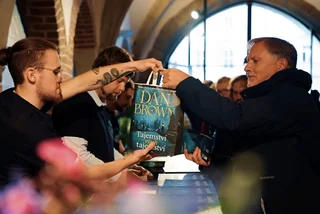
At a press conference in Prague last month, Brown explained why he chose the city as a character:
DAN BROWN (clip):
Prague has been the mystical capital of Europe. This is the place where mystics, scryers, alchemists, Kabbalists, and magicians came to communicate with the divine.
ELIZABETH:
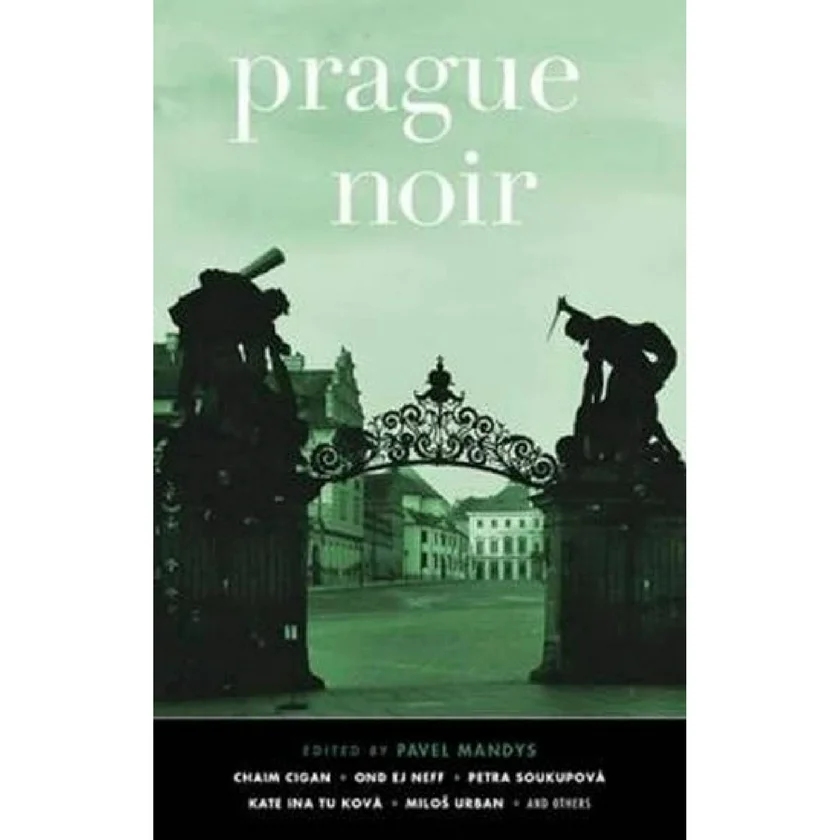
We asked Pavel Mandys, editor of Prague Noir — an anthology of mystery stories that reveal the city’s darker side — whether Brown’s novel captures that spirit. Mandys is also on the board of the Magnesia Litera Awards, Czechia’s version of the literary Oscars — and, as it turns out, a Da Vinci Code fan himself.
PAVEL MANDYS:
I expected a novel like The Da Vinci Code, more focused on the history of the city or some historical-mystic plot. But this one is totally tech-culture. The history of Prague or any other city isn’t really important.
Still, a Dan Brown novel set in Prague could bring a new wave of readers and visitors to the city. We got many drunkards who came to Prague for good and cheap beer — but this kind of book could bring a different type of tourist.

ELIZABETH:
That’s what fans call the Langdon Effect — the mix of mystery, travel, and discovery that Dan Brown does best.
Local businesses are already feeling it. Hotels are launching Dan Brown–themed packages. Prague City Tourism is planning walking tours of the book’s key locations. Even cafés are serving Langdon-inspired lattes.
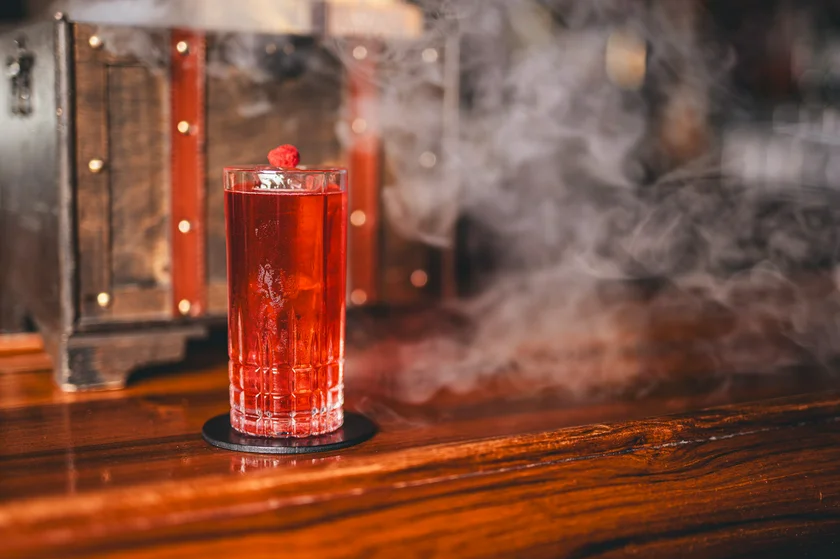
At Black Angel’s Bar in Old Town — featured heavily in the novel — bartenders are shaking up a new menu, from the fiery Inferno to the gin-based Search for the Secret.
PAVEL ŠÍMA, BLACK ANGEL’S
We’re super excited. It’s a big honor that our bar will be part of the story.
ELIZABETH:
But maybe the most lasting impact isn’t tourism — it’s reading.
BROWN:
My job, above all, is to make the reading experience exciting — to make you want to go out and read another book.
MANDYS:
Even if The Secret of Secrets doesn’t do justice to Prague, it could open doors for readers — they can discover other authors who have written about the city, like Miloš Urban or Umberto Eco.
So whether it’s cocktails or crime scenes, Netflix thrillers or Czech noir, Prague is once again a city of secrets. Which one you discover depends on the story you open.
And for those who want a different kind of mystery — one set in Žižkov stairwells and shadowed courtyards, not glossy hotel bars — pick up Prague Noir, edited by Pavel Mandys. It’s the Prague beneath the postcard.
ANICA:
That’s all for this week’s episode of Expats Extra, where we bring you fresh stories, surprising soundbites, and insights beyond the headlines.
For all the links, details, and bits and bytes we mentioned in today’s episode, head over to Expats.cz.
This episode was written, edited, and produced by Elizabeth Zahradníček-Haas, Anica Mancinone, and Alexis Carvajal, with contributions from Thomas Smith.
Follow Expats Extra wherever you get your podcasts — so you never miss a story.
Excerpt from The Da Vinci Code (2006), directed by Ron Howard. Copyright © Sony Pictures. Used under fair use for commentary purposes. Excerpt from ‘Sarà perché ti amo’ by Ricchi e Poveri. Copyright © Ricchi e Poveri / Baby Records. Used under fair use for commentary purposes. Excerpt from ‘Irish Way’ by The O’Reillys and the Paddyhats. Copyright © Metalville Records. Used under fair use for commentary and educational discussion. All audio excerpts are used for purposes of commentary, critique, or education under the fair use doctrine. No ownership of the original materials is claimed.