




 Reading time: 2 minutes

 Summary for: Babiš who? Women crack glass ceiling in Czech election
The announcement Sunday that billionaire populist Andrej Babiš’s ANO party had won the Czech elections came as little surprise to observers, who widely predicted the former prime minister’s political comeback.
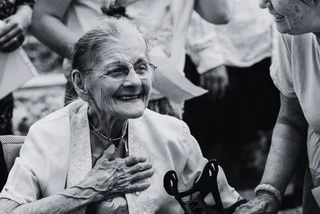
Yet the election also delivered unexpected milestones; most notably, record representation for women and young people in parliament.

“The biggest surprise for me was the failure of the Communist Party,” Petra Vodová, assistant professor of politics at the University of Hradec Králové told Expats.cz.
“I expected they’d make it into parliament, but they didn’t—and that’s good. I’d also highlight the positives: more women and young people in parliament. Those are real signs of progress.”
According to the Czech Statistical Office, voters elected a record 67 women to the 200-seat Chamber of Deputies this weekend, giving women one-third of the lower house—a jump from 50 in 2021 and just 31 in 2006.
The election also brought a younger cohort of lawmakers, including 12 MPs under 29, signaling a modest but notable rise in youth representation.
Speaking to Expats.cz, Lenka Simerská, a sociologist and Equal Pay expert, founder of LibuShe - Institute for Women in Governance, said that preference votes played a significant role in these gains.
“Women voted for women and triggered a wave that led to two parties now having a female majority in their parliamentary clubs. Women are simply fed up with the male-only style of politics.”
Pirates lead gender parity push
The Pirates party, which secured 18 seats with 9 percent of the vote, has the highest proportion of women in its parliamentary group; 15 of 18 MPs, or 83 percent.
Party chairman Zdeněk Hřib said female voters “had made it clear that they had noticeably missed women and young people” in parliament, calling it a commitment for Pirates to amplify their voices.
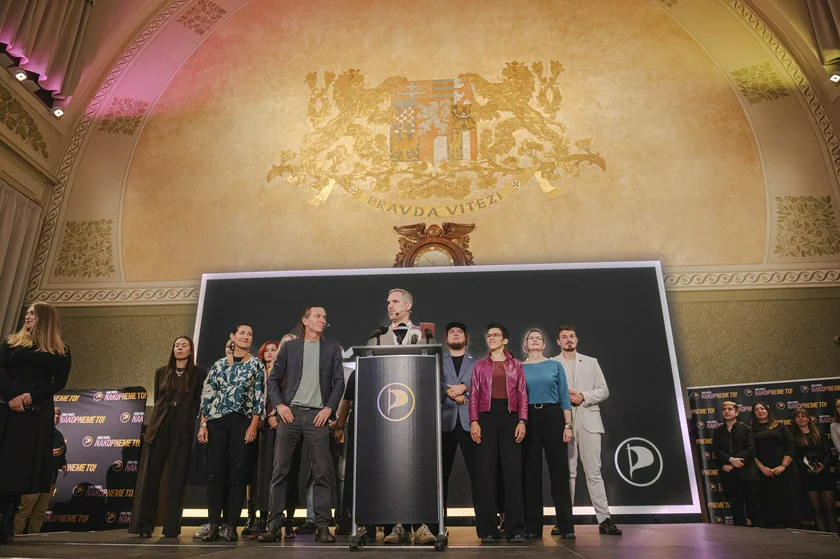
Olga Richterová will lead the Pirate delegation, with Ivan Bartoš as first deputy and two other women, Kateřina Stojanová and Lenka Martínková Španihélová, as deputy heads.
Catching up to the rest of Europe
The new parliament is also younger, with the average MP age dropping to 48.8 years from nearly 50 in 2021. The youngest elected representative is Julie Smejkalová, a 21-year-old Charles University student representing STAN from Prague.

The largest group of female MPs (24) falls between ages 40–49, while male MPs cluster between 50–59 (51 members). Twelve MPs under 29 were elected—four times more than in 2021.
Czechia’s roughly 33 percent female representation now aligns with the EU average of about 33.4 percent, as measured in 2024, placing it among countries making steady gains toward gender parity.
Time for men to roll up their sleeves, too
The record number of women in parliament contrasts with the overall conservative outcome. ANO won with 34.5 percent of the vote, and the far-right SPD entered parliament with 7.78 percent.
Simerská cautions that increased female representation does not automatically lead to legislative change.
“Equality is not just a womens’ issue. Male allies are crucial, and cross-party cooperation will determine the real impact of these women MPs,” she said.

Still, Simerská remains optimistic. “I have strong hopes that the newly elected women will continue to promote progressive changes in labor law, family law, and across the legislative spectrum.”
She added, “It would be fantastic, perhaps even too optimistic, if women from the winning party, ANO, could connect and cooperate with women MPs from opposition parties on these topics.”