



 Reading time: 2 minutes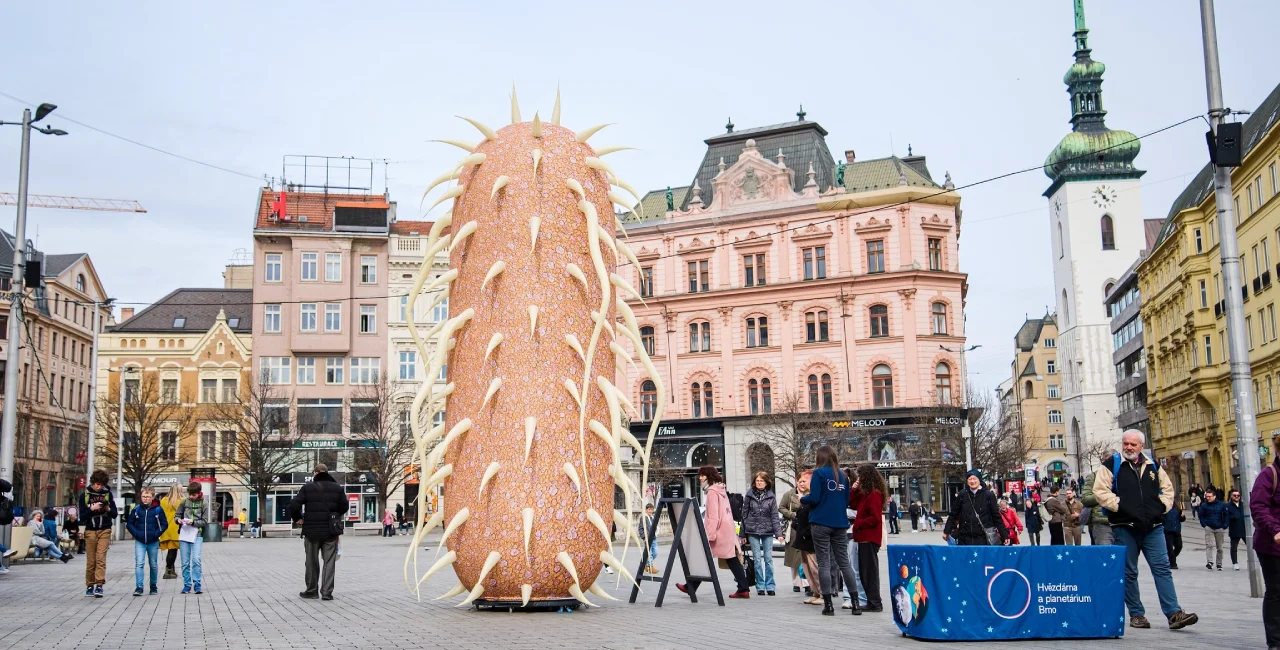

 Summary for: Brno unveils giant E. coli model to celebrate its microscope heritage
Brno residents and visitors now have a new unusual landmark for selfies: a giant inflatable model of the bacterium Escherichia coli, also known as E. coli. The model is roughly three million times larger than the real bacterium, which naturally lives in the human and animal digestive tract, supporting digestion and the immune system.
The installation was created by Brno’s observatory as part of its ongoing science outreach efforts. Following a series of inflatable planets, astronomers developed this bacterium model to encourage public engagement and provide a striking photo opportunity across the city in the coming days.
A nod to Brno’s microscope legacy
E. coli is a classic representative of the “micro-universe” revealed by electron microscopes. Brno has a long-standing tradition in producing these instruments: about a third of the world’s electron microscopes come from the city. The E. coli model, which even glows at night, symbolizes the city’s ongoing success in this field.
The new model coincides with the 75th anniversary of the first Czechoslovak electron microscope, which was built in Brno, and the city will mark the milestone with the Electron Microscopy Days festival from March 23-29.
Jiří Dušek, director of the Brno Observatory, told Novinky.cz that the model reflects the city’s international standing in microscopy. “Because the Czech Republic is a global powerhouse in electron microscopy, the festival will showcase both the instruments and the micro-worlds they reveal.”
Brno’s electron microscope industry remains robust, with ten companies operating in the city, including global leaders Thermo Fisher Scientific, TESCAN, and Delong Instruments. Together, these firms employ around 5,000 people and generate annual revenues of approximately CZK 30 billion.
Named after the German-Austrian pediatrician Theodor Escherich, who discovered the bacterium in 1885, E. coli is vital for human health. It aids digestion, stimulates the immune system, and contributes to the production of vitamin K, essential for blood clotting. Its adaptability has made it one of the most studied organisms in microbiology.

A scientific ambassador
The inflatable model is expected to appear in several prominent locations around Brno, including near the Špilberk Castle and Petrov Cathedral, providing both educational and visually striking experiences for passersby. The project continues a tradition of using public art to celebrate the city’s unique contributions to global research.
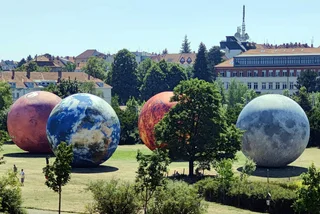
The Electron Microscopy Days festival will feature demonstrations of Brno-made microscopes, workshops, and exhibits exploring the micro-worlds these instruments make visible. Organizers hope to inspire curiosity among both locals and visitors, reinforcing Brno’s reputation as a hub for scientific innovation and outreach.
With this giant E. coli model, the city blends history, science, and creativity, offering a memorable way to celebrate Brno’s microscope legacy while educating the public about the microscopic organisms that play a crucial role in human health.