



 Reading time: 3 minutes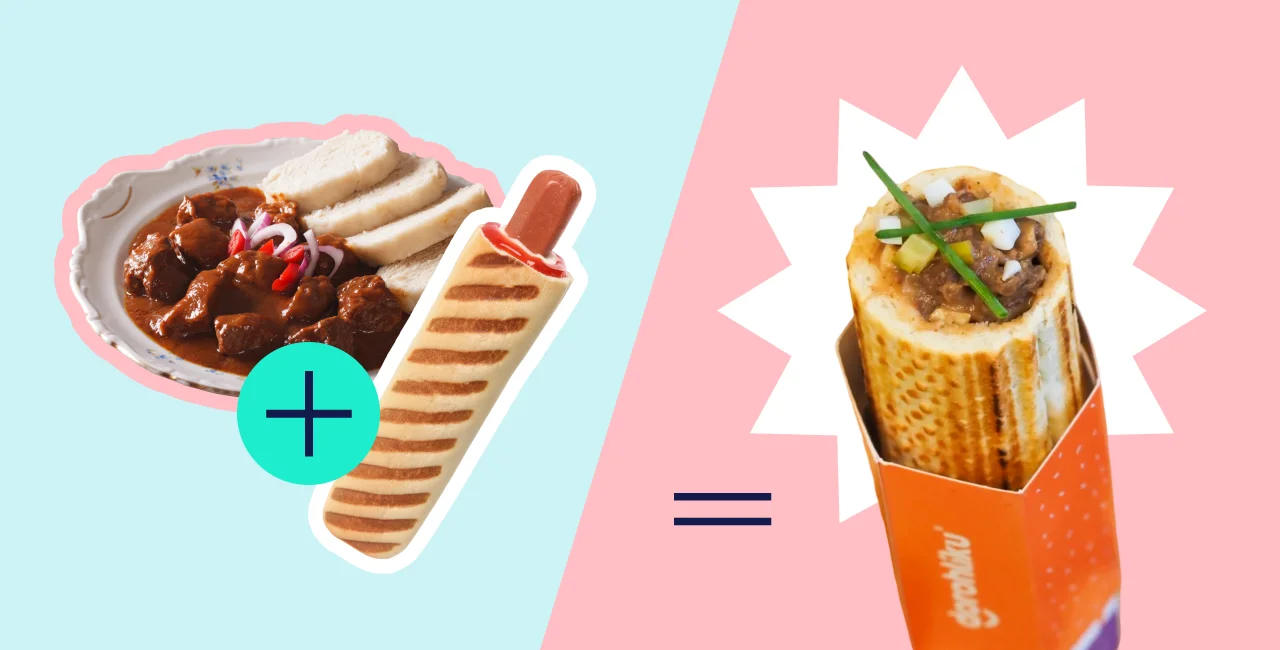

 Summary for: Guláš to-go and smažák on pizza? Czech frankenfoods take on the classics
Czech food has a reputation for being reassuringly unchanged. Svíčková is svíčková. Smažený sýr is smažený sýr. You eat them sitting down, with a beer, at a table with paper napkins.
But over the past several years, a small cohort of entrepreneurs and cooks have been taking the nation's comfort food canon and doing strange, wonderful things to it. Meet Czech 'frankenfood': the classics, but mutated.

Guláš in a roll, and now at a petrol station
DoRohlíku made a stir in the media in 2024, being a Prague startup that has done exactly what its name suggests: taken beloved Czech hotovka dishes like španělský ptáček and ragú z divočáka, and stuffed them into freshly baked rohlíky.
The concept was born from founder Lukáš Nádvorník's frustration with the dismal food options at Czech petrol stations. Together with chef Alan Pham, they spent around six months perfecting the recipes so the sauce wouldn't run and the rohlík wouldn't go soggy. One portion runs to about CZK 106 as of March 2026, and the flagship location is on Lazarská in Prague's New Town. The concept has since expanded to OMV stations in Prague and Brno — meaning you can now eat a unique Czech Sunday lunch while your car refuels.
The smažák multiverse
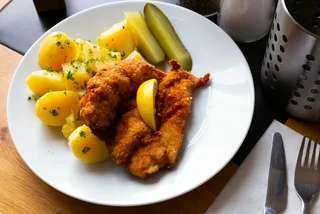
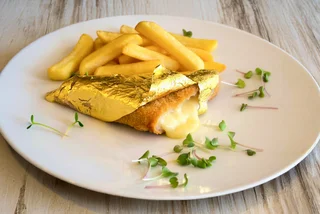
Smažený sýr, the golden, breadcrumbed slab of fried cheese that Czechs hold sacred, has been quietly spawning variants for years. It's a dish so embedded in Czech and Slovak culture that it appears in school canteens, street stalls, and proper restaurants alike, typically served with tartar sauce and fries.
In Prague, the riffs are well underway. Café Velryba serves its smažák made from Gouda on a soft bun, with house tartar sauce and vegetables — closer to a proper burger than a pub plate. Lokál, the upscale Czech pub chain, fries its version in clarified butter using organic Edam, which puts it in a different category entirely from the standard hospoda version.
But the most eyebrow-raising mutation may be happening two hours from Prague, at Hotel Seč in the Pardubice region. Their pizzeria serves a five-cheese pizza topped with an entire portion of smažený sýr, served with tatarská omáčka on the side.
One reviewer described it as "a millimetre of dough under a centimetre of cheese," which is either a complaint or a dream, depending on who you are. The creator defends the combination by pointing out that removing the tartar sauce would be like serving svíčková without the knedlíky.
The artisanal klobása, reconsidered
Not all Czech frankenfood is absurd. Sausage Go, a small stall tucked near Old Town Square on Celetná, is doing something subversive with the klobása. Rather than the standard grilled sausage handed over in a paper wrapper, Sausage Go offers farm-sourced sausages — turkey, beef, herb-stuffed, blue cheese, chilli — served in homemade bread with a range of gourmet dips.

It has a Google rating of 4.9 from over 400 reviews, which for a street food stall in one of the world's most tourist-saturated city centres is quite remarkable.
Czech food is too stubborn and too beloved to be wholly disrupted, but it is perfectly willing to be folded into a rohlík, slapped on a pizza base, or served in a bowl with artisanal dips. The classics aren't going anywhere, they're just getting stranger.