




 Reading time: 4 minutes

 Summary for: How Czechia became a Cold War radar power and why it could help in Hormuz
When Britain and France convened a video conference of 40 countries this week to discuss security in the Strait of Hormuz, Czechia arrived with a concrete offer: passive radar technology that analysts say places the country among the leaders in a field increasingly central to modern warfare.
Prime Minister Andrej Babiš said Czechia would contribute its DPET passive radar system to a potential multinational mission in the strait once the current conflict subsides. "We're offering what we're good at," he said. "Our military has always had a good reputation within NATO."

How did a landlocked country of 11 million end up with radar technology the world wants?
The answer begins with Tesla (not that one)
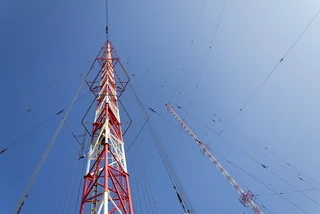
Czech radar expertise has deep industrial roots, beginning with a state electronics company in Pardubice called Tesla. The history of the Tesla brand dates back to 1946. The technology of passive radiolocation was developed in former Czechoslovakia based on research by Associate Professor Vlastimil Pech and his colleagues at the Military Research Institute in Brno.
The actual systems, Kopáč, Ramona, and the legendary Tamara, were produced in Pardubice by Tesla and first used by the Czechoslovak Army.
Engineers there focused heavily on passive surveillance, systems that listen rather than broadcast, partly out of necessity. Active radar emits signals that can be tracked and targeted. Passive systems do not.

That Cold War constraint turned into a competitive advantage. Tesla's military passive radar KRTP-86 Tamara was able to detect US stealth bombers.

Development began at Tesla Pardubice in 1981 and the system was deployed in 1987. It was claimed to be the only system in the world able to detect military "invisible aircraft."
When Tesla went bankrupt in the privatizations of the mid-1990s, three engineers who could not bear the thought that the technology would cease to be developed founded ERA.
The company brought Tamara's successors, VERA and VERA-NG, to market, and according to ERA, its systems now operate at 160 locations in 69 countries on five continents, with ERA holding more than 50 percent of the world market.
What passive radar actually does
Conventional radar works by broadcasting a signal and measuring what bounces back. Passive radar skips the broadcast entirely. It detects and analyses electromagnetic emissions already present in the environment, radio, television, mobile networks, reflected off objects moving through air or water.
Because passive systems are silent, they are far harder to detect or target. In contested environments, where an active radar installation can be located and destroyed, that silence is operationally significant.
It is also why passive radar has become increasingly relevant as drones proliferate. Small, low-flying unmanned systems are notoriously difficult to track with conventional radar. Passive systems, which do not rely on a strong return signal, handle them differently.

What Czechia is offering
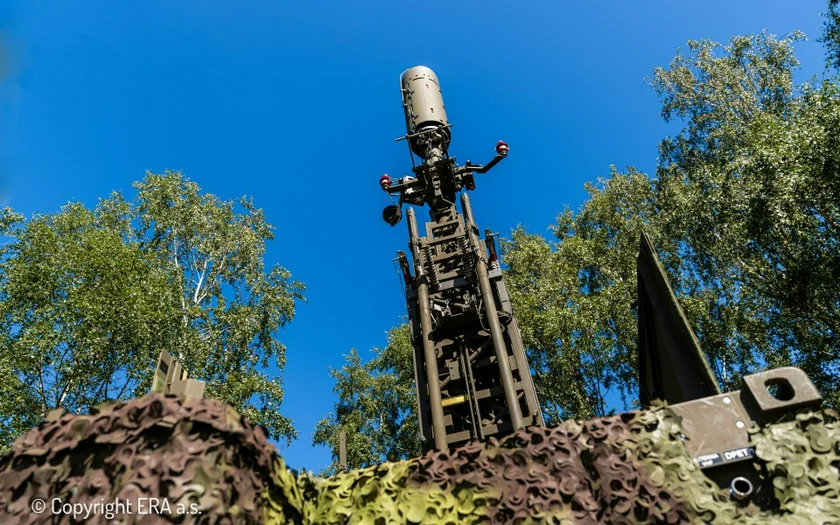
The system Babiš referenced, DPET, is a mobile version of ERA's passive radar platform, designed for rapid deployment. It can track large numbers of targets in real time and is built for use in both military and civil surveillance operations.
The Czech Army has been investing in this technology itself. Last year, it ordered three PLESS radar units from ERA for CZK 2.3 billion, with delivery still pending. The Hormuz offer, in that context, is consistent with a broader national commitment to the technology rather than a one-off diplomatic gesture.
Why Hormuz
The Strait of Hormuz, at its narrowest point just 33 kilometers wide, is one of the most important global energy chokepoints, carrying a significant share of the world’s oil exports from the Persian Gulf.
The strait has been largely blocked since late February, when the US and Israel launched an air campaign against Iran. Iran briefly declared it open on April 17 before closing it again the following day, saying the US had failed to lift its naval blockade of Iranian port.


The current security environment has increased interest in technologies capable of detecting small or low-flying objects such as drones, which have become a recurring feature of regional tensions.
However, analysts caution that Czech involvement would likely be supportive rather than decisive.
“Allies already operate a range of radar systems in the region, both active and passive,” said Vlastislav Bříza from Charles University’s Faculty of Social Sciences. “This would be a useful addition, but not a game-changer.”
The Czech Republic plans to offer a passive radar system to help secure the Strait of Hormuz as part of a multinational mission led by Britain and France, following conflict in the region. Supporters say it highlights Czech defense expertise, while critics question involvement in overseas security operations. What do you think?
He added that the offer also allows the country to showcase its technology on an international scale. “Czechia is among the leaders in radar production. There is also a degree of signaling here; it showcases domestic defense capabilities.”
Any deployment would still require parliamentary approval in Prague, and no formal mandate or timeline has been confirmed.

With the strait closed again and no deal in sight, the window for exactly this kind of technology may be opening faster than anticipated.