Good afternoon, the big news of the afternoon is a large anti-corruption raid carried out at Prague City Hall. Meanwhile, we enter the first week of massive public transport disruptions in Prague's city center, and take a look at the growing interest in raising chickens at home.
This afternoon's top story
Six people charged as police raid Prague City Hall
Six people and two legal entities are facing prosecution after police raided the Prague City Hall building in the Škoda palace. Still little is known about the identity of the accused, but prosecutors said they were accused of abuse of power, accepting bribes and money laundering, and are suspected of having acted like an organized criminal group.
Finger-pointing. Early media reports suggest the investigation is targeting the Prague City Hall's municipal road department. Prague Mayor Bohuslav Svoboda (ODS) already said the department falls under the responsibility of the Pirate Party, which in turn denied the claim and said it was a delegated state administration department outside of their authority.
More top headlines
Senate to vote on parental allowance increase
The Senate is due to vote and is expected to approve an amendment increasing the parental allowance from CZK 350,000 to CZK 400,000 starting next year. Parents of twins (or more) will be entitled to double that amount for children born from January 1, 2027. The measure could cost the state approximately CZK 230 million on the first year and over CZK 3.5 billion annually after its full implementation.
Low birth rate. The measure is seen as instrumental in the government's aim to boost Czechia's free-falling birth rate and create stronger incentives for people to have children. Dropping by 6 percent in the first six months of the year, the birth rate could reach another historic low in 2026, according to the latest forecasts.
Experts weigh in on mobile phone ban in schools
Banning mobile phones in schools is a relevant and necessary step to protect children's mental health and cognitive development, according to a statement issued by the Czech Medical Society of Jan Evangelista Purkyně (ČSL JEP). Contacted by the Czech News Agency, other experts warn that any sort of restrictions should come hand-in-hand with measures to strengthen digital and media literacy and explaining to children how to use smartphones responsibly.
Mobile phone ban from 2027. The government of Prime Minister Andrej Babiš this week supported a proposal to ban the use of mobile phones in all Czech kindergartens and elementary schools. The measure should take effect from September 2027.
News you can use
Tram repairs disrupt traffic in central Prague
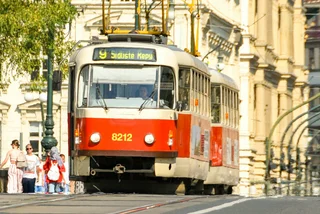
Huge disruptions to public transport and car traffic can be expected as the Prague Public Transport Company (DPP) began repairing tram tracks between Spálená, Národní and Vítězná streets in Újezd. There are no replacement buses, and DPP has advised passengers to use the metro instead. The situation should get back to normal from August 11.
In related news, a collision between a car and a motorcycle halted traffic on the D1 highway just outside of Prague this afternoon, specifically between Průhonice and Čestlice in the direction of Brno.
Chickening at home
Czechs show record interest in raising chickens
Czechs are showing growing interest in raising their own chickens at home, iRozhlas.cz reports, citing figures from the online portal Heureka that showed record sales in the first half of 2026 in home chicken farming necessities. Sales of chicken coops, poultry feed and other equipment have all seen a double-digit growth, a spokesman for Heureka said, noting that the upward trend has been going on for some years already.
Price of eggs. The skyrocketing price of eggs has certainly been a factor, but not the only one. "I think the prevailing factor is rather people's interest in having their own production. In my opinion, the financial aspect is no longer decisive today," commented Pavel Dobrovolný, the head of the Czech Poultry Association.
POLL RESULTS: We asked readers if they thought public criticism of the courts and judges undermines confidence in the rule of law. Nearly half of respondents argued that the judiciary should be open to criticism like any other institution, while a little more than a third agreed that attacks on judicial independent could threaten trust in democratic institutions.