



 Reading time: 6 minutes

 Summary for: 'Zombie' kids, frustrated parents: Will 2026 see Czechia ban phones in schools?
Seventy percent of Czech children have been blackmailed online. Over half have faced online aggression. And in classrooms across the country, teachers report students who are “distracted, tired, and unable to focus,” their attention fractured by devices they can’t put down.
Starting in 2026, the government has pledged to implement a nationwide school phone ban. An Expats.cz survey of nearly 100 parents and teachers suggests the question isn't whether the policy is needed, but whether it's already too late.
The alarming figures come from the Safer Internet Centre, released as Czechia grapples with what to do about smartphones in schools.
While countries like Australia have already implemented world-first social media bans for under-16s, and the European Parliament has called for sweeping restrictions requiring parental consent for children aged 13 to 16 to access social networks, Czechia has until now left phone policy decisions to individual schools.
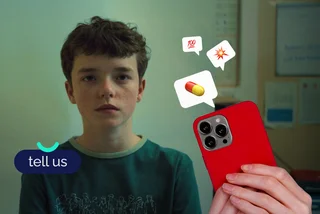
Only around 15 percent of schools have implemented complete bans, far below the rates in countries like France, which enacted a nationwide prohibition in 2018, or the Netherlands, which followed suit in 2024.
Czech schools' fragmented approach has left parents and teachers navigating a patchwork of inconsistent rules while watching children struggle with increased bullying, mental health issues, and exposure to graphic content.
Parents are overwhelmingly in favor of a ban
Our survey captured voices from across the educational spectrum. Responses were split almost evenly between public and private international schools, with families representing every age group, from 6-year-olds just starting their education to teenagers in their final years of school.
What’s striking wasn’t the demographic spread but the overwhelming consensus despite it. Nearly 80 percent of respondents want stricter phone bans enforced during school hours, with 72 percent advocating for a coordinated policy similar to those implemented in other parts of Europe.
Currently, most schools require students to keep their phones in lockers or bags, but enforcement varies widely. Policies are split between allowing phones only with teacher permission and banning them entirely, while 18 percent of respondents said schools permit phone use during breaks.
Clive Bergmann, parent“From our own painful experience, having a phone in the school bag is one step away from sneaking off to the toilets for some quick texting and social media posting.”
Over 80 percent of respondents believe phones reduce face-to-face interaction, and 53 percent report that phones fuel social media drama and texting conflicts that spill into the classroom.
Interestingly, when asked who should decide on the phone policy, 40 percent said schools should determine rules independently; yet nearly three-quarters want those schools to adopt restrictions. The message is clear: parents trust schools to lead, but they’re begging them to be stricter.
'Unable to think for themselves'
The most pervasive finding from our survey is the dramatic shift in student focus and the clear degradation of the learning environment. For many, the problem is no longer academic performance alone, but a fundamental change in how young people process information and interact with the world around them.
Steve Watt, a teacher, observed a troubling shift: "Students in upper grades have lost the ability to think for themselves. Their first reaction is to consult ChatGPT."
Steve Watt, parent“During breaks, children stare at their phones rather than talk with each other.”
This digital distraction spills directly into the school day. Lee (last name withheld), a high school teacher, detailed the exhausting reality: “At the moment, it is having a somewhat negative impact due to students being distracted, tired, and simply unable to focus on classwork in some cases.”
Czech schools criticized for lax enforcement
The survey revealed criticism of how Czech schools handle the issue. “Back home, there’s zero tolerance for phones at school. Czech policies feel too relaxed in comparison,” said one British parent who requested anonymity.
Even where policies exist on paper, the reality is different. “Looser rules have allowed kids to get distracted during class with some even using the phones to create a hotspot for their laptops to watch movies,” Dimana, a private school parent, said.
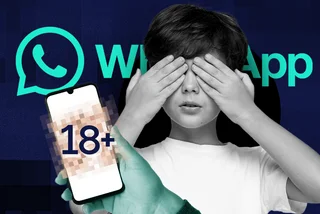
Another parent highlighted what they called Czechia’s prevalent WhatsApp paradox: “Don’t promote WhatsApp groups among children. We would never allow WhatsApp, but all school chats are there.” The platform has become ubiquitous in Czech school communication, creating pressure on families trying to limit their children’s app access.
The problem with WhatsApp reveals another issue: well-intentioned tools designed for connection and learning become vectors for the very distraction and drama parents are trying to avoid.
Lee, the Prague high school teacher, argues that the problem isn’t the technology itself, but rather the fact that teachers aren’t equipped to deal with changes, such as the increasing number of digital, connected devices in the hands of students.
Anonymous expat parent“I think technology in our kids’ lives is inevitable, so as parents and educators, we need to teach them how to use the devices responsibly.”
"From VR headsets to gaming laptops, 360 cameras, etc. a smartphone is one of the greatest resources in the hand of every student. But many of the teachers and schools are simply unable to harness them to make learning more interactive, and as a result, the rampant misuse of smartphones in school is detrimental."
When bans backfire
Not everyone supports restrictions. Prague-based parent Michael Fletcher argues that blanket mobile device bans are "outdated, legally questionable, and endanger children by preventing parents from ensuring their safety, especially outside school hours."
When his daughter’s private school banned her GPS smartwatch, Fletcher launched a legal challenge that revealed significant ambiguities in Czech education law.
He contends that the school overreached, interpreting guidance about regulating classroom disruption as “permission to ban all mobile devices at their discretion, confiscate them, and forbid students from contacting their parents directly."
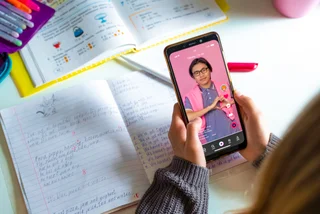
After more than a year of appeals, he secured a partial victory from the Czech School Inspectorate, which clarified that schools cannot prohibit students from bringing mobile devices to school, cannot confiscate devices without cause, and may only regulate device use, not possession.
Yet Fletcher’s school continues to resist. “We are still in an ongoing dispute,” he said. The Ministry of Education told him they would “take the matter under consideration."
Similar tensions erupted last year when an international school in Prague implemented a phone-free policy without consulting parents. “The uproar!” one parent recalled. Each student now receives a Yondr bag that locks their phone until the day’s end.
While 40 percent of surveyed parents believe schools should decide policy independently, these incidents show that implementation without clear legal authority, or parent communication, can backfire.
What happens next?
In a November 2025 interview, incoming Minister of Education Robert Plaga announced plans to ban mobile phones in schools, citing record numbers of children addicted to digital technologies. His proposal is sweeping: complete bans in early elementary grades and restrictions during breaks for older students.
But Fletcher’s ongoing legal challenge over his daughter's GPS smartwatch suggests that current Czech law may not support blanket bans. His victory at the Czech School Inspectorate, establishing that schools can only regulate device use, not ban possession, directly contradicts Plaga’s proposal for “complete bans” in early grades.
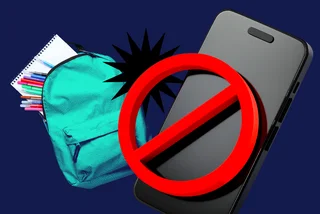
In fact, a June 2023 Ombudsman’s opinion went further, stating that schools cannot prohibit device use during breaks or lunch, and cannot forbid students from contacting parents directly.
Plaga seems to have already walked back his pledge: by the end of 2025, he stated only that the ministry plans to “prepare methodological recommendations for principals.” Such guidance would leave enforcement decisions to individual schools, exactly the fragmented approach parents say isn't working.
Damage done
For now, parents face an impossible choice. “As soon as the first kid gets a phone in the early grades, it snowballs,” one parent who requested anonymity explained.
“The key is to delay as long as possible, but soon it becomes an issue when they are the last without a phone.” A coordinated policy could break that cycle. But experts warn the window is closing.
Research from the Safer Internet Centre involving over 52,000 Czech students aged 13 to 17 shows that aggression is escalating: over 60 percent of girls and more than half of boys report verbal abuse online. About a third have had embarrassing photos circulated. Most alarming, over seven percent said someone misused artificial intelligence to create nude photos of them.
Whether Czech law will permit Plaga's proposed ban, or whether children will be left to face online blackmail, AI-generated abuse, and daily harassment while politicians debate legal technicalities, remains one of the most urgent questions of 2026.