




 Reading time: 2 minutes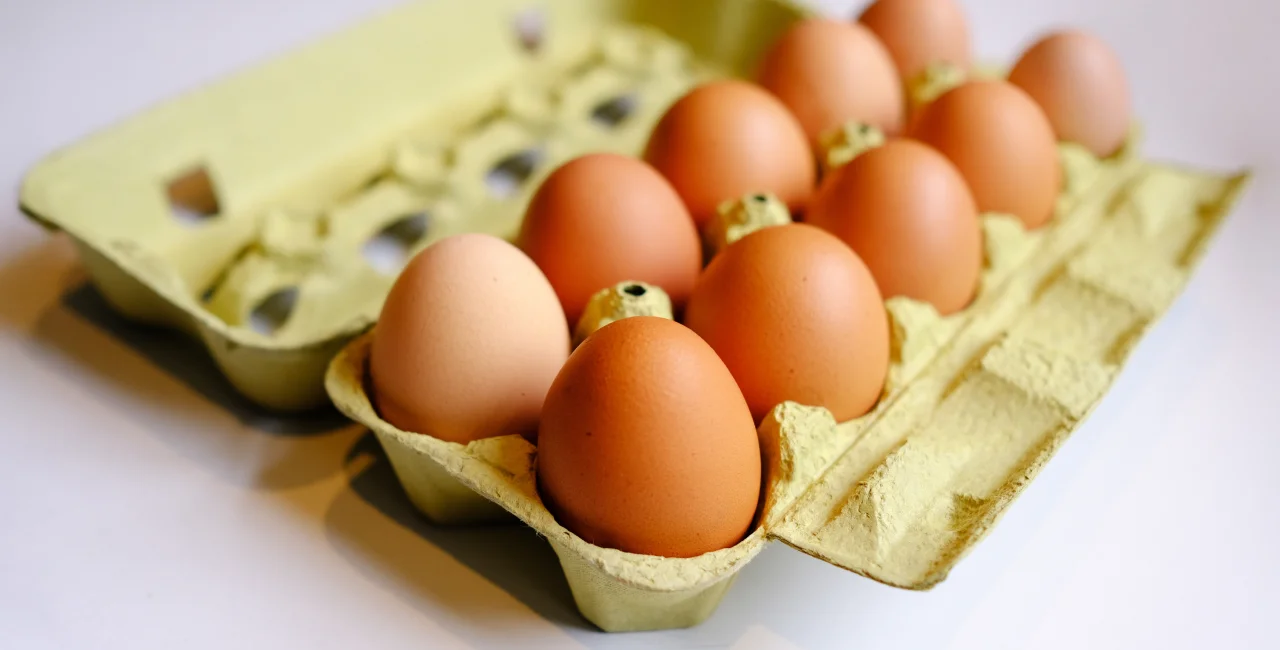

 Summary for: How bird flu and a new EU law may make your Czech Christmas pricier
Egg prices in Czechia are climbing fast, meaning your Christmas meal, dessert, or everyday meals are about to get pricier.
Prices are climbing due to a combination of domestic factors, including the EU-mandated 2027 ban on caged hens, and international pressures such as bird flu outbreaks that have killed millions of laying hens across Europe and thousands within Czechia.
An uptick in prices amid heavy demand
According to recently published figures from the Czech Statistical Office, a pack of 10 eggs now costs an average of CZK 73.43, up almost 10 percent from last month and 13.3 percent higher than last November.
Gabriela Dlouhá, chairwoman of the Czech-Moravian Poultry Union, offered Czech Television a bleak forecast. “With Christmas approaching, it is possible that the price of eggs will continue to rise.” The rise hits households hard, particularly as the holiday season drives up demand.
Caged hen ban and farm transitions squeeze supply
Czech poultry farmers are racing against a 2027 EU-mandated ban on caged laying hens. About 42 percent of the country’s six million laying hens are currently in enriched cages.
Many breeders may not finish transitioning to cage-free systems in time, risking closures and further declines in production. Dlouhá warns: “I don’t think there will be enough of these alternative farms at a positive price for Czech customers.”
Some farms have already invested heavily in modern aviary systems. Jan Pozdílek, director of Vejce Kosičky, told Czech Television: “The reconstruction of one hall cost approximately CZK 60 million. Litter eggs are also more expensive because of this,” Pozdílek adds.

Bird flu spreads, worsening price pressures
Bird flu is hitting Czech and European poultry stocks, and hard. Germany recently culled 1.5 million laying hens, while the Czech Republic confirmed six outbreaks last week, mostly in large-scale duck farms.
Although Dlouhá noted that “the extent of the flu in Czechia…is not yet such that it will affect the price of eggs,” imports already account for a fifth of domestic consumption, meaning that Czechia is feeling the effects of the Europe-wide squeeze on eggs.

State steps in, but consumers may still feel the pinch
The Czech government is offering support to farmers struggling with the cage ban and bird flu outbreaks, including subsidies to rebuild farms and partial compensation for losses.
Outgoing Agriculture Minister Marek Výborný told state media that the goal is to prevent a large-scale drop in domestic egg production, and to ensure residents can continue accessing locally produced eggs.

Despite these measures, experts warn that prices are likely to remain high at least through the holiday season, as supply adjusts and imported eggs face competition from tighter European markets.