Due to Prague’s special status, the invisible wheels turning and strings pulling the city many of us call home can seem obscure and complex. Yet, understanding how things work helps the day-to-day make more sense.
In this week’s explainer, we look at how the city of Prague works, who takes care of what, and why everyone has a stake in who’s in charge.
Prague: Municipality, city, or region?
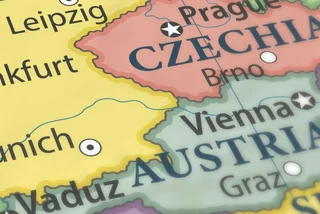
First things first, Prague – like many other capitals in Europe – has a special and rather complex status in the Czech territorial order.
It’s in the unique position of being all at the same time a municipality, a city and a region – and, ultimately, neither of those things.
To be even more precise, Prague is a so-called statutory city, a term referring to larger cities whose territory can be divided into smaller districts.
TEST YOURSELF! Brush up on your knowledge of who’s in charge of what in Prague with a dedicated English-language quiz about how municipal government works by Volby pro Všechny.
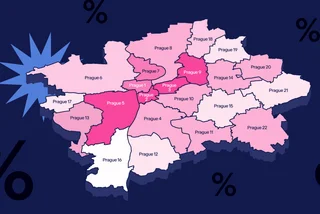
There are about two dozen of them in Czechia, with Prague being the larger one with 22 administrative districts (Prague 1 all the way to Prague 22), themselves subdivided into no less than 57 self-governing municipal districts.
The Czech Republic has over 6,000 municipalities, 600 cities and 14 regions. Due to Prague’s special status, however, regional elections are only held in all 13 other regions. The “region of Prague” doesn’t have a governor or a regional council, and elections there are held as municipal elections, not regional ones.
Who runs Prague?
So who actually runs the happy institutional mess that is Prague? Let’s break it down.
- Prague City Hall: the city’s administrative and bureaucratic structure, led by a director appointed by the mayor of Prague and employing about 2,000 people.
- Prague City Assembly: the legislative body of the city, with currently 65 members directly elected by citizens in municipal elections.
- Prague City Council: the executive body, it has 11 members elected by the Assembly and chaired by the mayor himself.
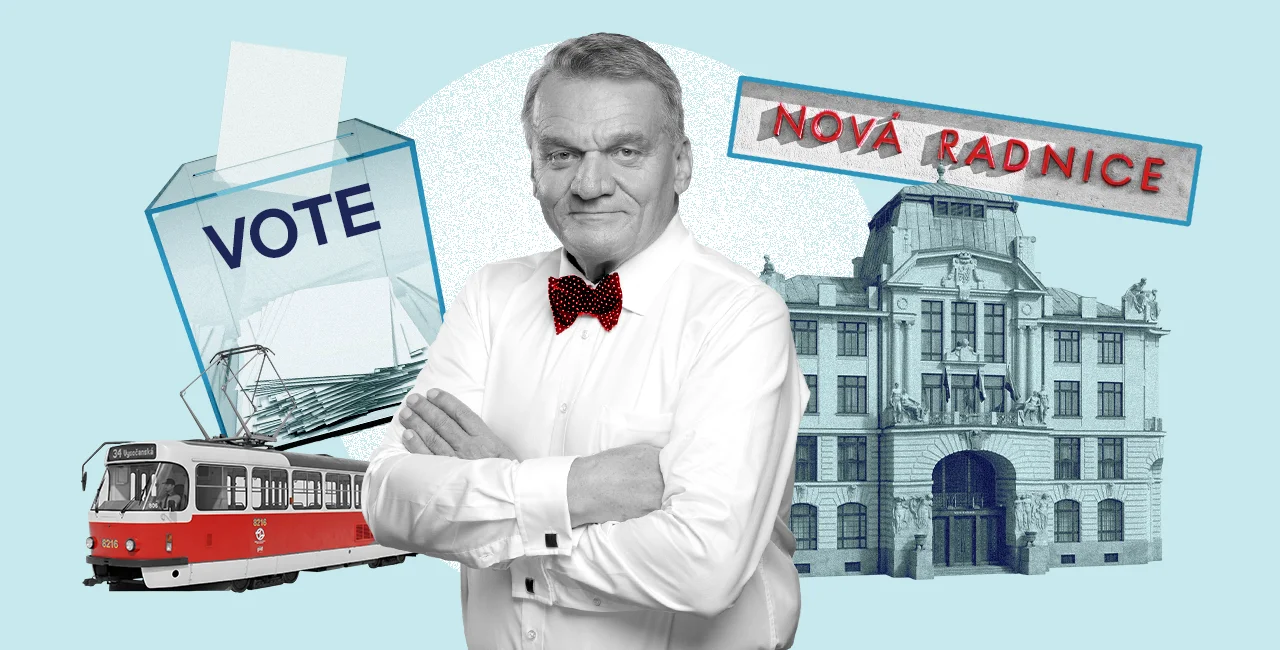
- Prague Mayor: and the big boss, elected by the Assembly based on municipal election results and post-election compromises. The position is currently occupied by Bohuslav Svoboda, an 82-year-old member of the right-wing ODS party, and OB-GYN physician by training.
In 2026, Prague handles a budget of about CZK 120 billion, a huge envelope that sets the capital apart. For the sake of comparison, this is not far off from the entire budget of the Ministry of Defense (CZK 154 billion), and four times higher than the combined national budgets for health and culture.
Who takes care of what?
From transport to education or healthcare, anything happening in Prague is handled by one of three actors (and the organizations that fall under each of their competence): the city itself, local Prague districts or the Czech national government.
Knowing who does what can help residents navigate daily life, overcome practical obstacles and clear bureaucratic hurdles.
For the national government, that’s pretty intuitive: state actors are in charge of the country’s most fundamental and long-term policies, some of which can have an impact at the local level, including immigration laws, fiscal policy or the health insurance system for example.
Individual Prague districts, meanwhile, also have a set list of competences. They manage and operate preschools and primary schools, decide on parking zones, can regulate the opening hours of terraces and outdoor seating areas, and take care of playgrounds and local green spaces (except for the city’s largest parks, like Stromovka or Letná).
Finally, bigger responsibilities fall on the Prague City Hall, in charge of larger-scale projects like managing 2,500 km of roads throughout the city and coordinating roadworks, setting up housing as well as urban development rules, approving public transport fares, taking care of street and public lights throughout the city, and handling waste management.
Out of Prague’s CZK 120 billion budget, about CZK 25 billion are allocated to new investments this year, with the largest ones in 2026 going to the construction of metro line D, renovation works at Výstaviště, the reconstruction of the Libeň bridge and the construction of the Dvorecký bridge.
Why it matters
It’s easy to treat local policies and mayoral elections as a lesser brand of politics while assuming real power lies with the president, government or parliament.
Yet, and that can be particularly true for foreigners, the mayor and city councils shape daily life far more directly than national politics. These are the people, organizations and funds that control and operate the systems people use every day.
And municipal elections in Prague and all around the country are just a few months away, taking place on October 9-10.
Although many people tend to forget it, any EU citizen can vote and even stand as a candidate in Czechia’s municipal elections and Prague’s mayoral race this October.
The process to register is free and relatively straightforward, and we’ll soon be publishing a step-by-step guide on how to jump through the hoops.
Voting day is just one of many ways for people to get involved in their local community and civic life. So even for non-EU citizens, there are many other options, activities and initiatives to make their voices heard and shape public debate in an election outcome bound to have a direct impact on how they live.