 Reading time: 2 minutes

 Summary for: Czechia needs workers. So why are jobseekers struggling to get hired?
Employers say they cannot find workers. Jobseekers say they struggle to get an interview. A question from the audience at a Prague business conference captured a contradiction facing the Czech labor market, and prompted a discussion about why recruiting more people alone will not resolve it.
During a labor market panel at the ABSL Conference 2026, participants pointed to mismatched skills, inflexible career pathways and administrative barriers that prevent companies from fully using the talent already available.
The discussion also raised a longer-term concern: as artificial intelligence takes over some junior tasks, businesses could weaken the entry-level career paths through which their future specialists develop.
A shortage of workers, or a shortage of matches?
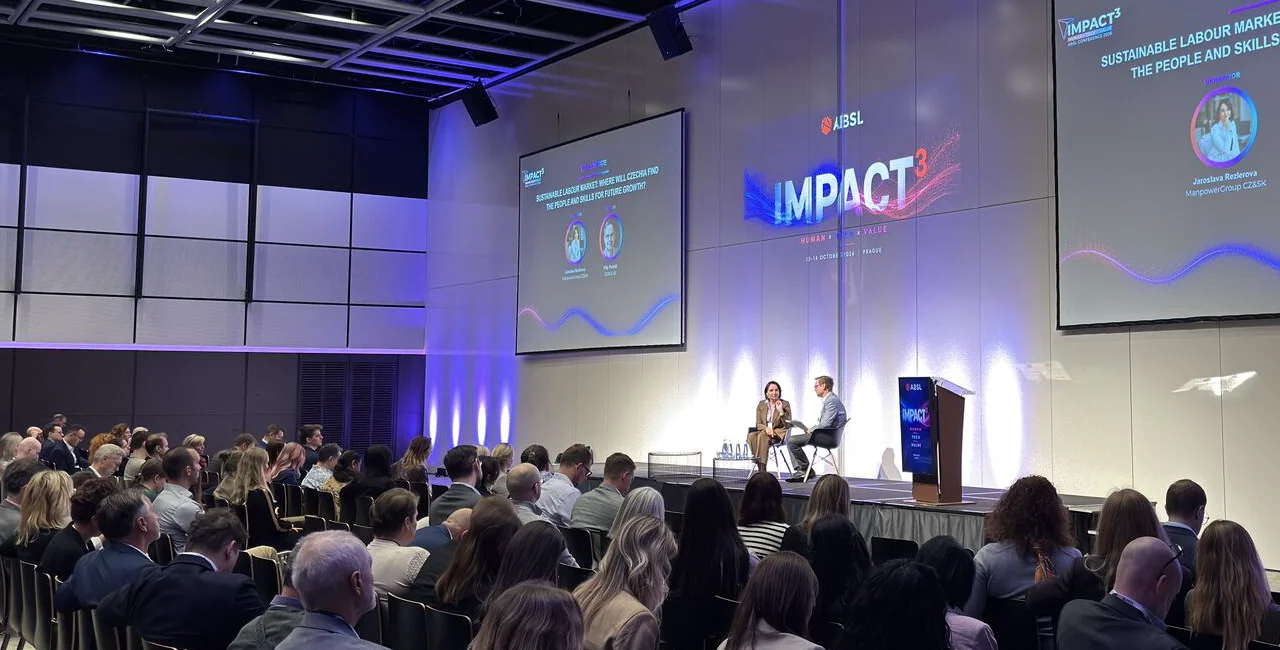
The conference took place Oct. 13–14 at Prague’s Clarion Congress Hotel. ManpowerGroup Czech Republic CEO Jaroslava Rezlerová moderated the labor market panel, which included economist Filip Pertold.
An audience member asked why candidates encounter so few suitable opportunities when employers repeatedly describe a labor shortage.

The discussion pointed to a gap between the qualifications applicants offer and the skills companies need. Participants argued for closer cooperation between schools and employers, while cautioning against education designed too narrowly around a graduate’s first job.
Workers need broader skills they can use as they change roles and employers throughout their careers, the panel heard.

Other potential workers face obstacles beyond qualifications. The discussion identified insufficient childcare services and difficulties returning after long parental absences as barriers to greater participation.
Foreign recruitment presented another example. Participants described lengthy administrative procedures for hiring outside the EU, followed by further hurdles that can prevent qualified newcomers from working in their professions.
The issue, they argued, extends beyond attracting people to Czechia: employers and institutions also need to make better use of the knowledge and experience of those already here.

One proposed approach was to allow some recruits to start work before completing the administration. This was a suggestion raised during the discussion, rather than an announced policy change.
AI could remove the first rung of the career ladder
Artificial intelligence adds a new complication to the mismatch. The panel discussed how automation is changing entry-level tasks in fields such as finance and human resources. If companies reduce junior opportunities, they could find themselves without enough experienced staff several years later.

The concern was about how people acquire expertise when some of the work traditionally assigned to beginners is automated.
Participants also considered AI’s potential to help workers with intermediate skills undertake more advanced tasks. Whether that would translate into higher pay remained an open question.

Training employees to use the technology effectively was presented as essential to ensuring they benefit from productivity improvements, rather than being left in roles below their qualifications.
The discussion connected these questions with wider calls for retraining, more flexible employment and changes to the incentives attached to different forms of work.
For employers, the challenge is to fill today’s vacancies while preserving routes into tomorrow’s skilled jobs. For applicants, the panel’s discussion helps explain why a labor shortage can coexist with a difficult job search: openings, qualifications and opportunities to develop do not necessarily line up.