 Reading time: 5 minutes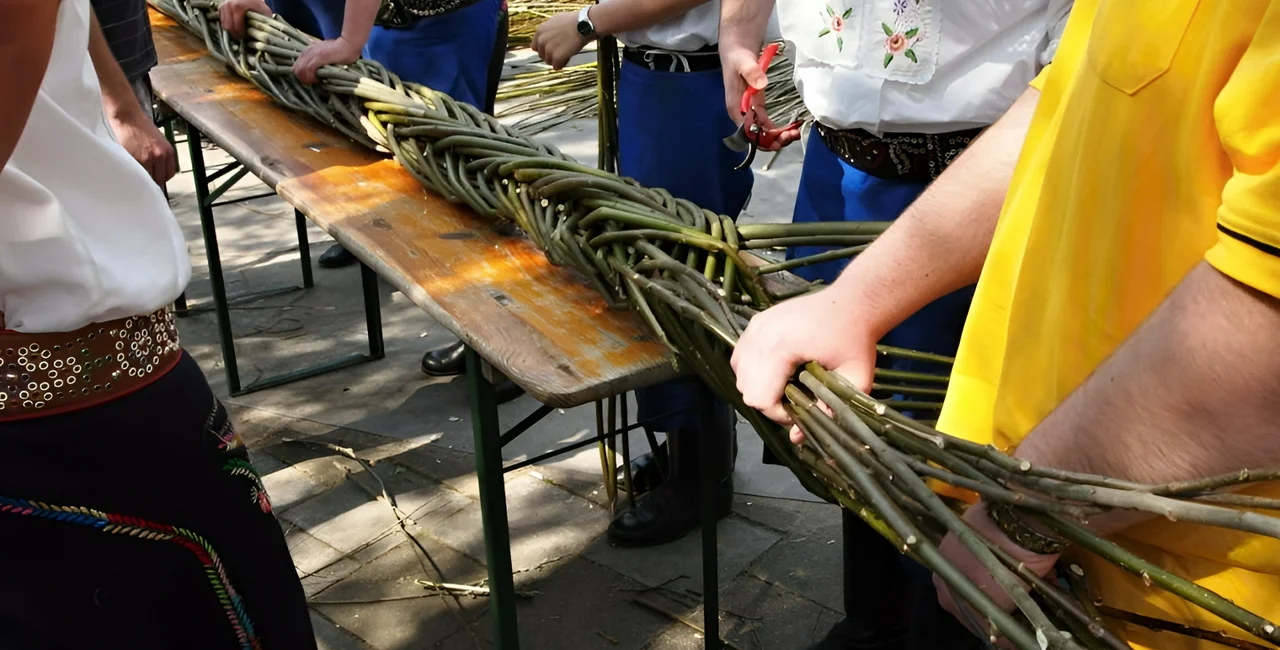

 Summary for: Czech Easter by the numbers: Whips and weather break records this year
Easter is, by most measures, the moment Czechia comes back to life. Castles reopen. Markets fill the squares. A quarter of a million people descend on Prague. Sunshine returns if only temporarily; on Sunday, temperatures at nine sites across the country broke records, nudging close to 25 degrees before a sharp cooldown set in for the week.
And in villages across the country, young men set out with willow branches (also setting records this year for length) to participate in the country's most infamous Easter Monday tradition.
This year, the numbers behind the holiday tell a story about a country that takes Easter seriously, if not in the sacred sense.
Easter in Europe's most secular country
Only about 5 percent of Czechs attend Catholic services regularly, and a January 2026 STEM/MARK survey found that 95 percent of people who visit churches do so primarily for sightseeing rather than devotion. In the 2021 census, just 11.7 percent of the population identified as Christian down from over 90 percent in the first half of the twentieth century.
The most devout corner of the country is the Zlín region in eastern Moravia, the only part of Czechia where believers still outnumber non-believers, at 54.6 percent. It is no coincidence that it is also where the folk traditions are best preserved.
In a country where velikonoce, from velká noc, the great night, is mostly unattended, the Easter vigil remains, deeply and observantly, the most important day of the year as Velikden, the great day, for the Ukrainian community.
Among the a community of 613,000 Ukrainians now living in Czechia, one in every 18 people in the country, celebrate on April 12, a week after the Czech date, because the two traditions use different calendar system, most identify as Orthodox or Greek Catholic

The crowds arrive
Around 250,000 visitors are expected in Prague over Easter week, roughly matching last year, according to Prague City Tourism. Hotel occupancy around the holiday regularly reaches 80 percent, and visitor numbers at Old Town Hall run about 45 percent higher than a typical week.
Across sites managed by Prague City Tourism, Easter week brings roughly one and a half times the normal weekly volume. The strongest growth in inbound interest this year is from South Korea and China; within Europe, Italy and Spain both countries with strong Catholic traditions are leading.
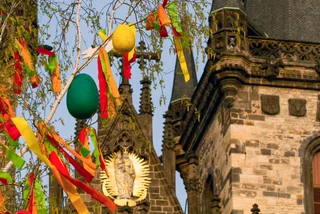
The Easter markets at Old Town Square and Wenceslas Square run through April 12, which this year coincides with Orthodox Easter, giving the city something of an extended season.
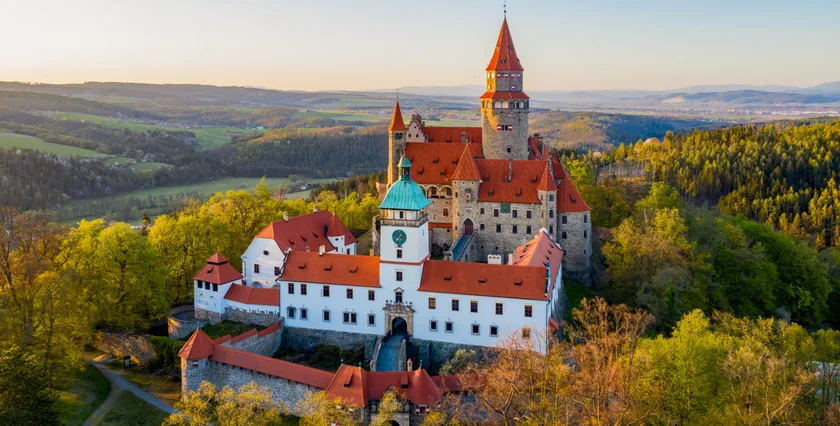
The influx also marks the start of the heritage season nationwide. The National Heritage Institute recorded 4.3 million visitors across its roughly 100 properties in 2025, a 6 percent increase year-on-year, and Easter Monday is the traditional moment castles and chateaux launch their first guided tours after the winter break.

The scale of movement also puts pressure on the roads. Last Easter's national traffic enforcement operation checked more than 23,000 vehicles, found nearly 5,000 violations, and issued fines totalling CZK 6,732,500 with speeding accounting for the largest share. This year, more than 1,000 police officers are deployed daily through Easter Monday.
What Czechs actually do
Six in ten Czechs dye eggs and bake a mazanec or lamb for Easter, according to an Ipsos survey for Provident Financial. Just over half decorate their homes, and around half spend the holiday visiting family or friends.
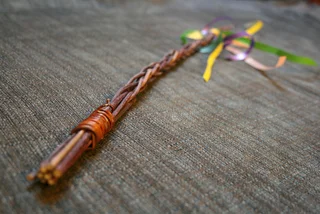
Fewer are keeping up with the pomlázka itself: 30 percent of Czechs now weave one, down from 40 percent five years ago.
A poll of 232 Expats.cz readers suggests the international community's relationship with Czech Easter traditions is still a work in progress: just 21 percent said they participate fully, 28 percent do some but not all, and a majority, 51 percent, opt out entirely.
Czechia celebrates Easter this weekend with a four-day holiday from Good Friday through Easter Monday. Do you take part in Czech Easter traditions?

For international residents, the entry point into Easter traditions is often through food and the options can be bewildering. In an Expats.cz poll of 247 readers, mazanec came out as the clear favorite at 37 percent.
But the second-largest group 32 percent said they either haven't tried any of the traditional Easter baked goods or simply don't know them yet. Beránek came in at 16 percent, nádivka at 9 percent, jidáše (Judas knot) at just 2 percent.
The cost of celebrating
Those baked goods are one thing, but the chocolate aisle is where Easter spending has become genuinely eye-catching. Prices for chocolate bunnies and eggs are up by as much as 29 percent compared to last year, according to an analysis by iDnes.cz, even as global cocoa prices returned in March to roughly their 2023 level.
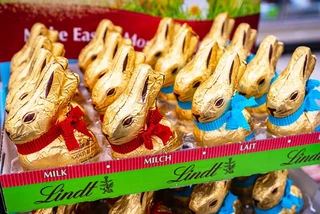
Since 2020, the increases are steeper still: a 90 g Milka bunny has gone from CZK 29.90 to CZK 54.90, an increase of 83.6 percent. A kilogram of Lindt Easter bunnies now costs around CZK 1,600, comparable to premium sirloin steak.
Czech shoppers are also paying 10–25 percent more than consumers in Germany for the same products. And shrinkflation is adding a further hidden cost: replacing a 100 g chocolate figure with a 90 g one at the same price works out to an 11 percent rise in the effective unit price, without the sticker ever changing.

The tradition people can't stop arguing about
No part of Czech Easter generates more debate than the pomlázka. A survey by NMS Market Research found that 1 in 4 women in Czechia has experienced bruising or marks from the whipping tradition, 44 percent have felt pain, and 19 percent have felt helpless or humiliated. At the same time, more than half of Czech men say they dislike the practice, and more than a fifth actively avoid it.
A recent Seznam Zprávy poll on the custom drew 187 reader comments, spanning the full range from fond defense to sharp criticism. A recurring thread was the role of alcohol. As one reader put it: "The problem is not in pomlázka, but in those who use it and in the fact that it has become a tradition to reward young men, and unfortunately even minors, with a shot of hard alcohol."
One more number
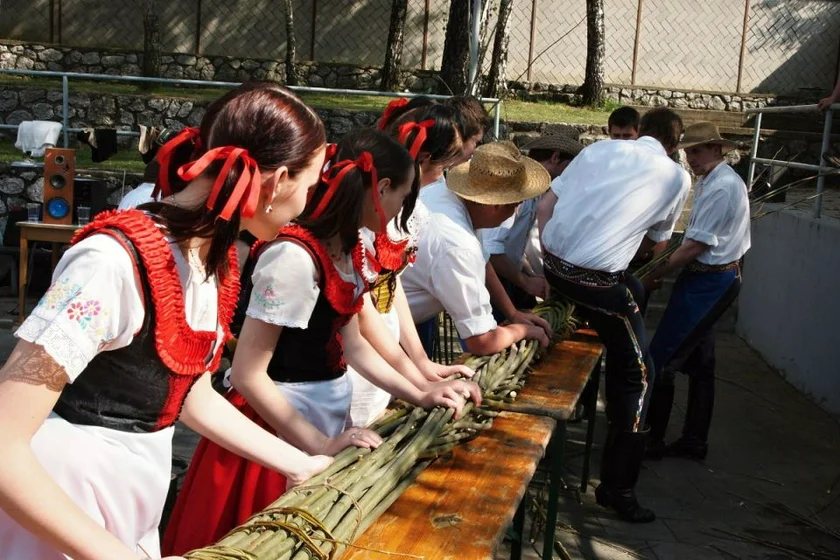
In Němčičky in the Břeclav region, the pomlázka, known locally as a žíla, or vein, is not a symbolic sprig. This year, the village's younger group wove one measuring 21 metres and 21 centimetres, beating the older group's for the second year running. The village record, set in 2016, stands at 66.66 metres, woven by 14 people over six hours.
According to local knitter Jiří Stávek, the first five metres came together in about two hours. Then the wine arrived, and things went, as he put it, downhill from there. The older group's effort, a mere 14 metres, tells you everything you need to know about how Czech Easter really works.