



 Reading time: 3 minutes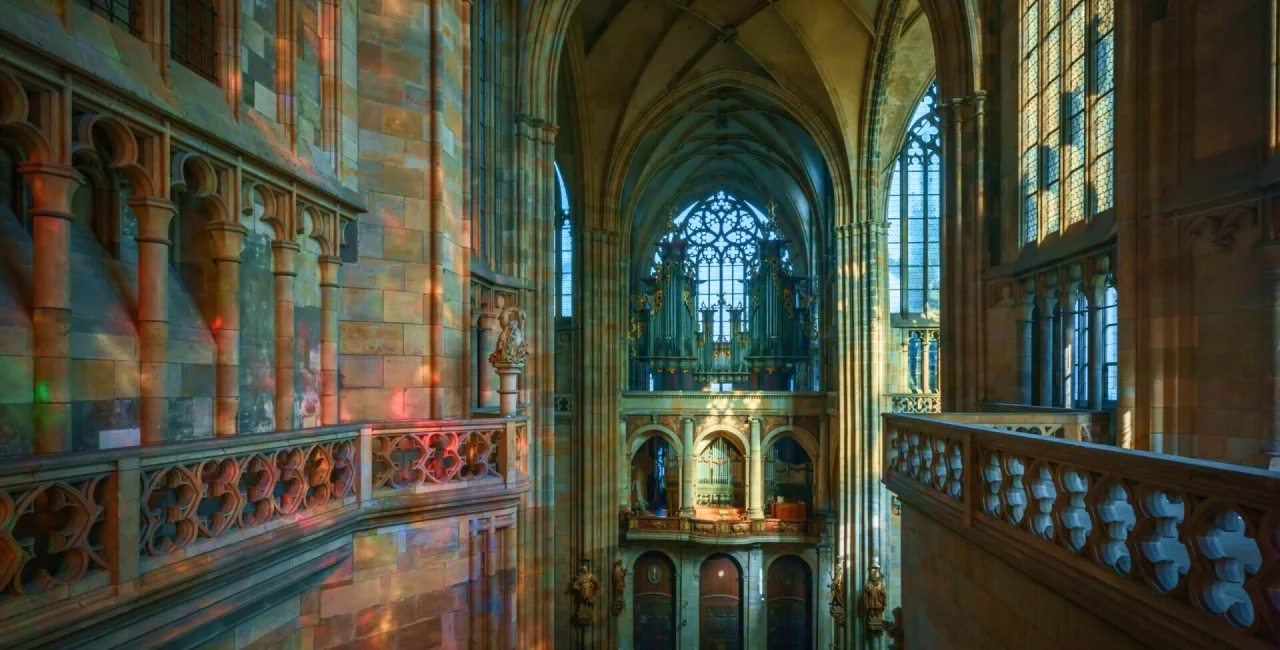

 Summary for: In one of Europe’s most secular countries, Prague puts faith in ‘spiritual tourism’
Today is Ash Wednesday, the day the Christian calendar marks the beginning of Lent with a smudge of ash to the forehead. But at Prague’s St. Vitus Cathedral, this evening, visitors may spot more tourists than worshippers.
According to a January STEM/MARK survey, most Czechs (95 percent) attend church primarily for sightseeing rather than religious devotion.

"Even among regular church-goers, worship tends to be a weaker motivation for attendance, just under half," researchers note.
Czechia has long been one of Europe’s most secular countries, a fact that contrasts sharply with the wealth of ecclesiastical treasures scattered across its landscape. And yet pilgrimage tourism, travel motivated by religion, has historically drawn visitors from nations with strong religious traditions, such as Poland, Israel, Spain, and Germany, to the Czech capital.

The city of Prague is taking note. A new campaign aimed at attracting spiritual “slow travelers,” both international and domestic visitors seeking history, culture, and sacred spaces, will also draw attention to the spiritual foundations of one of the world's most atheistic countries.
“Prague's spiritual heritage is diverse, ranging from Christian and Jewish monuments to mystical places and Prague legends,” says Jana Adamcová, Vice-Chairwoman of Prague City Tourism.
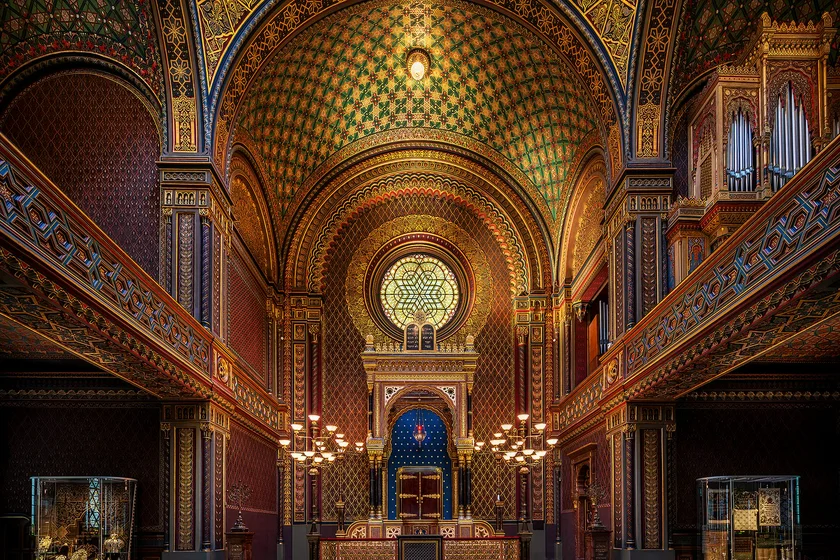
The initiative, Praha duchovní (“Spiritual Prague”), brings together the city’s Christian heritage, Jewish landmarks, mystical sites, and pilgrimage routes, offering historical context, sightseeing tips, and walking tours linked to some of the city's most revered relics, including the famed Infant Jesus of Prague.

Prague hopes that its new campaign will contribute to the kind of intentional travel that "emphasizes authentic experience and respect for local values," citing studies that show such travelers spending more nights in pilgrimage destinations.
Fervently Catholic to systemically secular
Prague’s skyline, defined by church spires, offers an immediate glimpse of the city’s spiritual past: the twin towers of Týn Church over Old Town Square, the Baroque dome of St. Nicholas in Malá Strana, and the Gothic grandeur of St. Vitus anchoring Prague Castle. According to the Spiritual Prague site, this architecture of faith is intentional.
Behind much of it stood Emperor Charles IV, whose vision shaped the city’s churches, monasteries, bridge, and university (the latter two bearing his name) to merge "architecture, faith, education, and power into a single organism."
In the Middle Ages, Prague was built as a heavenly Jerusalem, a city of peace and harmony that should stand firm even in the face of chaos."
These buildings were constructed over centuries by a population that was once fervently Catholic, later forcibly re-Catholicized after the Battle of White Mountain in 1620, and then systematically secularized under four decades of Communist rule.
The city's spiritual-tourism strategy, Adamcová says, aims to attract visitors to lesser-known sites associated with this complex history, such as monastery gardens, neighborhood parish churches, and pilgrim routes through Prague.

The platform also highlights foreign-language masses: At the Church of Our Lady Victorious, home of the Infant Jesus of Prague, Mass is celebrated in English, Spanish, and Italian. Elsewhere, services are held in Portuguese and Tagalog at St. Thomas, in French and Polish at St. Giles, in German at St. John of Nepomuk on the Rock, and in Ukrainian at the Cathedral of St. Clement.
These congregations point to a religious landscape sustained just as much by migrant communities as by local worshippers.
People seek quiet and reflection
Whether such a tourism strategy is truly sustainable in a country where only 13 percent of people attended midnight Mass last Christmas, and roughly a quarter of them were non-believers, is an open question.
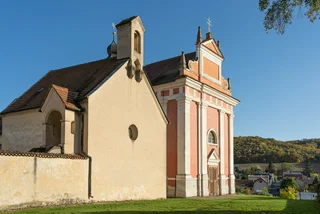
STEM data show that even though church holidays are not widely observed, Czechs are not indifferent; around 66 percent attend church for the sense of peace, silence, and atmosphere alone.
"Pilgrimage tourism is not exclusively a matter of faith," says Adamcová. "More and more people are seeking a path to personal growth, reflection, and deeper meaning through pilgrimage tourism." Prague, she says, offers these in abundance.