



 Reading time: 5 minutes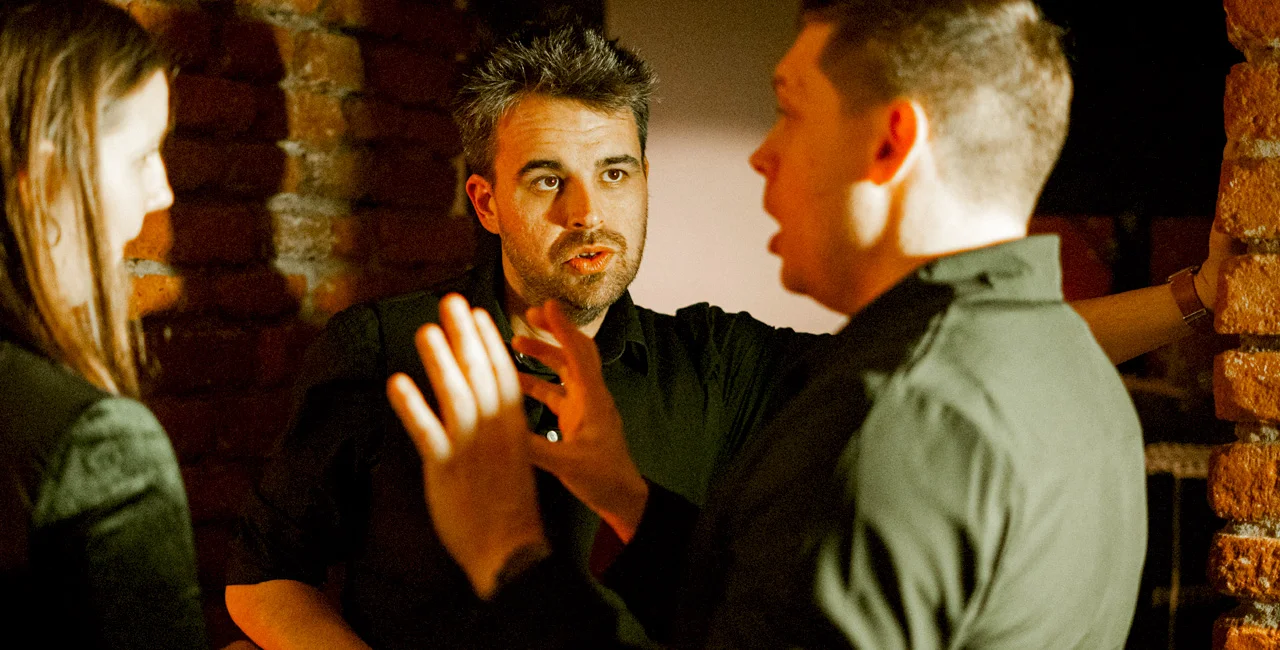

 Summary for: How improv is helping Prague adults rediscover play, confidence, and connection
A group of adults stands in a loose circle, waiting for the evening to begin.
There are no scripts, no props, no costumes. Just a room, a teacher, and a handful of people preparing to do something most adults spend years trying to avoid: step into the unknown in front of others.
At Improv Academy in Prague, the beginner class starts gently. Word association games. Group storytelling. Small exercises designed to loosen the mind and sharpen attention. The outside world slowly recedes. Phones disappear. The room becomes casual, focused, and quietly electric.
Soon, the students will be asked to create scenes from nothing. A location. A relationship. A suggestion. From there, anything can happen.
For many, that is the terrifying part. It is also the point.
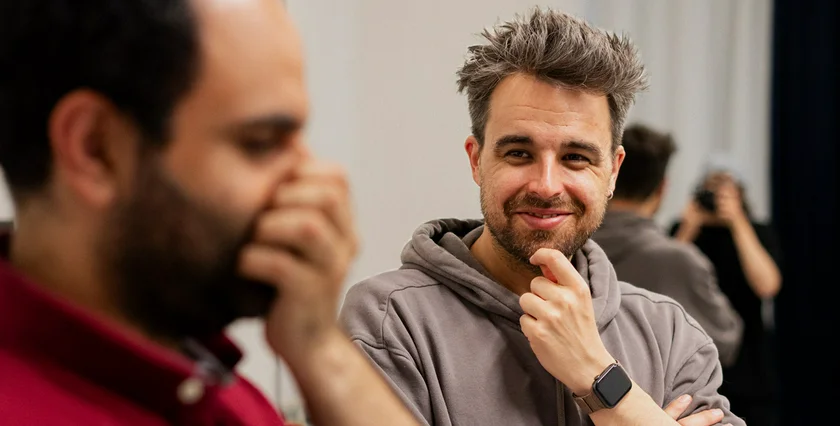
“People often think they’re coming to learn how to perform,” says Jeff Koch, founder of Improv Academy. “But what they’re really practising is listening, trusting, and being okay when they don’t know what comes next.”
Koch watches from the side of the room with the calm attention of someone who knows how fragile confidence can be. He is quick to guide, but never to shame. If students lose their way, he offers a suggestion. If they want feedback, he gives it privately. No one is made to feel foolish. No one is left unsupported.
His teaching style is warm, observant, and quietly disciplined. There are rules to the games, yes, and principles to remember: accept the premise, build on your partner’s idea, stay present, listen. But within that structure, something wonderfully unpredictable happens. Chaos is allowed to spark.
And in that chaos, people often discover something about themselves.
In one beginner exercise, I found myself standing beside another student, Patricie. The prompt was simple: we were surgeons. She pointed to the exposed brain of our imaginary patient and said, “Look at this — the patient appears to be missing key memories.”
My first instinct was to correct the science. Surely memory loss would not be visibly obvious in the neocortex. I could feel the words forming: “Well, actually…”
Then I remembered Jeff’s advice. A scene does not need to be medically accurate to work. It needs commitment. Emotion. Relationship. Belief.
So instead of correcting her, I accepted the offer.
“My God,” I said. “You’re absolutely right.”
And suddenly the scene had somewhere to go.
It was a small moment, but it stayed with me. Walking home later, I wondered how often I do that in life — interrupt connection in order to be right. How often does the impulse to explain, clarify, or correct get in the way of simply joining someone where they are?
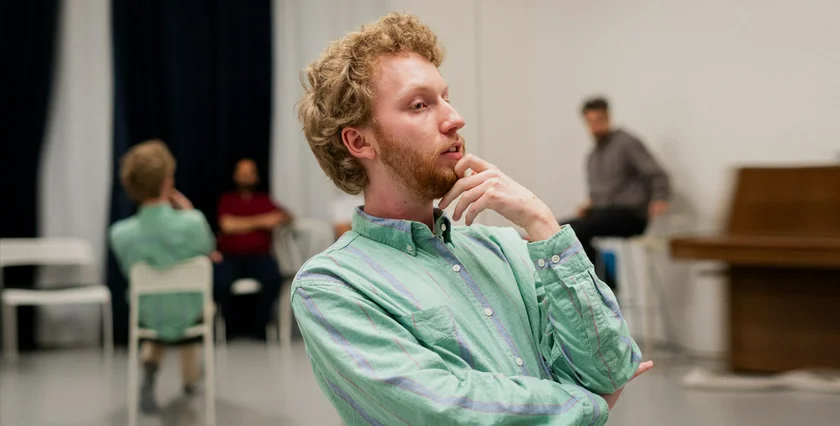
That is the strange power of improv. It looks like play from the outside. But inside the room, it can become a mirror.
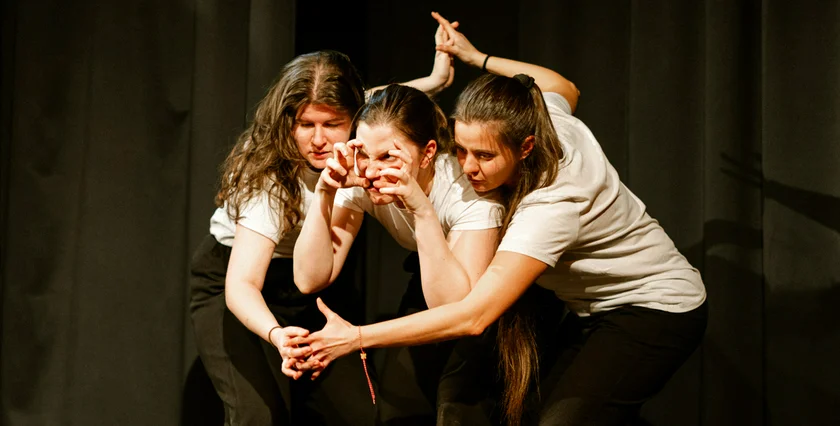
For Koch, this is part of why the work matters. He studied theatre and improv for years before opening Improv Academy three years ago, driven less by a business plan than by a desire to share something that had shaped his own life. Since then, the school has grown steadily. Students move from beginner to intermediate to advanced courses, each six-week programme ending with an optional live show in which performers create scenes from audience suggestions.
For many students, the first show is terrifying. For some, it becomes addictive.
There are now more than 140 active members in the Advanced Improv community. Many keep coming back through weekly drop-in sessions, additional classes, showcases, and specialist workshops. A musical improv class has also been introduced, adding spontaneous songs and live accompaniment to the already unpredictable world of improvised performance.
But the real story of Improv Academy is not only what happens on stage. It is what happens to people.
While researching this article, I spoke to students from different countries, professions, and stages of life. Their reasons for joining varied: confidence, spontaneity, social skills, curiosity, loneliness, creative expression. But many described the same underlying need — a desire to feel more open, more connected, and more alive around other people.
Lea, from Serbia, came to improv during a period of burnout and post-partum depression. After the birth of her son, she felt she had lost touch with the carefree part of herself. Her husband, who enjoyed improv himself, encouraged her to try a class and promised to take care of things at home while she went.
She did. The effect was immediate.
“I never told Jeff this,” she says, “but he saved my life.”
Others shared similar stories, though in different forms. Sam described feeling lost before improv gave her a new sense of belonging. Nick, a more experienced performer, had been looking for a social life that did not revolve around alcohol. He now runs workshops of his own and has helped organise regular improv showcases in Prague.
For expats especially, the appeal is easy to understand. Moving abroad can be thrilling, but it can also be isolating. Friendships take time. Language barriers complicate spontaneity. Many people find themselves rebuilding not only their social circle, but their confidence.
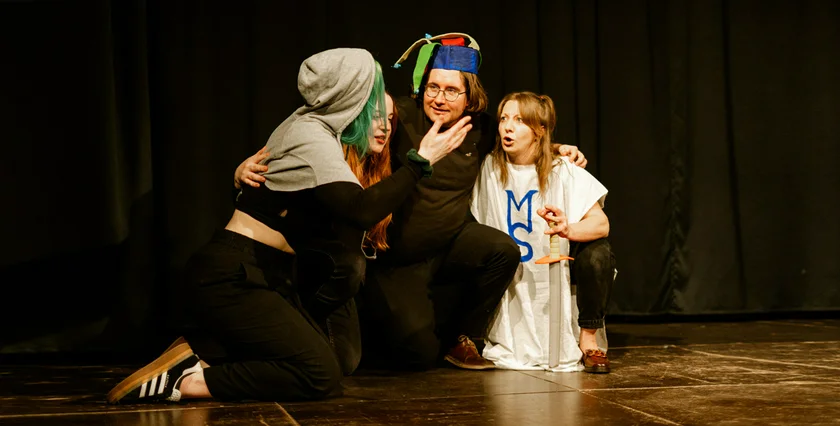
Improv offers a shortcut back to human connection. Not because it is easy, but because it requires people to pay attention to each other in real time. You cannot scroll, retreat, or overthink your way through a scene. You have to look at someone, listen, respond, and trust that something will happen.
One student, a hypnotherapist from Greece, said the pandemic had left him unsure how to interact with people offline. Another, a game developer from Belarus, was drawn to improv after watching actors at a cosplay panel remain effortlessly in character while answering audience questions. To her, it looked almost magical.
There is something magical about it. But it is also practical. Improv trains skills many adults quietly struggle with: listening without planning your reply, accepting uncertainty, taking up space, letting others shine, recovering from awkwardness, and turning mistakes into momentum.
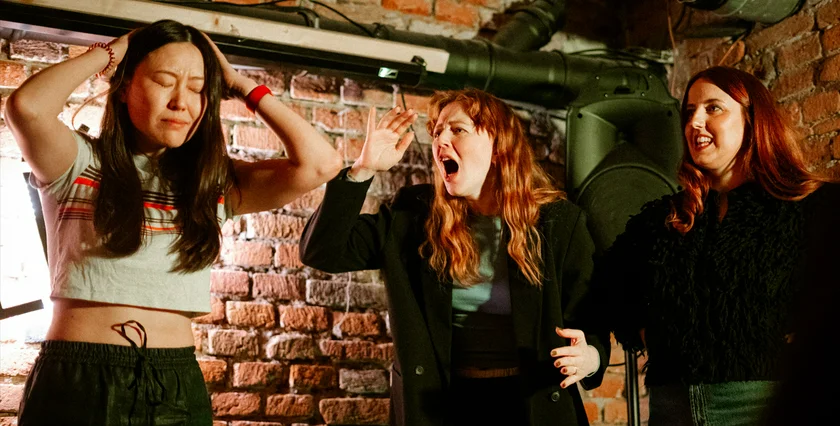
Koch has also brought these principles into the corporate world through team-building workshops. These half-day sessions use improv exercises to strengthen listening, cooperation, creativity, and problem-solving. The goal is not to turn office workers into performers, but to help teams notice how they communicate — and how they might do it better.
Still, the heart of the academy remains its community.
Three years in, Koch has built more than a school. He has helped create a space where people from different countries and backgrounds can meet through play, vulnerability, and shared risk. The community around Improv Academy is inclusive, supportive, and growing. Students come for classes, but often stay for the friendships.
Now Koch has a larger dream: a permanent home for the academy.
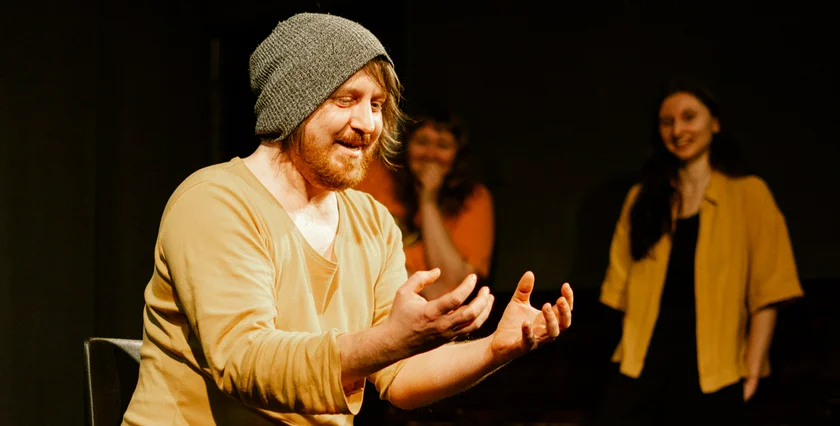
He imagines a dedicated space where classes, shows, workshops, and social events could happen under one roof. A place with room for audiences, food, drinks, live music, student artwork, and the many creative subcultures already orbiting the school — from Dungeons and Dragons to karaoke, burlesque, comedy, and theatre.
It would be more than a venue. It would be a home base for people who want to make things together.
And perhaps that is what Improv Academy has been building all along.

In a city full of people who have arrived from elsewhere, improv offers something simple and increasingly rare: a room where adults are allowed to play, fail, listen, laugh, and begin again.
No script required.