



 Reading time: 6 minutes

 Summary for: 10 common mistakes when applying for Czech citizenship – and how to avoid them
If you’ve lived in Czechia long enough to qualify for citizenship, you’ve probably already survived the big expat rites of passage: your first foreigner’s office appointment, your first Czech tax form, and at least one moment when a missing stamp nearly ruined your week.
Czech citizenship can feel like the final step of that paperwork journey, but “a successful application is not just about meeting the main requirements,” says Martina Jirka Pohanková, CEO at Czechwise, a citizenship advisory specializing in Czech citizenship applications. “It is about submitting a well-prepared and properly timed application.”
Rejected cases often come down to timing, documents, debts, or overlooked state obligations. Here are 10 common mistakes that can complicate a Czech citizenship application, and how to avoid them before you apply.
1. You applied at the wrong time
Czechwise was recently approached by a client who waited more than a year for his citizenship application to be processed, only for it to be rejected. The reason? He miscalculated his length of residency and applied one week too early. Now he has to start the entire process again.
“It is not enough to be ‘almost there’ when going for citizenship,” Pohanková emphasizes. Before applying, confirm your eligibility date against your residence history and permanent residence start date, rather than estimating based on years lived in Czechia. Applicants need three years of permanent residence if they are EU citizens, five years if they are non-EU citizens, or they can use the third option: 10 years of continuous stay combined with any length of permanent residence.
2. You owe the State money, even small debts
Another example: an applicant was highly integrated, lived in Czechia for more than 30 years, and had a Czech spouse and children. Despite this, their citizenship application was rejected, because of a CZK 15,000 debt.
Forgot to pay your social security last month? “Debts on taxes, social security, and health insurance are the second most common reason for rejecting an application, even for relatively small amounts,” Pohanková says. “Request confirmations from the relevant authorities to make sure there are no outstanding debts.”

3. Your life looks too detached from Czechia
It may seem that enduring a successful visit to the Czech post office makes you worthy of calling yourself Czech already, but the Ministry takes integration seriously. Applicants should be able to show real ties to Czech society through work, family, and social life.
Do you need to work for a Czech employer? Not necessarily. You can be a digital nomad or work remotely. However, if your work is largely outside the Czech environment, this part of your integration may be considered weaker and should ideally be balanced by stronger social or family ties.
Social integration is often the easiest to strengthen, but also the easiest to underestimate. Czechwise recommends participating in local activities, joining associations, or spending your free time in a more structured way within Czech society.
4. You haven’t passed the Czech language test
Yes, the notoriously challenging Czech language requirement. This has long been the bane of many an expat’s existence, and for many applicants, this is the most stressful part.
You must pass an officially recognized Czech language exam at the B1 level. The test must be booked in advance, and it can take a few months to receive the results. There are some exceptions, but this requirement applies to most applicants. Book the test early, allow time for results, and leave enough room to retake it if needed.
5. You forgot Czech bureaucracy has a long memory
If you’ve moved a few times and forgot to register your address, or your residence status isn’t properly updated with the Ministry of the Interior, your application could be in trouble.
“Although some of these issues may not lead directly to rejection, they do not present the applicant in a favorable light,” explains Pohanková. “If there are doubts elsewhere in the application, they can weigh against them.”
Make sure your other obligations, such as local waste fees, tax filings, or administrative duties toward Czech authorities, are all squared away before applying.
6. You submitted an incomplete application
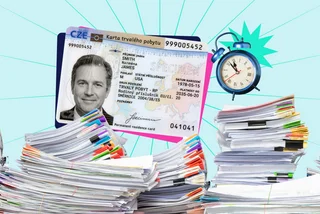
This one seems obvious, but it’s worth emphasizing: every missing document means the Ministry will contact you, wait for your response, and only then continue processing your application. This can delay the process by weeks or months.
A typical application file can easily contain around 40 documents. If you feel unsure or overwhelmed, a citizenship advisor can help you build a checklist of every required document and confirm that each one is current, complete, and in the correct language or format.
7. Your documents are in the wrong format
It is not just about what you submit, but also about how you submit it. Original or copy? Certified copy? Apostille? Superlegalization? Plain or certified translation?
“If something is not in the correct format, your application may not be accepted, or the process may be significantly delayed,” Pohanková says.
In some cases, it may be impossible to obtain a document in the required form, particularly from countries with less reliable administrative systems. In such a situation, it is advisable to clarify the options or discuss the matter with an expert to determine whether you may apply for an exception.

8. You haven’t clearly documented your income
Unlike other residency applications, there is no fixed minimum income required for Czech citizenship. However, applicants still need to prove their financial situation supports a life here.
“The Ministry will not look at your income in isolation,” explains Pohanková. “They will consider it in context, including your typical expenses, and expect to see that your financial situation makes sense overall.”
9. You treated the CV like a job application
This part is less like a résumé, and more like a short story of your life in Czechia. The authorities want to understand where you are from, why you came here, how your life has developed, and what your future plans are.
“It should be personal and coherent, and it must also be written in Czech,” Pohanková says. She also advises against using AI to generate it. “It is better to write your story yourself and have it reviewed, both for clarity and for correct Czech.”

10. Your criminal records are wrong, or missing
Pohanková says that in most cases, you will need a criminal record extract from Czechia, but if you have lived here for less than 10 years, or if you have spent a longer period abroad, you may also need criminal records from your country of origin and from countries where you stayed for an extended time.
“These documents often require an apostille or superlegalization and must be valid at the time of submission,” Pohanková adds. Start collecting criminal record extracts early, check which countries you need them from, and confirm whether each one requires an apostille, superlegalization, or translation.
Be ready to take on the application challenge
A lot of people try to take on residency and citizenship applications on their own to save money, but they often end up spending more money as a result because of all the issues mentioned. Although it’s possible to complete the process on your own, if you are unsure about your situation or if the process feels overwhelming, it is often worth reviewing your case with experts in advance. This investment ensures accuracy but can also save time in many cases.
“A successful citizenship case requires an application where all details are in order,” Pohanková concludes. “In our experience, this is also where applications typically succeed or fail, and where we can help.”

Becoming a Czech citizen is a long process, but many setbacks are avoidable. Before applying, check your eligibility date, documents, debts, language requirements, and personal history carefully. This gives the Ministry fewer reasons to pause the process, and gives your application a stronger chance of success.