


 Reading time: 2 minutes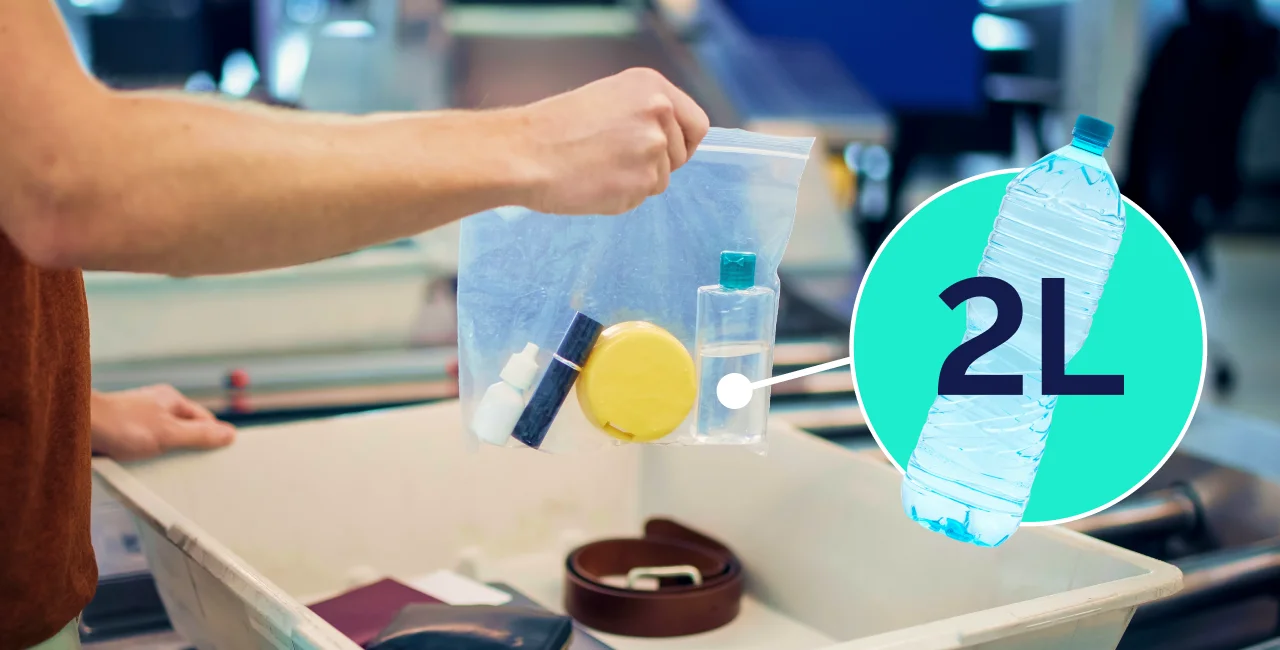

 Summary for: Travel alert: Prague Airport eases liquid rules for Schengen flights
Prague’s Václav Havel Airport has introduced a major change for passengers flying within Europe: starting Oct. 1, 2025, travelers departing from Terminal 2 can now bring liquids in bottles of up to two liters in their hand luggage.
The change is made possible by installing modern CT X-ray scanners, which provide detailed three-dimensional images of luggage contents.

The new technology allows security staff to identify threats more accurately while eliminating the need for passengers to remove liquids or electronic devices from their bags.
“Passengers have already appreciated that they no longer need to unpack electronics or liquids for screening since we introduced CT scanners in Terminal 2 earlier this year,” said Martin Kučera, Prague Airport’s director for operations and security, in a press statement.
Different terminals different rules
Each passenger may now carry one container of liquid exceeding 100 milliliters, up to a maximum of two liters, in addition to the smaller bottles permitted under existing rules. This includes water, beverages, or toiletries.
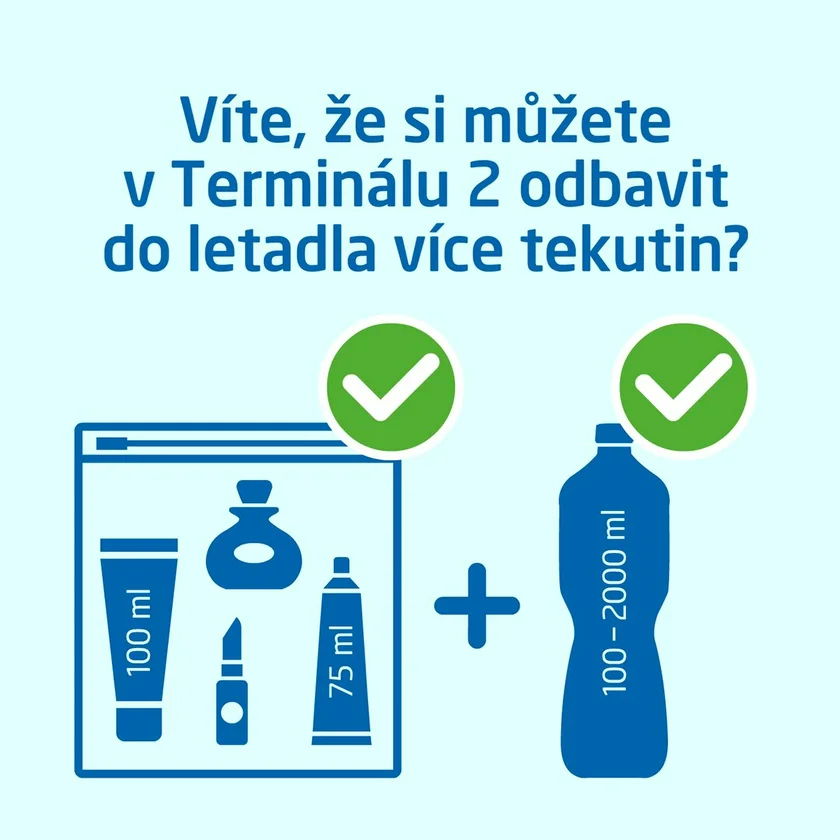
Standard exemptions remain for baby formula, medically required liquids, and other special cases. The airport cautions that rules for liquids can differ by airport. Passengers are advised to check restrictions at their return airport before traveling.
While Terminal 2 will benefit from the new rules, Terminal 1—handling flights outside the Schengen area—will remain under the older system. Passengers departing from there may only bring liquids in containers of up to 100 ml, packed into a one-liter bag. Larger bottles are not permitted.
More changes planned
Prague Airport has so far purchased six CT scanners and plans to add two more next year. At some security stations in Terminal 2 where older scanners remain in use, travelers will still need to remove liquids and electronics from their luggage, but the higher two-liter limit will still apply.
Officials stressed that signage and staff will be on hand to guide passengers through the differing procedures.

The airport restricted the transport of liquids in 2006 following the foiled London bomb plot, when security agencies uncovered plans to use liquid explosives on passenger planes. Airports across Europe adopted the 100-milliliter rule soon after, and most still enforce it.
The Prague changes mark one of the most passenger-friendly shifts in aviation security rules in years, though travelers flying outside Schengen should be careful not to confuse the two systems, officials say.
Airport representatives say Terminal 1 is also slated for modernization, including a central checkpoint equipped with CT scanners. If successful, the liquid limits there may also be eased in the future.
“For now, the ability to carry larger volumes of liquids is another significant step forward in improving the travel experience,” said Kučera.