



 Reading time: 2 minutes

 Summary for: Czech scientists propose unique solution to fight climate change: Deforestation
Czech researchers have joined an international team proposing a novel approach to climate mitigation: harvesting parts of northern forests and transporting the wood via rivers to the Arctic Ocean, where it could lock carbon away for thousands of years. The plan aims to remove roughly one gigaton of carbon dioxide annually, equivalent to about a tenth of global yearly emissions.
The approach could supplement existing efforts to reduce fossil fuel emissions by providing an alternative carbon removal method. By using a process that already occurs naturally—fallen trees drifting into oceans—scientists hope to expand carbon storage without creating entirely artificial infrastructure.
How it could work
The researchers focus on coniferous forests in Siberia and North America, including the Ob, Yenisei, Lena, Yukon, and Mackenzie river basins. These forests collectively store an estimated 100 gigatons of carbon. Harvesting just 1 percent of this area, around 180,000 square kilometers, and channeling the wood to the Arctic could capture one gigaton of carbon dioxide per year.
“States should not abandon efforts to cut emissions from fossil fuels, but with economic growth, it is essential to explore complementary ways to remove and store carbon from the atmosphere,” says Miroslav Trnka, a co-author of the study from CzechGlobe, the Institute for Global Change Research of the Academy of Sciences of the Czech Republic.
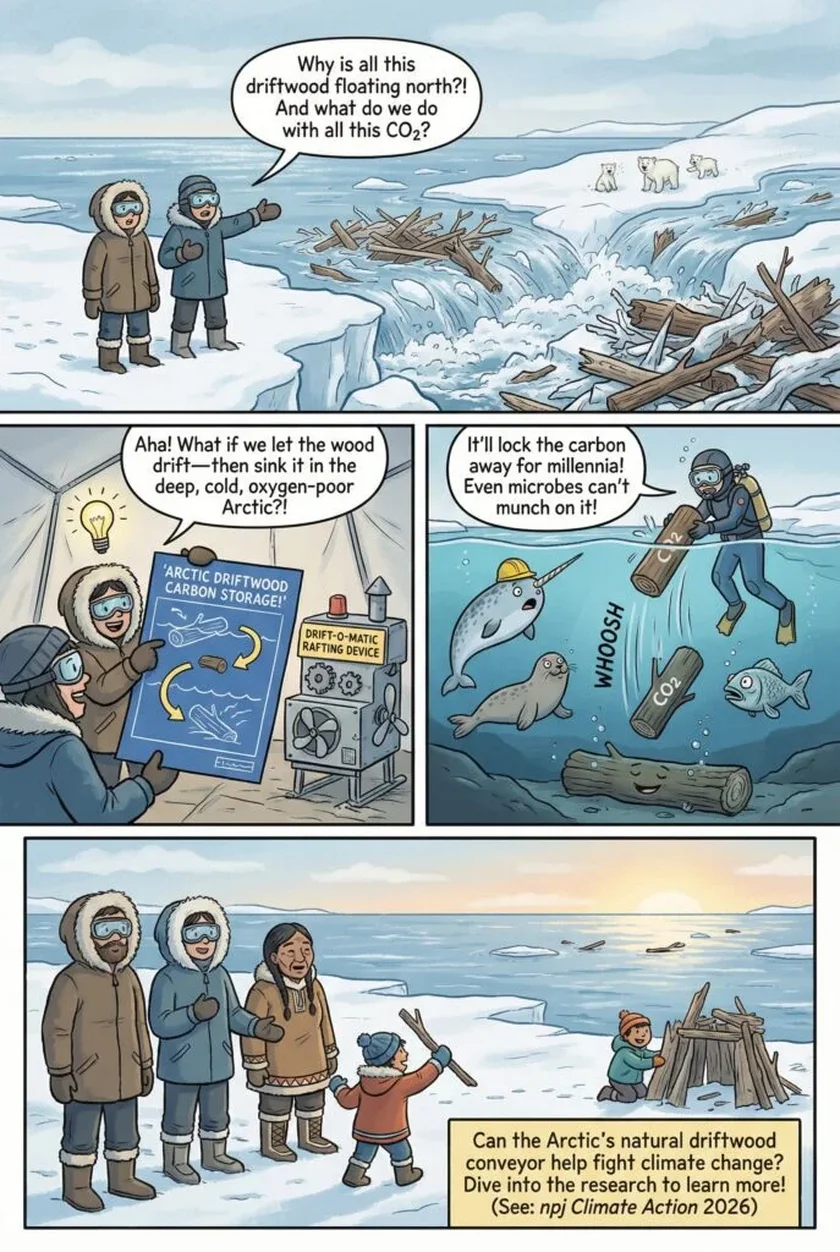
Measurements indicate that deep ocean floors provide conditions that prevent wood from decomposing quickly: low temperatures, minimal oxygen, and limited microbial activity ensure long-term carbon storage.
The targeted forests have dense timber, low biodiversity, and are prone to wildfires, which makes selective logging less disruptive to ecosystems than in more sensitive regions.
Potential benefits and challenges
Trnka noted the plan would also reduce wildfire risk. Leaving branches behind for soil enrichment while logging in winter would allow frozen rivers to serve as natural transport channels, reducing the need for roads.

However, implementing the scheme would require substantial resources and international cooperation. Only Canada among the key countries currently supports the concept, while Russia and the United States have different approaches to climate policy.
Even if fully executed, the method would address only a fraction of annual emissions, highlighting that fossil fuel reduction remains essential. Nevertheless, it offers insights into carbon management strategies for sectors where emissions are harder to cut, such as aviation.

The scientists stress that further research is needed to assess environmental and geopolitical feasibility. Future studies will examine ecological impacts, logistical requirements, and the long-term stability of submerged wood as a carbon sink.
The Czech-backed proposal illustrates the growing interest in large-scale, nature-based solutions to complement traditional climate mitigation measures.