



 Reading time: 2 minutes

 Summary for: Three Czech cities, one big surprise: The best quality of life isn't in Prague
As the first days of 2026 settle in and New Year’s resolutions take hold, many residents of Czechia’s capital are once again confronting the rising cost of living. The latest Numbeo Quality of Life Index suggests that for those seeking a balance between career and comfort, there may be life beyond Prague.
In a significant shift for the new year, Plzeň has overtaken both Prague and Brno to become the most livable city in Czechia, ranking 20th worldwide.
This puts the West Bohemian capital in a league of its own within the region, while the nation’s two largest urban centers follow further down the list. Prague currently sits at 132nd globally, with Brno trailing slightly behind at 125th.
Affordability is the key divider
The most pronounced difference among the three cities lies in the simple math of affordability. Plzeň recorded a very high purchasing power score of 117.3, which stands in stark contrast to the moderate scores of 97.7 in Prague and 96.2 in Brno. Housing costs reveal an even sharper divide.
Plzeň’s property price-to-income ratio stands at a manageable 9.7, whereas Brno reaches 14.9 and Prague climbs to a staggering 18.9. These figures indicate that residents in the capital require nearly double the relative income to purchase property compared to those in Plzeň, with Brno residents finding themselves in an increasingly expensive middle ground.
While safety levels across all three cities remain broadly comparable and impressively high by global standards, Plzeň also outperformed its larger rivals in healthcare access, scoring 81.6 against Brno’s 76.1 and Prague’s 74.8.
A new image for Plzeň
Once viewed primarily as an industrial city known for its brewery, Plzeň has undergone a steady transformation. New infrastructure projects, such as the TechTower innovation center, have helped reposition the city as an attractive alternative to the capital.

The city has also become a key hub for foreign companies across technology, manufacturing, and mobility, supported by a highly international workforce.
ADP operates a major global shared services center in the city, while multinational manufacturers such as Panasonic, Daikin, and Siemens maintain large engineering and production operations.
The city’s corporate landscape is further strengthened by Asahi Europe & International, owner of Plzeňský Prazdroj, alongside transportation leaders such as Škoda Transportation and ZF Group.
The presence of these industry leaders has effectively broadened the city’s appeal to the international community.
Prague’s enduring strengths
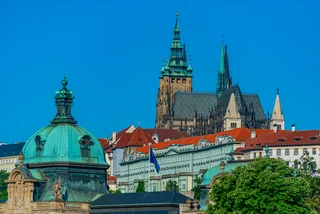
Despite its lower ranking, the capital continues to place among the world’s top cities for culture, tourism, and infrastructure, with its public transport system frequently cited as one of Europe’s most effective.

But analysts note that residents increasingly pay a “Prague Premium,” with higher costs tied to capital-city demand beginning to weigh on overall quality of life.
As 2026 brings higher fixed costs for many, including a significant jump in minimum social insurance to and tighter rules on tax-exempt benefits, that premium is becoming harder to justify.
The “reverse commuting” trend (choosing to live in more affordable cities while traveling to Prague for work) is set to become more appealing.