



 Reading time: 2 minutes

 Summary for: AI facial recognition cleared to return to Prague airport under strict limits
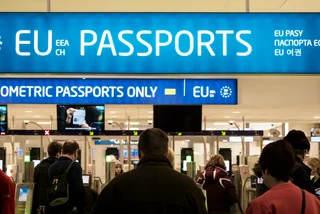
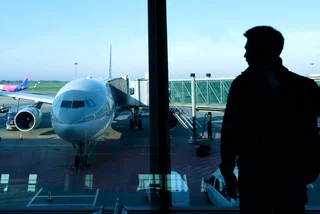
Prague Airport will see the return of AI facial recognition systems for law enforcement, the High Court in Prague ruled at the end of 2025. The decision follows a temporary suspension last August after changes to Czech and European AI legislation.
Police confirmed the system has been turned off since last year and that preparations are underway to resume its operation. Details on timing and technical setup will be shared with the public in advance.

The court authorized the system under strict conditions. It must operate in isolation from the internet, with encrypted communication and limited access to authorized personnel. Only trained employees can assess matches, and outputs are treated as operational information requiring further verification.
At a glance: AI facial recognition at Prague Airport
- Authorized by High Court under limited, temporary permit
- Fully isolated system, no internet connection
- Detects wanted or endangered individuals, not general population
- Data stored 90 days, accessed only on reasoned request
- Experts warn of privacy risks and potential future expansion
Among 'riskiest' AI technologies
Lawyers say the system is among the highest-risk AI technologies under the EU AI Act, which restricts real-time biometric identification to exceptional circumstances such as finding missing persons or preventing serious crimes.
“Each authorization must be limited in time and place and must be preceded by judicial approval,” said Dáša Aradská, a lawyer commenting on the Act to Seznam Zprávy.
The system, originally installed in 2015 and refined in 2019, identifies people in a database of wanted or endangered individuals. Cameras focus on high-traffic areas, such as information boards, to capture quality images. Data is stored for 90 days and can only be accessed upon reasoned request.

Critics warn of privacy risks. Jan Vobořil from Iuridicum Remedium told Seznam Zprávy the database of bio-indexes could be misused if security fails, while some experts note potential conflicts with European regulations.
“It is very likely that the rules currently valid for airports could be extended to other public spaces in the future,” Vobořil said.
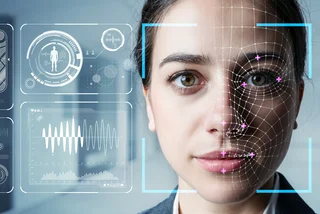
The High Court stressed the system is targeted, proportionate, and temporary, with a permit that may last up to 12 months. Judge Roman Horáček noted that its mere presence could deter crime but concluded that the system’s use does not outweigh individual rights under the current setup.
Law professors and analysts agree the ruling balances public safety and privacy but caution that ongoing scrutiny is needed to prevent expansion beyond airports.