



 Reading time: 2 minutes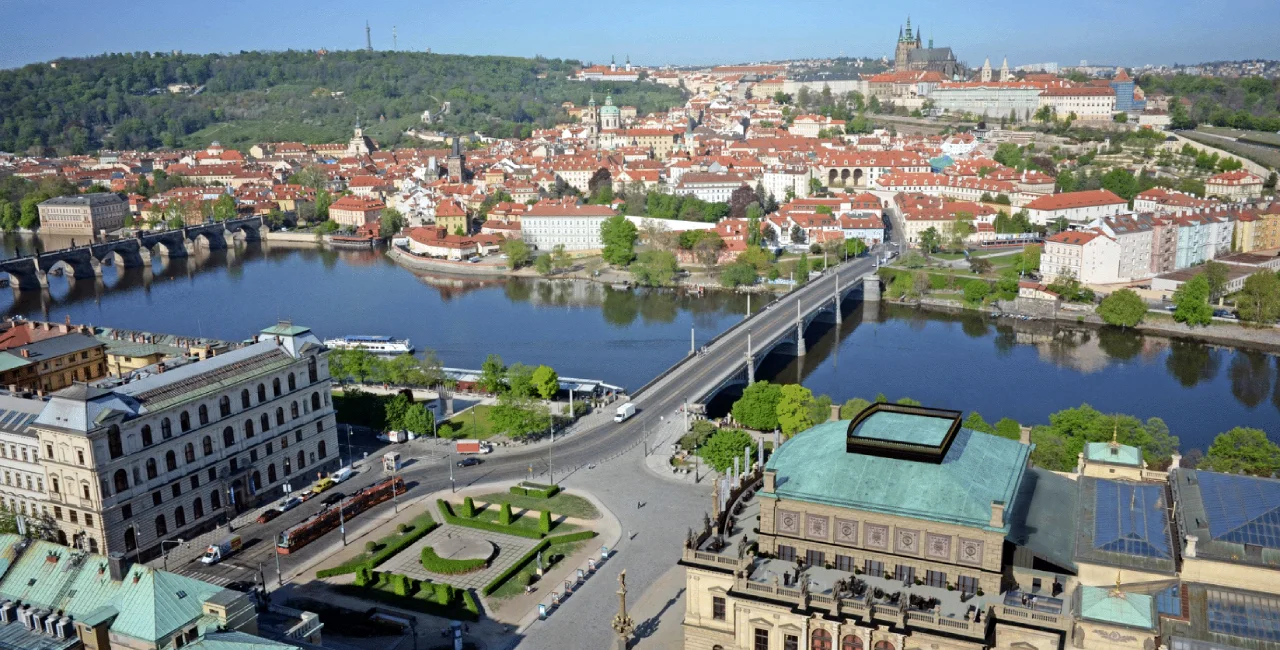

 Summary for: Rudolfinum terrace with stunning views of Prague to open to the public
Prague is about to get a new rooftop terrace with some incredible views of the historical city center. The Czech Philharmonic and Arcona Capital have announced plans to redevelop the terrace of the landmark Rudolfinum building in Prague's Old Town and open it for public access.
One of the most recognizable landmarks in central Prague, the Rudolfinum belongs to the Czech Philharmonic, and also serves as the seat of the orchestra.

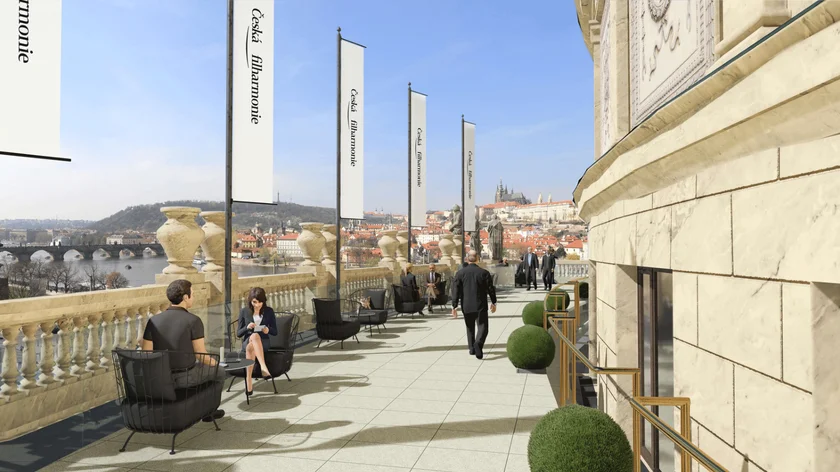
The terrace of the Rudolfinum, which features 16 busts of famous Czech composers, has always been visible from the exterior of the building but closed to the public due to insufficient safety features including uneven surfaces and a narrow entryway. The new renovation project aims to change that.
“The first time I stood on the Rudolfinum terrace, my breath was taken away,” Arcona Capital's Guy Barker states in a press release.
“We were captivated by the possibility of turning this extraordinarily beautiful, but hitherto underappreciated, part of one of Prague’s best-loved buildings into an accessible space for events and for public use. The project is very exciting, and a great responsibility.”
Building permits have already been obtained to renovate the terrace of the Rudolfinum, and approved by the relevant monument care bodies. Later this year, a fundraising appeal will seek an estimated 23 million crowns to complete the work and open the location to the public.
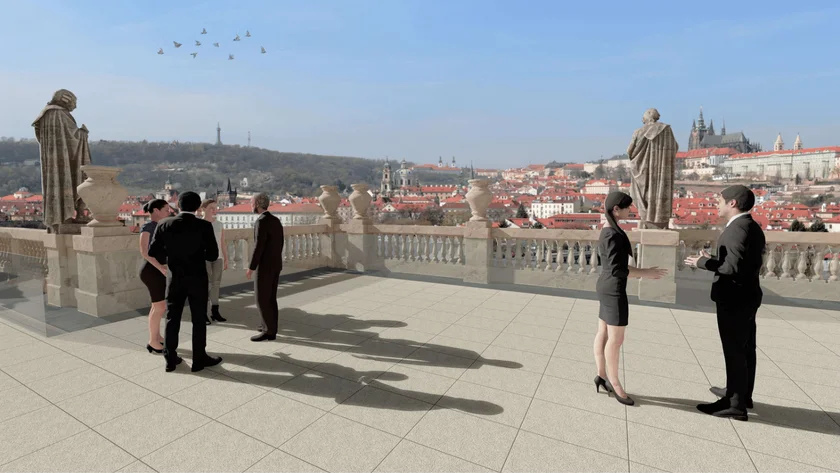
Renovation plans include the introduction of safety features and resurfacing as well as the introduction of an elevator to provide barrier-free access to the terrace. The space, with a total of 850 square meters, will also be utilized for special events held by the Czech Philharmonic.

Prague's Rudolfinum building has a storied history through the past 150 years. Named after Rudolf, Crown Prince of Austria, it was designed by architect Josef Zítek and his student Josef Schulz and opened on February 8, 1885.
The building's main concert hall was named after Czech composer Antonín Dvořák, who conducted the very first concert at the venue. After the establishment of an independent Czechoslovakia after the first Word War, the Rudolfinum served as the seat of Czechoslovak parliament.
During World War II, the building was appropriated by Reinhard Heydrich, who intended to use it to promote German culture. Since 1946, it has been the home of the Czech Philharmonic; in 1994, the orchestra was joined by an art gallery with the opening of Galerie Rudolfinum.
ÄŒeská filharmonie pÅ™edstavuje úpravy terasy Rudolfina. CÃlem je zajistit vÄ›tÅ¡Ã bezpeÄnost a lepÅ¡Ã pÅ™Ãstupnost terasy, dÃky Äemuž se tento výjimeÄný prostor jedné z nejikoniÄtÄ›jÅ¡Ãch budov ÄŒeské republiky bude moci otevÅ™Ãt veÅ™ejnosti. 😊 pic.twitter.com/18NtmokuKG
— Hlavnà mÄ›sto Praha (@PrahaEU) May 20, 2021
“The history of the Rudolfinum proves that the idea of giving has a long tradition in our country,” Czech Philharmonic CEO David Mareček states.
“The building was donated to the Czech people by Česká spořitelna 136 years ago, and it has been a home to the arts ever since. During the pandemic, we saw that this tradition of giving is still alive, as many of our subscribers donated their tickets to the Czech Philharmonic to help the orchestra through difficult times.
"We are extremely grateful for their generosity, and now, together with our donors and supporters, we look forward to welcoming them to the Rudolfinum terrace, where they will be able to enjoy stunning views of Prague and take part in various social events.”