



 Reading time: 2 minutes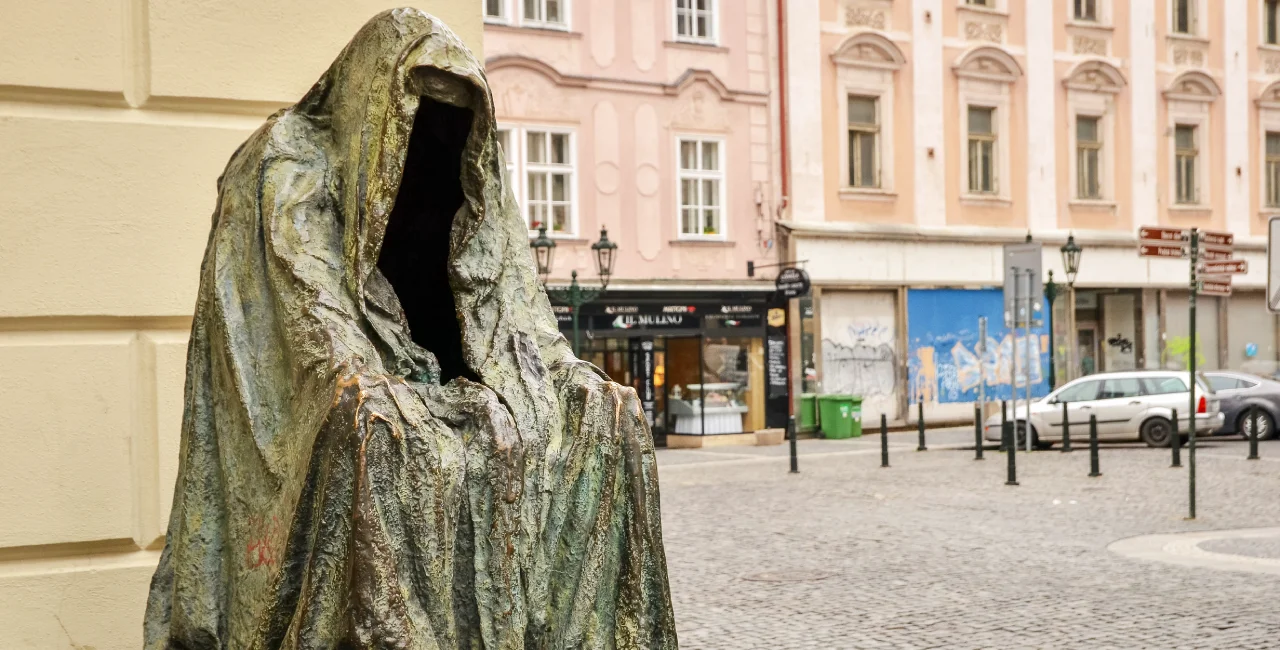

 Summary for: Prague removes controversial bronze sculpture by Estates Theatre
Prague 1 has removed a controversial bronze sculpture by Anna Chromy that stood for more than 20 years in front of the Estates Theatre. Officials cited repeated misuse by the public, including littering and urination, as the primary reason for its removal.
The sculpture, while celebrated by some for its artistic symbolism, had increasingly become a practical concern for both the municipal authorities and the National Theatre, which oversees the adjacent area.
A symbol of art and debate
The bronze figure, formally titled Il Commendatore and popularly known as Cloak of Conscience (Plášť svědomí), depicts an empty cloak inspired by the Komtur character in Mozart’s Don Giovanni. The opera held its world premiere at what is now the Estates Theatre, which continues to stage one of Mozart's most famous works.
Chromy, a Czech-born artist who spent most of her career in France and Italy, designed the piece to symbolize conscience, humility, and the inner emptiness of a person who has lost themselves. But despite its artistic intention, the sculpture has divided public opinion since its installation.
Some critics described it as kitsch, while others valued its surrealist influence. Over time, the base of the sculpture became a site for discarded waste, and some homeless individuals reportedly used the space to sleep, prompting city officials to act.
Tomáš Staněk, a spokesperson for the National Theatre, confirmed that the sculpture remains property of Prague 1 and is now temporarily stored at the theatre’s depot. “We are exploring a suitable location where the artwork can be appreciated without interfering with public use,” he said.
Previous placements of Chromy’s works in Prague have also sparked debate. A tribute to Franz Schubert near Malostranské náměstí has faced criticism for lacking expert evaluation and for honoring figures who had no direct connection to the city.

Controversial public art in Prague
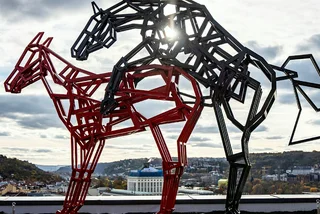
The removal of Il Commendatore reflects wider trends in European cities, where municipal authorities increasingly assess the practical impact of art in public spaces. A recent sculpture of the mythical horse Šemík on a Prague rooftop has sparked similar debate, while artist David Černý has long stirred controversy with his public art.
Authorities must balance artistic value with accessibility, safety, and public convenience—a challenge familiar to other capitals managing historical and contemporary art simultaneously.
Prague 1 has not yet announced a permanent relocation for the sculpture. Experts suggest that future placements of public art should undergo both aesthetic review and practical assessment to avoid similar issues.
Do you agree with the removal of the Il Commendatore statue in Prague?
For those navigating Prague’s streets, this case serves as a reminder of how municipal decisions shape the usability and character of shared spaces. City authorities encourage community input on public art projects, signaling that local engagement will influence which works remain visible in the urban landscape.