



 Reading time: 6 minutes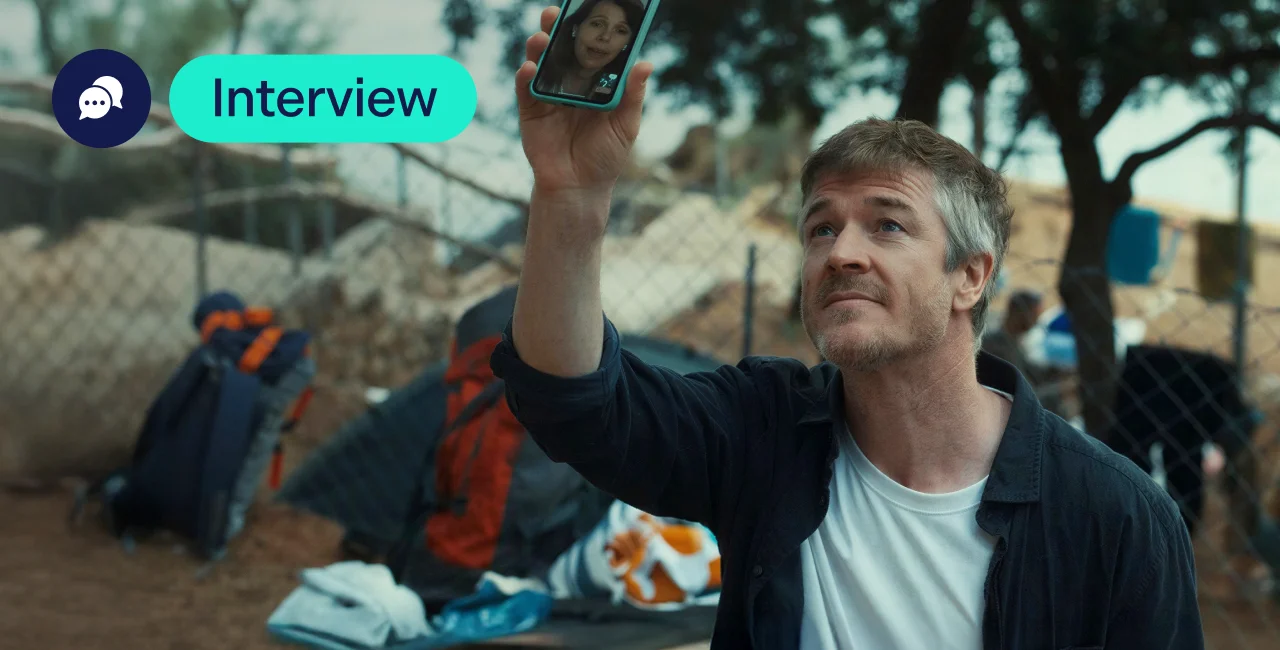

 Summary for: INTERVIEW: Irish actor Barry Ward on playing the English-speaking father of Czech kids
For anyone raising a family between two languages and cultures, the eye rolls exchanged between kids as you mangle a Czech word, or being the only one at the dinner table who missed the joke, is a reality that rarely makes it onto the big screen.
That's part of what makes Ungrateful Beings, the new film from Slovenian director Olmo Omerzu, feel so unexpectedly close to home.
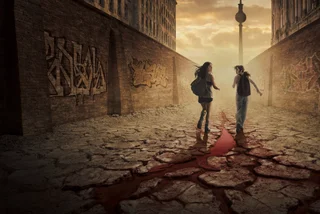
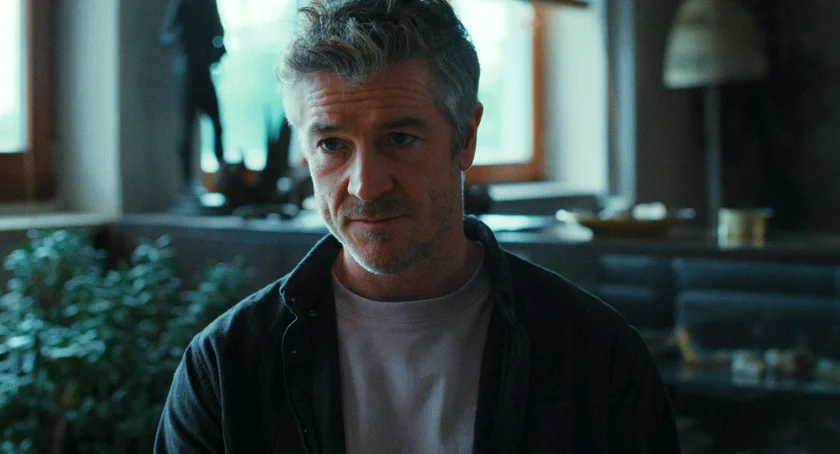
The film, which premiered in competition at the San Sebastián International Film Festival and arrives in Czech cinemas on March 26, follows David (played by Irish actor Barry Ward), an English-speaking father who takes his two bilingual children on an Adriatic holiday.
What begins as a family trip, already freighted with the tensions of a recent separation, unravels when his teenage daughter falls for a local boy who becomes caught up in a murder investigation.
As the family is pulled back to Prague to face the fallout, David must navigate a crisis in a language and a family dynamic that never fully feels like his own. He is, as Ward puts it, "a foreigner in his own family."
The role wasn't originally written that way. A scheduling conflict replaced a Czech actor with Ward, prompting Omerzu to reach for a bilingual version of the script, and this twist in fate is arguably what made the film even stronger.
Language in Ungrateful Beings becomes a vehicle for power, distance, and the particular loneliness of the foreign parent who watches their children grow fluent in a culture that still holds them at arm's length.
Ward, best known for his work in Jimmy's Hall and Calm with Horses, spoke to us about learning Czech, navigating multilingual family dynamics on screen, and why he believes that, sometimes, communication might have more to do with the art of "lying" than the sharing of truth.

One of the most striking things about this film is its bilingual dynamic. Yet that almost didn't exist. The father was originally written as Czech, wasn't he?
Yeah. Olmo had a Czech actor lined up to do it, and for reasons of scheduling, he couldn't. He said to me, "I have a bilingual version, wherein the father could be American or he could be English. Will you have a read of it?" And that appealed to me hugely.
You don't often see multilingual families on screen, despite the fact that it's a very common reality.
He's kind of a foreigner in his own family. His kids are more Czech than English. So do you think the film is partly about that kind of loneliness of being the foreign parent who's always slightly outside the culture their children are growing up in?
It serves as another barrier to overcome, another obstacle, and a source of fresh conflict. In a way, you've got the intergenerational gap, and then you've got that language gap. So it makes David's attempts at parenting all the more challenging.
And I think good drama requires challenges and conflicts and contrast, so it was just more obstacles for him to overcome, which makes it all the more challenging and hopefully more interesting for a viewer.

Barbora Bobulová (a Slovak-Italian actress who plays David’s Czech ex-wife) said she found it "very funny" when you first tried Czech on set. How much Czech did you end up learning for the role, and how humbling was the experience of grappling with it?
I guess I learned the bare minimum that was required, which was really just the lines and the dialogue. It's always a tough undertaking, learning a new language and trying to speak it convincingly, as though it's something you do daily.
The Czech language is so far removed from English, and whatever little bit of French and Italian I've done, so it was brand new. But it's an enjoyable challenge, and one I was really keen to embrace and encourage, because I think it really adds an interesting texture and layers to the film. I think it really elevates it in a way.
Do you think having to speak the language helped you inhabit David's character as being the outsider in his family?
Totally, yeah. I think that's one of the massive advantages of going with that idea. It does further serve to highlight David's outsider status, and the barriers of communication even in one language between generations is emphasized and heightened.
We started using [communication barrier] dramatically for reasons of status, power and control, and manipulation.
So there's a good scene when Klára is doing the dishes at the campsite, and she offloads this monologue in Czech to her dad who's feeling rather powerless and helpless, and that just further compounds it. So it does a lot of work for me, for the character, and for that emotional state.

The family in the film communicate across two languages, and then also through the medium of texting, and still struggle to communicate despite that. Do you think the film is optimistic about whether that gap can be bridged? Whether that applies to foreign families or parents trying to connect to their children in general?
I don't think it's either optimistic or pessimistic. To me, it's very realistic. Communication in any language, and through technology, is replete with its own shortcomings. They're inherent in the fact that we rely on words to communicate.
Even whatever thoughts I have, by the time it gets to my mouth and out and into the ear of the listener and into their brain, it's already been diluted, and there's been wires crossed along the way.
It's a very delicate balancing act that exists in a system of feedback loops. So, tricky business at the best of times, and in some ways, it's more about the art of lying than it is about sharing truth!
Speaking of humor, this film does have some humorous moments in it, despite what seems like dark subject matter from the outside. Did you and Olmo ever talk about any kind of films or references in terms of the tonality of this one that you wanted to work off?
We didn't talk about any specific films in terms of reference, but it reminded me of some great French movies I saw in the 90s that do that kind of middle-class existentialism very well.

We talked about movies extensively, and we both have very similar tastes in films, but with reference to our own, not really. I think that the script was so meaty in a way that we were constantly just going back to that and trying to make that as best we could.
And in terms of humor, I think you're right. I found it fucking hilarious throughout, and when I read it, I was really giggling. It's an uncomfortable laughter. It's a dark humor, which is my real sweet spot.
I think that's often in the eye of the beholder, too. I'm sure there'll be people watching it who will be horrified by the content and the issues on display. And that's absolutely a valid reading, too. And I certainly hope that it has that effect on some viewers.
As someone coming in from the outside yourself, did anything surprise you about how Central European filmmaking operates in particular, on set or in rehearsal, or how the crew works?
It was a very multinational cast. Olmo himself is obviously Slovenian, Barbora is Slovakian. We had Polish hair and makeup, and we filmed in Croatia, so we had some Croatian crew at the beginning.
I did a TV show in the Czech Republic before, I spent six months there, and the crew was largely Czech, some Slovaks. They're very, very good at their jobs and very hard working and good humored. It was very easy going.

Do you see more Czech films on the horizon, or working with Olmo again?
Oh, I'd love to. I've been acting a very, very long time, and I've been a film lover for as long as I've been acting. And I've always had this dream and desire to work with a brilliant European director and to do several movies together and I think, I hope, I've found that in Olmo.
Ungrateful Beings will play in Czech cinemas from March 26. The film is in English and Czech.