



 Reading time: 3 minutes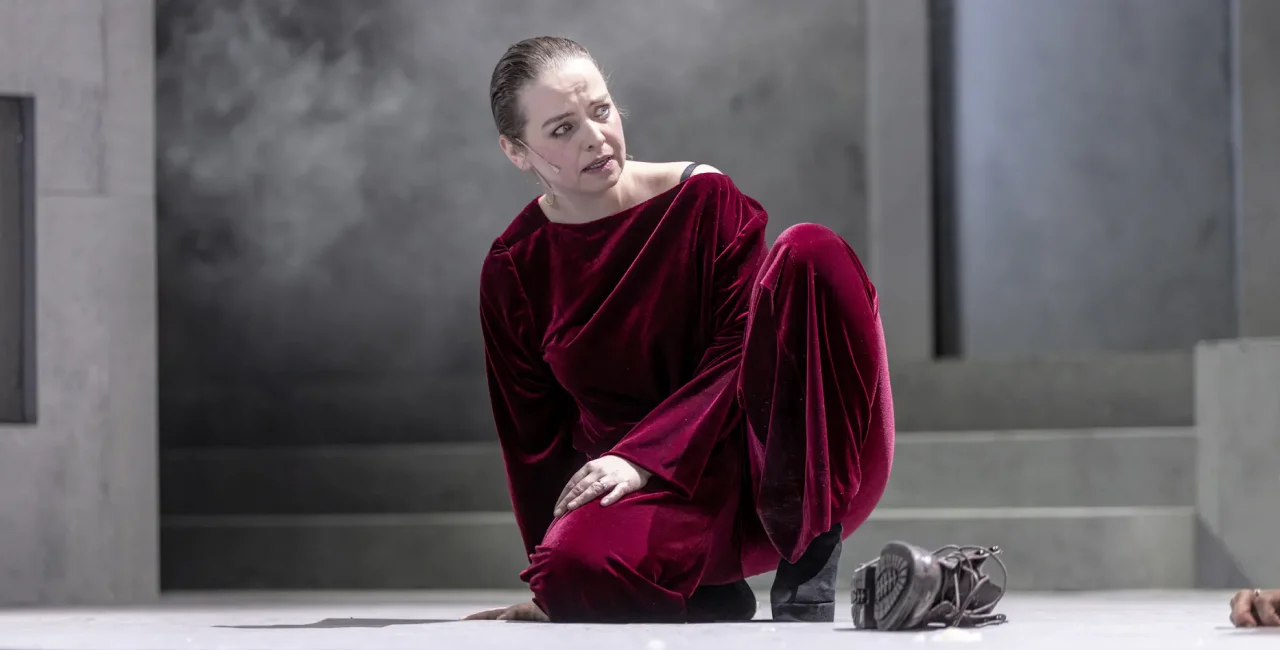

 Summary for: Prague National Theatre premieres one of drama's most iconic female characters
“I’m so fucking bored!”
The scream pierces through the large glass window dividing the stage, communicating with power and immediacy all the rage, despair and existential dread that make up the character’s chronic and destructive boredom.
It comes from Hedda Gabler, the title character of Norwegian playwright Henrik Ibsen’s 1890 play, now staged in a new production that premiered in Prague's Estates Theater last week.
Expats.cz was among the lucky troupe to get an early peak of the show. And while Hedda might be “so fucking bored”, you’re unlikely to feel the same.
Meet Hedda Gabler
Among Ibsen’s later works, Hedda Gabler originally faced, like many of the Norwegian writer’s norm-breaking plays, controversy and backlash from his peers and contemporaries, but has since become a staple of 19th-century drama.
It tells the tale of Hedda Gabler, a general’s daughter, who likes shooting her father’s pistols, riding horses and playing the piano.
What she doesn’t much like, on the other hand, is her bookish scholarly husband Jørgen Tesman with whom she just came back from honeymoon, their neighbors and acquaintances, or the uninspiring marital life she seems doomed to suffer through.
Yes, Hedda is bored; irreversibly, irrevocably and unflinchingly bored.

So when her former great love – the writer, ex-addict and recovering-alcoholic Ejlert Løvborg who has been saved from his inner demons by the loving grace of the innocent Thea Elvestad – comes back to town, Hedda sees an opportunity.
An opportunity to “shape for once a human destiny” in search of a higher meaning and higher beauty; or it is merely an excuse to distract her from her existential ennui and apathy? Chaos, debauchery and tragedy ensue.
Anti-heroine
Immoral and selfish, (self-)destructive, manipulative and deeply cynical, Hedda Gabler – sometimes described as the “female Hamlet” – is widely considered as one of the greatest female characters and anti-heroines in dramatic literature.
Now put on stage by Hungarian director Viktor Bodó – known for his unorthodox style and pop culture references – Ibsen’s play comes to life in Prague’s Estates Theatre artfully transposed in the modern, functionalist setting of a “smart home” where nothing really seems to work as it's expected to.
Carried by a powerful cast led by Pavla Beretová in the lead role, the performance holds a few unexpected surprises for the audience.

“She is a mysterious, incomprehensible person,” Beretová said about taking on the demanding role. “I want to continue to be surprised by what Hedda will bring, because there is so much there and Hedda Gabler shouldn’t be put into any boxes.”
For more than 100 years since she first appeared on stage, critics and audiences have been debating the complexity of her character – in many respects a visionary creation by Ibsen, years ahead of its time in its portrayal of women’s secret thoughts, inner feelings and struggle for emancipation.
Monster or victim?
Idealistic at her core, Hedda apparently cannot find a better use of her time than manipulating her entourage and wickedly plotting other people’s downfall.
Whether she is a cold sociopathic monster, or the victim of social norms and expectations – marriage, motherhood, etc. – against which she has no choice but to revolt with the tools she has at her disposal, has also been the subject of many debates.
“Male critics didn’t know what to make of an unwomanly, unfeminine woman,” explained Kirsten Shepherd, professor of English and theater studies at Oxford University. “It’s not possible to be outside the dominant mode of femininity at that time without being accused of not being a woman.”

No wonder that – on stage, on TV or in movies – Hedda Gabler was more recently played by some of the greatest living actresses, from Cate Blanchett and Rosamund Pike to Isabelle Huppert.
With cold precision and uncompromising honesty, the play explores universal themes of ethics and morality, addiction, motherhood, and what it means to “be a woman” in still largely men-dominant societies.
More information and tickets are available on the National Theater’s website. Ticket prices range from CZK 150-CZK 590. The performance is in Czech language with English surtitles.