 Reading time: 5 minutes

 Summary for: UK exchanges are returning to Erasmus+. Here's what students in Czechia should know
For thousands of British residents in Czechia, Brexit changed far more than residence paperwork and airport queues. It also interrupted educational links that had allowed pupils, university students and teachers to move between the UK and the rest of Europe through programs like Erasmus+.
Britain was a major Erasmus destination before Brexit, and its return is expected to restore reciprocal exchanges. Under the UK’s replacement Turing Scheme, British students could travel overseas, but the program did not provide the same framework for European students and educators to travel in the opposite direction.
Now, one of the most significant educational ties lost after Brexit is returning. The UK will rejoin Erasmus+ in 2027, restoring reciprocal exchanges for students, pupils and educators. Switzerland is also preparing to associate with the program, further expanding the destinations available to participating institutions in Czechia.
The changes could create new opportunities for pupils, university students, apprentices and educators based in Czechia. Read on to learn more about the opportunities available, how participation works and when exchanges involving the UK could begin.

What is Erasmus+?
The original Erasmus program was established in 1987 and named after Renaissance scholar Erasmus of Rotterdam. Its name also served as an acronym for the European Community Action Scheme for the Mobility of University Students.
Its current incarnation, Erasmus+, has a seven-year budget of around EUR 26.2 billion and covers education, training, youth and sport. Opportunities are available across several stages of education, from pre-primary, primary and secondary schools to universities, vocational training and adult education.
Czechia is one of the European Union’s 27 member states and therefore has access to the full range of Erasmus+ activities, including exchanges, training and funding opportunities.
The program currently includes all 27 EU member states and six associated non-EU countries: Iceland, Liechtenstein, North Macedonia, Norway, Serbia and Turkey. The UK will join the program in 2027, placing its learners, educators and institutions on the same footing as those in EU member states and other associated countries.
Switzerland’s federal government is also aiming for the country to associate with Erasmus+ from 2027. Its participation still depends on the necessary political and funding processes being completed.

How British schools in Czechia could benefit
Nearly 7,900 UK citizens were living in Czechia at the end of 2024, according to the Czech Statistical Office. British-style education also remains firmly established, particularly in Prague, where international families can choose from numerous schools offering British curricula, qualifications or teaching models.
Originally from the UK, Rob Ford, Executive Headteacher of Perrott Hill British School Prague, praised the “transformative benefits” of the program in an article he wrote for Tes.
“It has allowed schools ranging from small rural primaries to large inner-city sixth forms to find and engage with other schools across nations and lift learning and engagement for everyone involved,” he says.
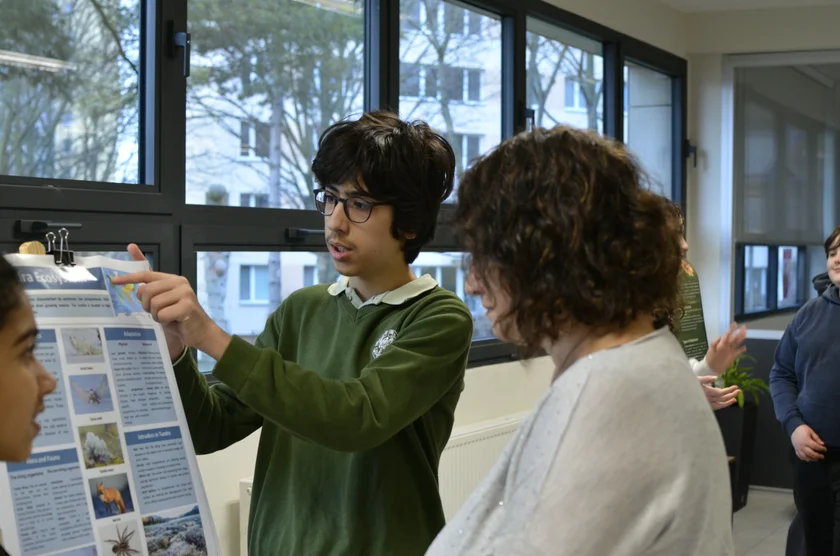
Ford has seen these partnerships in action through eTwinning, an online network that helps European schools connect and collaborate. At Perrott Hill British School Prague, teachers are working with French and Czech schools on wellbeing projects and training colleagues to establish further international partnerships.
“The success is exponential, meaningful and sustainable,” he adds.
Participants may receive Erasmus+ funding that contributes toward travel, accommodation and living expenses. The amount and conditions vary according to the type of mobility, destination and individual circumstances. Funding should not automatically be understood as covering every cost.
University students may also complete a Learning Agreement setting out what they will study abroad and how the work will be recognized by their home institution.
Where can you go and what can you learn?
As an EU member state, Czechia benefits from the full range of Erasmus+ opportunities available through the program.
These can include short group visits for school pupils, longer individual study periods, university semesters, vocational placements and international training for teachers and other educational staff. The available destinations and activities depend on the partnerships and approved projects offered by a participant’s school, university, training provider or organization.
For schools, the benefits can extend beyond travel. Erasmus+ also supports cooperation between institutions, allowing teachers and pupils to work together on subjects such as languages, wellbeing, social responsibility and sustainability.

Who can apply from Czechia?
For most Erasmus+ opportunities, individuals do not apply directly to the European Union.
School pupils and teachers generally participate through their school. University students apply through the Erasmus+ or international office at their higher education institution, while vocational learners usually participate through an eligible training provider or organization.
This means that citizenship is not necessarily the deciding factor for expats. For many Erasmus+ opportunities, eligibility is tied to the participating institution rather than the applicant’s citizenship. A foreign student enrolled at a participating Czech university or a child attending an eligible school in Czechia may be able to participate through that institution.
Specific requirements vary. Applicants may be asked to submit a CV, motivation letter, academic record or proof that they can study in the language used by the host institution.
The current Erasmus+ program also has four wider priorities: inclusion and diversity, environmental protection, digital transformation and participation in democratic life. These priorities are primarily intended to guide organizations when developing and running Erasmus+ projects, rather than serving as a universal checklist for individual motivation letters.

Prospective participants should begin by asking their school, university or training provider whether it takes part in Erasmus+ and what partnerships are currently available. Czech national Erasmus+ agencies can also provide information and support to applicants and participating organizations.
Czechia has become an established Erasmus+ destination. European Commission data show that almost 40,000 Erasmus+ participants traveled to Czechia in 2024, compared with around 25,800 in 2018.
Can I already apply for a UK or Swiss exchange?
Not yet.
UK organizations will be able to apply for Erasmus+ projects funded under the 2027 call for proposals, which is expected to be published in autumn 2026. Individual students and pupils will generally access the resulting opportunities through their schools, universities or other participating organizations.
Placements involving the UK are expected to begin during the 2027–28 academic year, rather than immediately on Jan. 1, 2027.
Switzerland is also preparing for possible participation from 2027, but its timetable remains subject to approval of the required funding and wider political process. Until then, it continues to operate its own international mobility program, which works alongside Erasmus+.
Ford describes the UK’s return as “a real investment in young people again.”
For schools, he says, the change will restore opportunities for British and European pupils and educators to work together through reciprocal exchanges, shared projects and networks such as eTwinning.
“It’s a divisive world in many ways at present, so it’s wonderful to see collaboration and community return within education, giving young people across Europe the opportunity to make connections with one another,” Ford concludes.