



 Reading time: 4 minutes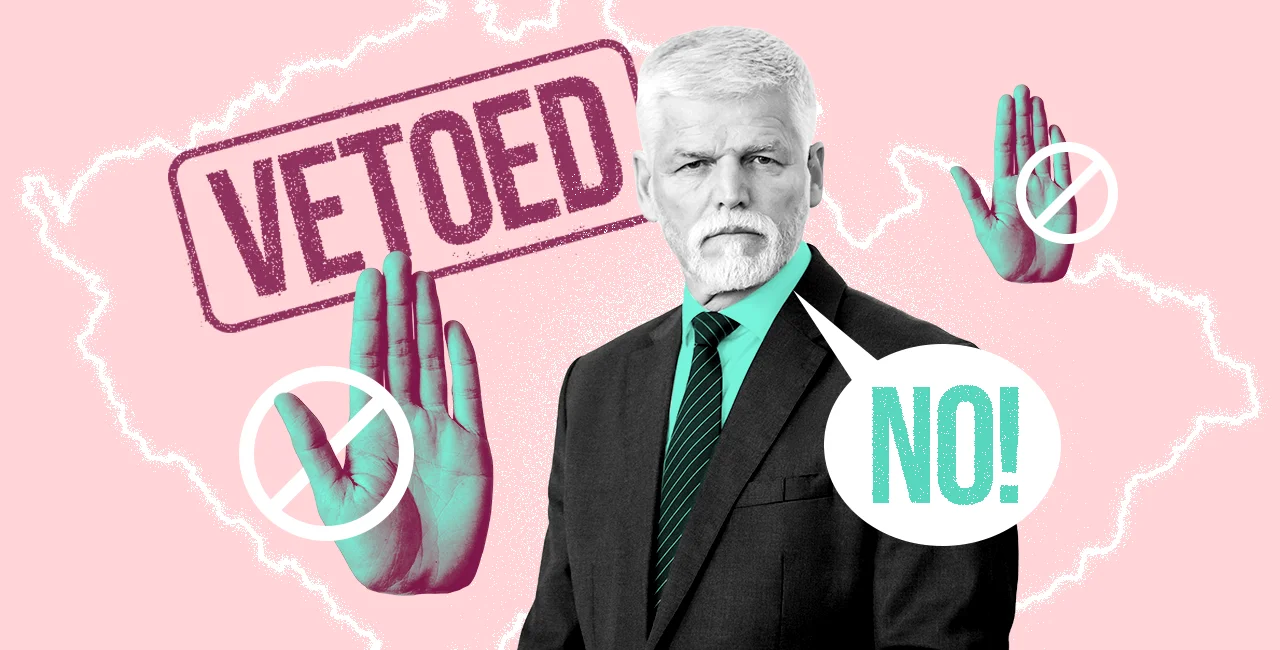

 Summary for: All the presidents’ vetoes: What a presidential “no” really means in Czechia
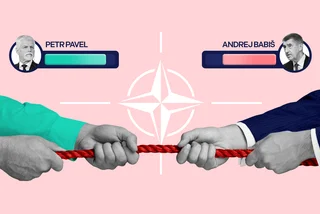
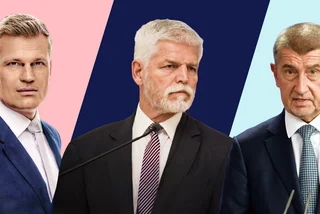
Czech President Petr Pavel has vetoed one of the government’s flagship fiscal bills, setting up a political showdown with Prime Minister Andrej Babiš just as Parliament and government head into its summer recess.
The decision leaves key changes to public spending in limbo and raises questions about what happens when a Czech president refuses to sign a law.
While Babiš has accused the president of playing politics, experts say the veto is consistent with Pavel’s track record and priorities. Unlike his predecessors, Pavel has used his veto power sparingly, reserving it primarily for legislation involving public finances and government transparency.
The timing, however, means lawmakers won’t be able to respond until Parliament reconvenes, leaving one of the government’s key legislative priorities in limbo.
So how much power does a Czech president actually have to block legislation? Can Parliament override a veto? And how unusual is Pavel’s decision compared with those of previous presidents? Here’s what to know.
What did Pavel veto, exactly?
President Pavel did not veto the state budget itself. Instead, he rejected a government-backed bill that would change the rules and safeguards governing how public budgets are prepared.
His third overall, last week's veto is his first against a bill pushed by the new government of Andrej Babiš, in office since December, making the move politically significant given the tense relationship between the two branches of Czech executive power.
According to the president, the controversial bill would threaten the long-term sustainability of public finances and reduce the parliament’s oversight on how annual public budget are prepared.

“If the government creates rules that make it easier to increase debt-financed spending, we will all end up footing the bill for these decisions in the future,” Pavel reasoned.
“The president has vetoed relatively few laws so far. The conflict will intensify,” warns Lukáš Valeš, a political scientist at Newton University in Prague.
In effect, the bill would allow the government to exceed the approved state budget spending by up to 10 percent if the security situation deteriorates – and could do so on the recommendation of its National Security Council.
It would also enable the government to increase spending on strategic infrastructure projects and increase defense spending beyond the framework approved by the Chamber of Deputies until 2036 – three more years than what is currently allowed.
Finally, it would give the Finance Ministry the power to change the financial management of some key state institutions like the Constitutional Court, the Supreme Audit Office and the Presidential Office itself.
According to Ladislav Mrklas, an analyst at the Prague-based CEVRO Institute, Pavel’s veto is consistent with his long-standing emphasis on fiscal responsibility, although he says the president might have benefitted from giving a more detailed justification for his decision.
Why does this veto matter?
The dispute goes beyond technical budget rules, reflecting broader differences between Pavel and the Babiš government over fiscal discipline, government spending, and the role of parliamentary oversight.

Finance Minister Alena Schillerová has argued that without the changes, the government would be forced to keep the 2027 deficit below CZK 150 billion, which she says would harm economic growth and limit defense spending.
The law, she argues, increases budget transparency, empowers the state to make strategic investments to boost growth, and gives the government more leeway to adapt defense spending to the evolving security situation.
Critics, however, argue that Pavel has repeatedly supported higher defense spending within existing budget rules and that the government is seeking greater borrowing flexibility to fund its priorities.
Prime Minister Babiš immediately criticized Pavel’s move as irresponsible and politically motivated, saying the coalition would override the veto when the Chamber of Deputies returns from its summer recess at the end of August. With 108 seats in the 200-member lower house, the coalition has the majority needed to do so.
How presidential vetoes work in Czechia
Under Article 50 of the Czech Constitution, the president can refuse to sign a bill within 15 days of receiving it. The bill then returns to the Chamber of Deputies, where lawmakers can override the veto with a simple majority.

The veto is therefore a delaying power rather than an absolute one: the president cannot permanently block legislation approved by Parliament. It applies to most laws, but not constitutional amendments.
Despite its limits, the veto carries political weight, especially when a president uses it selectively.
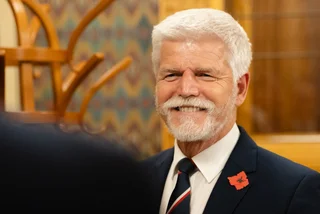
Since taking office in 2023, Pavel had used the veto only twice before: against an amendment changing the role of lay assessors in court panels (2024) and against a law increasing salaries for top politicians and judges (2025). Both vetoes were eventually overturned.
How unusual is Pavel's veto?
Successive Czech presidents have made use of their veto power in very different ways, and with varying degrees of success and moderation.

After Havel’s 24 vetoes, successor Václav Klaus criticized him for what he described as the first Czech president’s excessive use of the practice.
Klaus went on to pass as many vetoes in a little over three years as Havel did in one decade in power. He would go on to establish a domestic record of 57 vetoes during his ten-year presidency, using the power to signal his political opposition to bills passed by successive governments, with a few successes along the way.
Then along came Miloš Zeman, who vowed before his election to use the veto as little as possible compared to his predecessor, and keep it for exceptional cases.
In power for ten years, Zeman used his veto ten times, once successfully, although not a single time during the first government of Andrej Babiš, with whom he had passed what many pundits described as an unofficial alliance.
Pavel has so far used the power less frequently than any of his predecessors, making his latest intervention more politically significant.