 Reading time: 2 minutes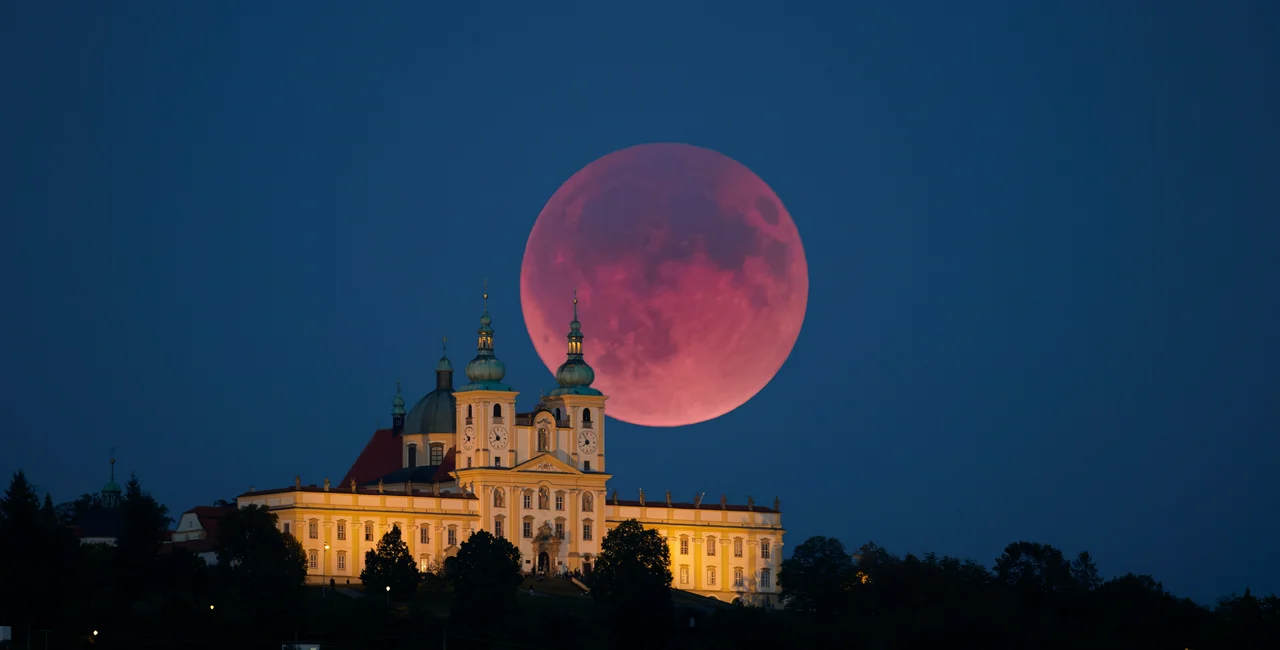

 Summary for: Two eclipses in two weeks: Czech skies set for another rare show this Friday
Early risers across Czechia are in for yet another rare celestial treat this Friday morning, as a near-total lunar eclipse will be visible in the dawn sky.
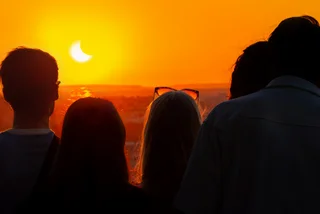
The astronomical event arrives just 16 days after a dramatic partial solar eclipse, giving local stargazers and photographers another immediate opportunity to turn their lenses skyward.
The Aug. 12 solar eclipse was visible across the Czech Republic, with the Moon covering roughly 85–87 percent of the Sun at its peak. In Prague, about 86 percent of the solar disk was obscured at 8:11 p.m., although the Sun was already just a few degrees above the western horizon.
Friday's event reverses the perspective: instead of the Moon passing between Earth and the Sun, Earth's shadow will fall across the Moon.
The partial lunar eclipse will officially begin at 4:33 a.m. CEST on Friday, Aug. 28. At that time, observers will find the Moon hanging low above the southwestern horizon.
As the early morning progresses, residents will see the bright lunar disk gradually shrink as it moves deeper into the Earth's shadow. Astronomers note that it will be a near-total eclipse, providing a highly dramatic visual as dawn approaches.
The most spectacular phase of the celestial event is forecast to occur at 6:12 a.m., when nearly the entire surface of the Moon will be obscured by shadow, leaving only a narrow, brightly lit crescent visible at the northern edge.
However, the window to witness this peak phase will be incredibly brief. In Prague, for instance, the Moon is scheduled to set at 6:17 a.m., just five minutes after the maximum phase is reached.

Experts say plan ahead
To make the most of the short viewing window, experts urge residents to prepare their viewing spots in advance.
"From our territory, we will be able to observe it low above the horizon already at dawn. For observation, it is necessary to choose a place with the most exposed southwestern horizon," recommends a report released by the Silesian University in Opava.
Describing the peak of the event, the university added: "At that moment, only a very narrow cap of the lunar north pole will shine brightly, while the rest of the lunar surface will already be disintegrating in the Earth's shadow."
Fortunately for local observers, preparing for the morning event is straightforward. Unlike a solar eclipse, which demands specialized eye protection to prevent severe retinal damage, observing Friday's lunar eclipse is entirely safe for the naked eye.
Those hoping to get a closer look can simply use standard binoculars, while amateur photographers should be able to capture the disappearing Moon with basic camera equipment before it dips beneath the horizon.