 Reading time: 2 minutes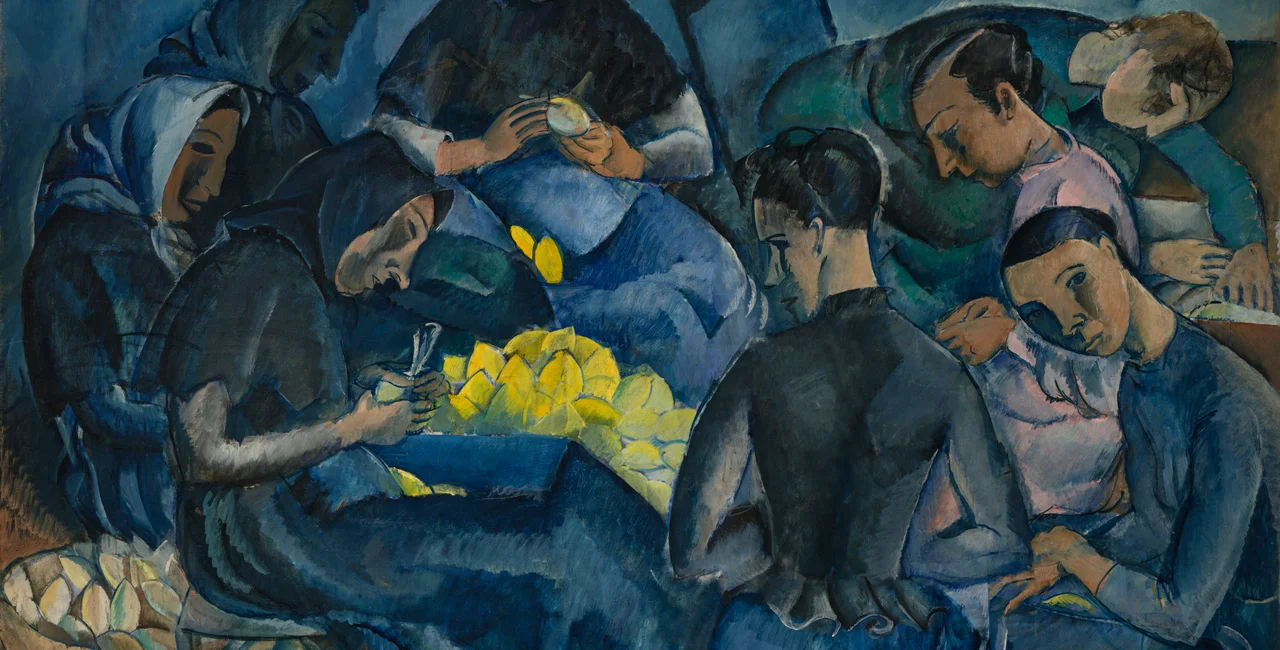

 Summary for: A Bohemian in Paris: French retrospective spotlights Czech-born painter
A major retrospective of Czech-French painter Georges Kars opened in Paris on Thursday, bringing renewed attention to an artist whose journey took him from Kralupy nad Vltavou to the studios and galleries of Montmartre.
Organized by the Museum of Jewish Art and History in collaboration with the National Gallery Prague, the exhibition features more than 150 paintings, drawings and archival documents. It runs through March 14, 2027, at the Paris museum near the Centre Pompidou.

Curated by Anna Pravdová and Pascale Samuel, Georges Kars: A Bohemian in Paris follows the artist’s changing styles alongside a life shaped by migration, cultural exchange and the upheavals of 20th-century Europe.
From Kralupy to the Paris art world
Born Jiří Karpeles into a Jewish family in Kralupy nad Vltavou in 1880, Kars studied in Munich and traveled around Europe before settling in Paris in 1908.
There, he joined the artistic community of Montmartre and became associated with the École de Paris, or School of Paris. The term describes the diverse international artists working in the French capital rather than a single institution or uniform artistic style.
During the 1920s and 1930s, Kars exhibited regularly in Parisian salons and galleries, establishing himself as a respected figure in modern art.
The retrospective spans his early work in Munich, the cubist paintings he produced after moving to Paris and his subsequent neoclassical work. Together, the exhibits show an artist responding to different currents in European painting while maintaining connections to his Central European roots.
“This exhibition restores to European art history an artist whose life and work were shaped by the Central European cultural environment, Paris and the tragic events of the 20th century,” Samuel said.
Czech collections help rebuild a scattered legacy
The National Gallery Prague lent 21 works to the exhibition, with conservation treatment carried out ahead of their journey to France.
They include Kars’s Portrait of Otto Gutfreund, Packing Lemons and Woman With a Parrot, alongside works by fellow artists Otakar Kubín, Otto Gutfreund and Hugo Steiner. Additional loans came from Czech and French institutions and private collections.

The project grew out of École de Paris: Artists From Bohemia and Interwar Paris, an exhibition curated by Pravdová at Prague’s Wallenstein Riding School between November 2024 and March 2025.
For the National Gallery, the collaboration also brings Czech curatorial research to an international audience. Acting Director General Olga Kotková described Kars as an exceptional symbol of the connections between Czech and French culture.

Despite his standing during his lifetime, Kars, who died in 1945, largely slipped from public attention after World War II. According to the National Gallery, the destruction and dispersal of a substantial part of his work by the Nazis contributed to that disappearance.
The Paris retrospective brings surviving works together to give visitors a fuller picture of an artist whose reputation extended well beyond his Czech birthplace.