



 Reading time: 3 minutes

 Summary for: Positive outlook: Czechia closes in on first S&P rating upgrade in 15 years
Czechia has moved a step closer to its first sovereign credit rating upgrade from S&P Global Ratings since 2011 after the agency improved the country’s outlook from stable to positive.
S&P left Czechia’s ratings unchanged at AA- for foreign-currency debt and AA for debt denominated in Czech crowns. However, the positive outlook signals that an upgrade could follow within the next one to two years if the economy continues to grow despite geopolitical and trade pressures.
The agency cited Czechia’s economic resilience, relatively moderate public debt, effective monetary policy and strong external finances. It expects the economy to grow by an average of 2.3 percent annually between 2026 and 2029.
“The outlook revision to positive reflects Czechia’s continued economic convergence process with higher-income peers,” S&P said.
Economy remains resilient despite external shocks
Czech GDP per capita measured in U.S. dollars has increased by around 40 percent over the past five years, according to S&P. The economy has expanded by more than 20 percent in real terms over the past decade despite the pandemic, energy crisis and weak growth in Germany.
The Czech economy grew by 1.9 percent year on year in the second quarter of 2026. S&P forecasts full-year growth of 2 percent, accelerating to 2.4 percent in 2027.
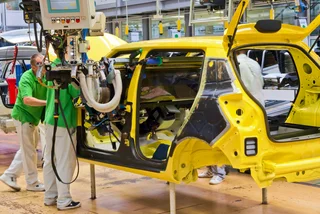
Household spending is expected to remain the primary engine of growth, supported by low unemployment and rising wages. Average wages increased by 6.4 percent year on year in the second quarter.

An emerging recovery in Germany, the destination for nearly 30 percent of Czech exports, should also support Czech manufacturers and exporters.
S&P identified the Czech National Bank’s monetary policy and the country’s banking system as further strengths. Czech banks remain profitable, well capitalized and primarily funded by domestic deposits, while non-performing loans have fallen to a record low of around 1.5 percent.
The country also remains a net external creditor. The central bank’s extensive foreign-currency reserves provide a buffer if geopolitical or economic conditions deteriorate.

Looser budget policy remains a risk
S&P’s more positive assessment comes despite the government’s shift toward higher spending and widening deficits.
The agency expects the general government deficit to rise from 2.6 percent of GDP in 2026 to 3.2 percent in 2027. Deficits should then fall below 3 percent in 2028 and 2029.

Net government debt is forecast to increase from approximately 31 percent of GDP in 2025 to nearly 38 percent in 2029. Although this represents a significant increase from pre-pandemic levels, S&P said it remained moderate by European and global standards.
The agency expects greater spending on transport, defense and two planned nuclear reactors to add to the government’s financing requirements. Construction of the reactors could cost an estimated CZK 500 billion, equivalent to around 6 percent of Czechia’s 2025 GDP.
S&P warned that it could return the outlook to stable if economic growth substantially disappoints, fiscal policy becomes less prudent or the country’s car industry loses competitiveness.
Other risks include prolonged conflict in the Middle East, higher energy costs and weaker demand from Czechia’s trading partners.
An upgrade could nevertheless follow if economic growth continues raising Czech living standards while the country preserves its strong public and external balance sheets.
S&P last raised Czechia’s sovereign rating in August 2011. Friday’s outlook revision therefore represents the country’s most favorable movement in the agency’s assessment in more than 15 years, although no rating upgrade has yet been granted.