



 Reading time: 2 minutes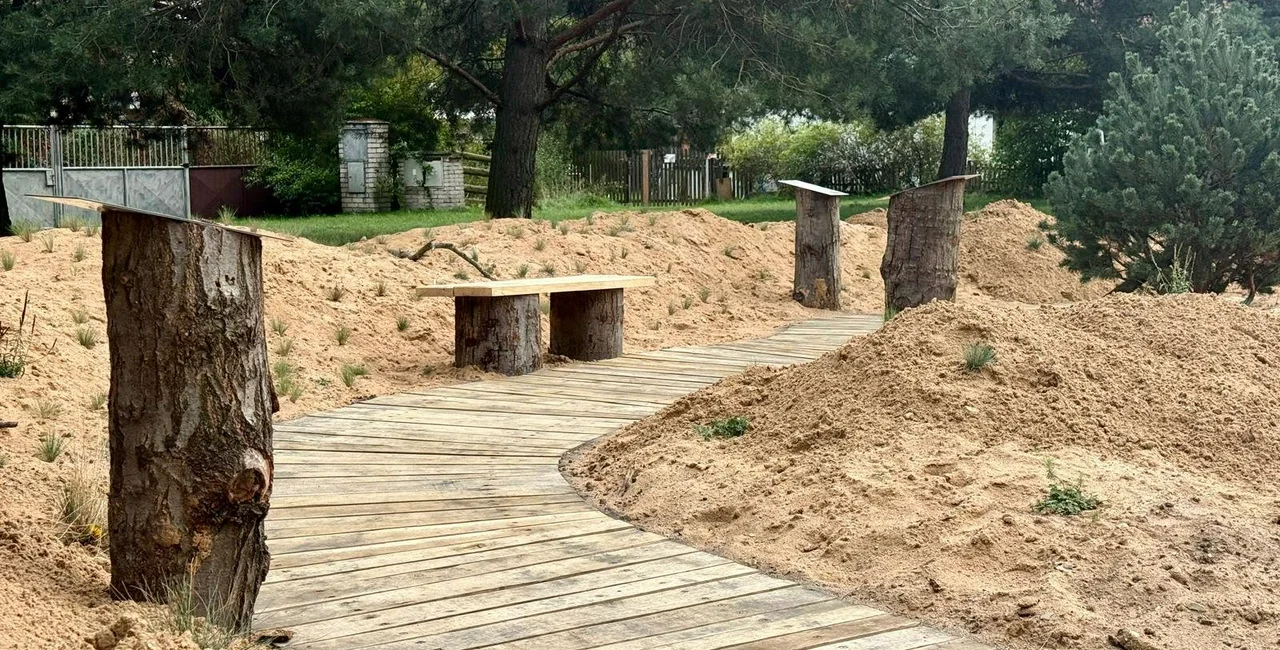

 Summary for: Czech village builds 100-ton sand dune to save a vanishing plant
A Central Bohemian village has built an artificial sand dune to protect one of Czechia’s most endangered plants and show visitors a habitat that is rapidly disappearing from the landscape.
The dune in Kostelní Lhota, near Nymburk, contains around 100 tons of specially prepared sandy soil spread across an area of almost 100 square meters. Dozens of critically endangered sand fescue plants now grow there alongside roughly 10 other species associated with the region’s sandy grasslands.
Botanists say the project is the first of its kind in Czechia. Although the dune provides a new home for rare plants, its principal purpose is educational and it may eventually supply seeds for restoring nearby wild populations.
Recreating a landscape that is disappearing
Sand fescue, known in Czech as kostřava písečná, is a small grass found primarily in the sandy habitats of the Elbe lowlands. It appears on Czechia’s Red List as critically endangered, although it does not have legal protection.
“The dune in Kostelní Lhota shows people what a natural sandy habitat looks like and which typical plants grow there,” said Vlastík Rybka of Prague Botanical Garden, the project’s expert coordinator.
The garden has identified around 35 remaining sand fescue sites, but only about half are considered large and viable. Some populations are shrinking or disappearing as exposed sand becomes covered by moss, fallen leaves, pine needles and more aggressive vegetation.
The plants placed on the new dune originated within Kostelní Lhota itself. The group includes both mature specimens and seedlings, which Rybka said are adapting well.

Botanists expect the grass to spread naturally by seed. Some seeds could later be used to strengthen other populations in the surrounding countryside.
Prague Botanical Garden began mapping the species and collecting its seeds in 2024. Planting in natural habitats around Kostelní Lhota began the following year, while a reserve is maintained in a seed bank.
Restoring the plant is difficult: only a few specimens may establish themselves from every 1,000 seeds sown.
Local children to help maintain the dune
The artificial habitat will require regular care to prevent it from becoming overgrown. Botanical specialists will work with residents and pupils from the village elementary school to maintain the exposed sandy surface.
Mayor Tomáš Drobný said organizers wanted the dune to become more than a place where visitors simply observe rare plants.
“Children can experience in a specific place how nature is cared for and why it makes sense to protect even plants that people might not notice during an ordinary walk,” he said.

The dune forms part of the Vracíme do přírody (Returning to Nature) project run by Prague Botanical Garden with tea producer Ahmad Tea.
The company has contributed approximately CZK 1.15 million to the wider conservation program, with about one-quarter used to construct the dune. The remaining funding supports field research, seed preservation and efforts to propagate sand fescue for reintroduction into the wild.