 Reading time: 2 minutes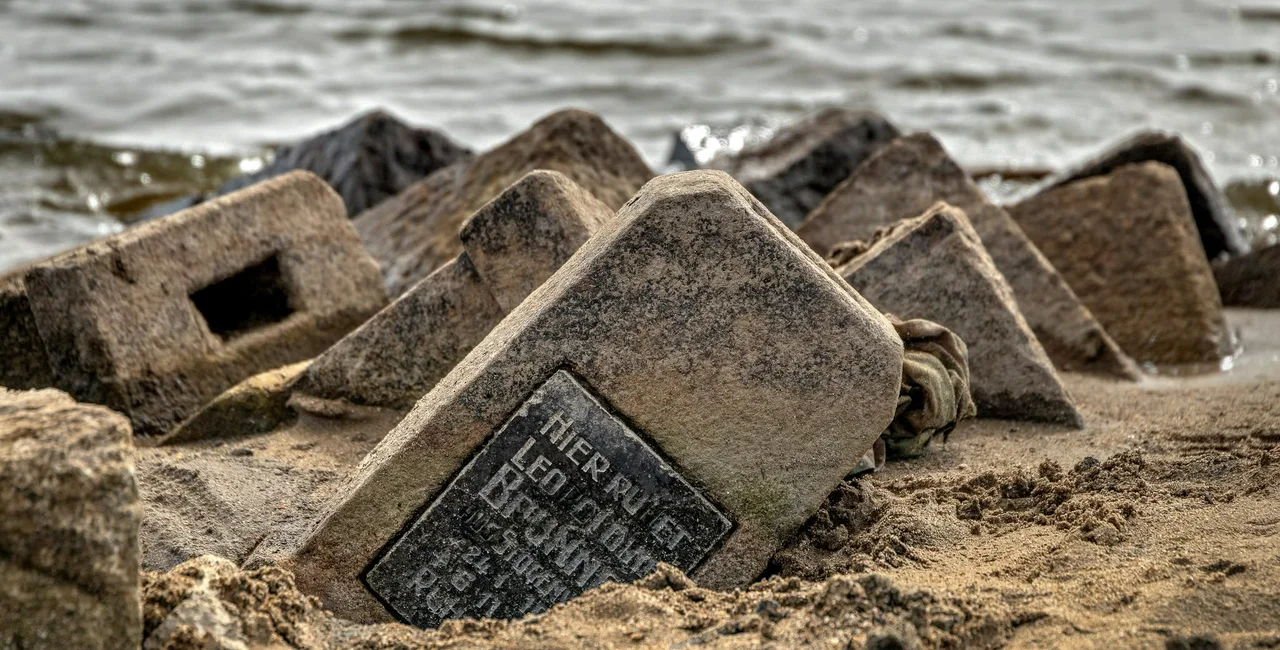

 Summary for: 19th-century graves uncovered in Czechia's Lake Lipno as water levels fall
Low water levels at Lake Lipno have exposed dozens of gravestones connected to Dolní Vltavice, a historic Šumava village that disappeared during the construction of the reservoir in the 1950s.
Experts and volunteers have so far recovered 12 stone relics, mostly dating from the second half of the 19th century. The oldest object, believed to have formed part of a roadside cross or wayside shrine, bears the date 1849.
The discovery began when a visitor exploring the lakeshore after reading Jan Štifter’s novel Vltavice noticed the exposed stones. She contacted the South Bohemian author, who alerted local water rescuers and historians.
A cemetery treated ‘without reverence’
Historical maps and photographs showed that the stones were lying beyond the wall of the former Dolní Vltavice cemetery rather than in their original graves, according to Martin Nechvíle, director of the Regional Museum in Český Krumlov.
The cemetery was used from 1899. During the 1950s, the remains buried there were exhumed and transferred to a mass grave in nearby Černá v Pošumaví before the Lipno reservoir was filled.
The headstones, however, were not preserved in the same way. Historians believe machinery pushed them into a pile outside the cemetery, where they were subsequently submerged.
“They were therefore deposited in a secondary and, it must be said, highly undignified location,” Nechvíle said.

The stones reappeared as this year’s dry weather lowered the reservoir. The recovery operation took place in two stages on Sept. 20 and 22 under the supervision of museum and heritage specialists.
The Regional Museum in Český Krumlov and National Heritage Institute coordinated the work with the Czech Red Cross water rescue service at Lipno, the Vltava River Basin authority, Museum Fotoateliér Seidel and the South Bohemian Research Library.
The recovered objects have been secured in temporary storage. Specialists will now determine where they can be placed permanently and how they might be presented respectfully.
A lost village returns to view
Dolní Vltavice’s documented history reaches back to the mid-13th century. The settlement once had a church, rectory and school and stood on a busy trade route linking České Budějovice with Passau.
More than 400 people lived there before World War II, most identifying as German. They were expelled after the war, and the largely abandoned village was later demolished as the Lipno dam and reservoir were built.

Historians now hope the surviving inscriptions can be connected with individual names, portraits and family stories. That research could restore part of the identity of a community erased first by displacement and then by rising water.
Nechvíle said museums, historians and other participating institutions must now agree on a dignified future for the stones. Their recovery, organizers said, offers an opportunity to preserve a small but tangible fragment of Dolní Vltavice’s lost cultural heritage.