



 Reading time: 2 minutes

 Summary for: From Prague trams to battery trains, Škoda Group posts a profit surge
The company behind Prague’s newest trams and a growing fleet of battery trains reported a sharp rise in first-half earnings Tuesday. Plzeň-based Škoda Group said its earnings before interest, taxes, depreciation and amortization, or EBITDA, reached €111 million, about CZK 2.7 billion, up 140 percent from a year earlier.
Revenue rose 32 percent to €726 million, roughly CZK 17.7 billion. New orders increased 47 percent to €475 million. The figures, announced at the InnoTrans transport fair in Berlin, continue the growth Škoda reported for 2025, when it secured a record €1.8 billion in new orders.
The distinction between earnings and profit matters: EBITDA is not the company’s net profit. It measures earnings before financing costs, taxes and depreciation are accounted for.
Battery trains drive new orders
Škoda said rail manufacturing accounted for much of the increase in new business, particularly battery and hybrid trains. Its battery-train contracts include up to 16 units for Latvia and up to 36 for Slovakia. The company is presenting a new generation of its battery-powered RegioPanter train in Berlin.
Speaking at the InnoTrans fair, Chief Executive Petr Novotný said battery trains are becoming more important for regional routes where tracks are not electrified. Škoda plans to keep electric, battery and hybrid trains at the center of its rail business while expanding exports beyond its Czech and Slovak markets.

The group also pointed to investments in its factories. Board member Jaroslav Zoch said spending on production capacity and efficiency in recent years was now showing up in its results.
Škoda invested CZK 2.6 billion last year and says the expanded capacity could allow it to produce up to 100 more trains annually without another major round of investment.

Prague trams remain part of the story
City transport is another source of work. Škoda’s ForCity Plus 52T trams have already carried 12 million passengers and traveled more than 1 million kilometers in Prague, according to the company. Prague’s transit operator exercised an option for another 25 trams this year.
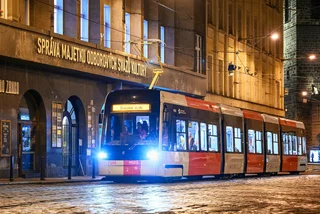
Škoda is also supplying trams to cities including Uppsala, Sweden, and Bergamo, Italy, while trolleybus orders include vehicles for Germany, Estonia, Bulgaria and Plzeň.
The group employs about 10,000 people, with its largest manufacturing operations in Plzeň and northern Moravia. Its latest results show the scale of the business behind vehicles familiar to Czech commuters, as well as its increasing reliance on orders from elsewhere in Europe.