




 Reading time: 2 minutes

 Summary for: Czech voters reject wind farms and waste plants in local referendums
Residents largely rejected proposed wind farms, waste incinerators and mining projects in local referendums held alongside Czechia’s municipal elections on Oct. 9–10, according to results reported by ČTK on Saturday evening.
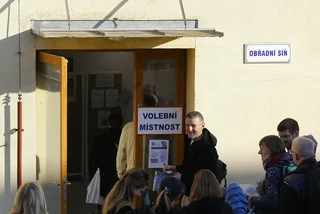
Around 40 municipalities and city districts held referendums, roughly half concerning wind turbines. The ballots allowed residents to weigh in on projects affecting their immediate surroundings, from energy infrastructure to farmland development and railway crossings.

Among the wind-farm results available so far, Dětřichov in the Svitavy district was the only municipality reported to have voted in favor. Residents supported allowing the village to continue negotiations with energy company ČEZ, rather than approving construction outright.
Wind projects face widespread local opposition
Voters rejected wind turbines in municipalities including Bystrá nad Jizerou, Kožlany, Žihle, Měčín, Šebířov, Radenín and Cítoliby.
Opposition also prevailed in Kamenná Horka and Mikuleč, both in the Svitavy district. Nearby Sklené voted against supporting either wind turbines or ground-mounted solar parks.

The results reflect decisions on individual local proposals. They do not establish a nationwide vote on wind energy, and the final picture may change as further referendum results become available.
Residents also opposed several waste and extraction projects. In Temelín, voters rejected a proposed hazardous industrial waste incinerator in Hůrka. Přísečná, near Český Krumlov, opposed the planned expansion and conversion to waste burning at the privately owned Energoblok Domoradice heating plant.

Majetín in the Olomouc district voted against expanding sand and gravel extraction, while Litultovice in the Opava district rejected an extension of quarrying in its Luhy neighborhood.
There were exceptions: residents of Dubenec, near Příbram, narrowly supported the planned excavation of a uranium spoil heap.
Turnout determines whether decisions count
Other ballots focused on preserving local infrastructure and open space. Residents of Ostrá, near Nymburk, backed keeping agricultural land undeveloped and opposed municipal steps that would enable extensive construction there.
In Záhorovice, voters supported retaining all three railway crossings. Hrádek in the Hradec Králové district voted for the municipality to take ownership of St. George’s Church from the Roman Catholic Church.
Not every referendum produced a valid decision. A ballot on a proposed solar power plant in Ralsko failed because only 537 people participated, falling below the required turnout.

For a local referendum to be valid, at least 35 percent of eligible voters must participate. A decision is binding if it receives support from more than half of participants and at least 25 percent of all eligible voters.
Residents checking an outcome should therefore look at both the vote split and turnout. The Interior Ministry maintains an overview of announced referendums and reported results.