




 Reading time: 5 minutes

 Summary for: What a healthcare membership adds when employees are already insured in Czechia
Your employees already have health insurance. So why would your company pay for a corporate healthcare program?
The answer is less about paying for “extra” healthcare and more about making it easier to access. For employees covered by the Czech public health insurance system, many healthcare services continue to be covered by that system. The corporate program pays for practical support around that care, including easier appointment booking, a dedicated client contact and help coordinating the next steps.
Employees in Czechia can be fully insured and still spend considerable time looking for a doctor, securing an appointment or arranging follow-up care. For HR teams, this can mean fielding questions about doctors, appointments and how the Czech system works.
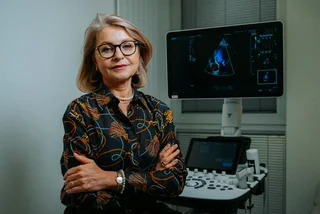
“From a company’s perspective, it is important to distinguish between simply being entitled to healthcare and how quickly and conveniently an employee can actually access it,” explains Kateřina Kaufmannová, sales and marketing director at MY CLINIC, who has worked in healthcare for more than 10 years.
We asked Kaufmannová to explain what a corporate healthcare program can add to existing coverage, from making care easier for employees to reducing the administrative burden on HR.

Easier access saves working time
Getting medical care can involve far more than the time spent at a doctor’s office. Employees may spend hours searching for specialists, calling medical clinics, waiting for an available appointment, or arranging several visits at different facilities.
“From both a business and employer perspective, the illness itself is not the only issue. A significant amount of lost time can also come from searching for a doctor, calling medical offices, waiting for appointments, and attending several separate visits that are not coordinated with one another,” Kaufmannová says.
A corporate healthcare program can make that process more straightforward. “Follow-up specialist examinations, laboratory tests, or diagnostic procedures can then be better coordinated, reducing unnecessary delays,” she adds.
A dedicated contact takes pressure off HR
The Czech healthcare system can be difficult to navigate, particularly for international employees and people who have recently arrived.
“The HR department is often the first place an international or newly arrived employee turns when they do not know where to find a doctor, how to make an appointment, or whether they will be able to communicate in English,” Kaufmannová says.
This can put HR in the position of helping with individual healthcare situations that are outside its usual role. A corporate healthcare program gives employees a clear point of contact instead, so they can get professional guidance without having to rely on HR to navigate each situation.
For employers, that also creates a clearer and more consistent healthcare offering, rather than leaving employees to work out the system on their own.
Coordinated care provides support beyond insurance
Having access to care is one thing. Understanding how to use it is another. International employees may not know whether they need a referral to see a specialist, or where to go for an urgent but non-life-threatening problem.
Language barriers can make the process harder. “Employees should feel confident that they understand what is happening, what their options are, and what will happen next,” Kaufmannová says.
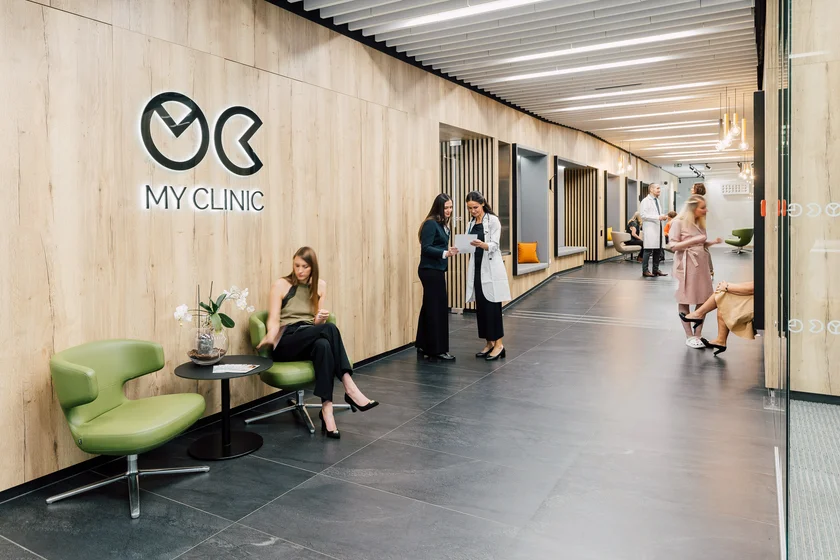
MY CLINIC works with corporate clients to connect employees with doctors or healthcare professionals who can communicate in the required language, most commonly English. Its client center can also help organize appointments and coordinate follow-up care.
That coordination becomes especially useful when several specialists, tests or procedures are involved. “One advantage of MY CLINIC is its broad range of medical specialties, including day surgery, and the ability to arrange a large proportion of care in one location,” Kaufmannová says.






Depending on the program, companies can also extend care to family members. For employees with children or partners who need medical care, having support with pediatricians, specialists or examinations can make managing healthcare in Czechia considerably easier. It can also affect the employee’s working day. Difficulty finding care for a child or partner may require time away from work and can be particularly stressful for families that have recently relocated.
Preventive care reflects workforce needs
Preventive care can also form part of a corporate program. Depending on the workforce, this might include checkups, laboratory tests, screenings or workplace Health Days focused on areas such as musculoskeletal health and lifestyle-related conditions. An office-based team may have different priorities from shift workers or employees in physically demanding roles.
“Prevention should not be treated as a one-off benefit. It should be part of long-term employee care,” Kaufmannová says. “A well-designed preventive program can help identify health risks early, before they begin to significantly affect an employee’s professional or personal life.”
The right program depends on the workforce
Not every company needs the same level of corporate healthcare. A smaller company with a high proportion of international employees may have different needs than a larger organization with multiple locations, shift workers or physically demanding roles.
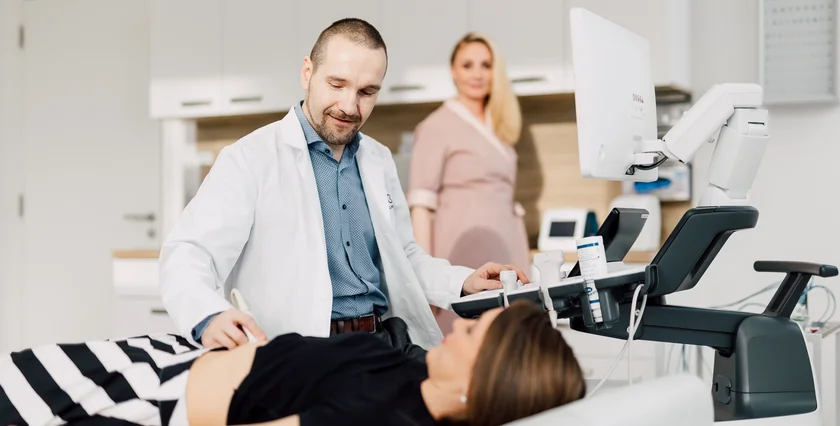
Some employers may prioritize general practitioner access, while others may want broader specialist care, preventive screenings, or family coverage. Options may range from an annual program centered on general practitioner care to broader plans covering selected specialists. MY CLINIC also offers flexible programs that combine access to core services with credit employees can use for additional specialist care.
“We first discuss each company’s goals, budget, expectations, and the situations its employees most commonly face,” Kaufmannová says.
This makes the decision less about choosing the most comprehensive package and more about identifying where employees experience the most friction. A program can then be adapted around those needs, including the level of client support, language assistance, access to specialists and options for family members.
Look beyond the price tag
For HR teams considering an additional healthcare benefit, the price of a program is only one part of the equation.
“I recommend assessing the program based on more than its price. The main consideration should be the specific problems it is intended to help solve for the company and its employees,” Kaufmannová says.
She also recommends looking at healthcare access, absence rates, the volume of health-related questions handled by HR, and the proportion of international employees. Recruitment and retention can also be part of the calculation, particularly for companies competing for international talent.
A corporate healthcare program is most valuable when employees understand how to use it and its services address problems they actually encounter. Kaufmannová recommends reviewing usage, employee satisfaction, time saved and the number of healthcare questions handled by HR to ensure the program continues to meet the workforce’s needs.
“For company management, such a program offers greater predictability, a clearly defined level of benefits, and the opportunity to provide employees with a service they will actually use,” Kaufmannová explains. “It can also support recruitment, retention, and the company’s overall reputation as a responsible employer.”