Good afternoon, not a whole lot of breaking news this afternoon as Prague lazily and hazily heads into this mid-July weekend. Those who like to spend their off days at the Džbán reservoir in Prague 6 will have to put it off for now after hygiene authorities banned swimming there due to toxic algae. For the good news, over 100 more trams in Prague will get AC - but we'll have to be patient. Here are today's main headlines.
This afternoon's top story
EU criticizes Czech conflict of interest laws
The European Commission criticized the Czech Republic for shortcomings in its conflict of interest laws in its annual report on the state of rule of law in EU member states. In particular, it flagged a recent draft amendment that would make it easier for companies controlled or owned by members of government to receive state subsidies and be awarded public contracts.
Public media concerns. In its 22-page report, the EU Commission also expressed concerns about the Czech government's controversial plans to abolish license fees for public TV and radio and fund them directly from the state budget starting next year.
More top headlines
Czechia has EU's second-lowest inflation
At only 1,1 percent last month, the Czech Republic had the second lowest inflation rate in the European Union, according to the latest data released by the EU's statistical office Eurostat. Across the continent, the average inflation rate slightly dropped from 3.3 percent to 2.9 percent in June.
A closer look. Although Eurostat uses a different methodology, the latest figures are in line with the previous estimate from the Czech statistical office released last week. Taking a closer look, food and energy prices are dropping while services (like restaurants, hospitality, repairs, etc.) are still getting more expensive.
Older Czech vineyards affected by drought
Record-high temperatures and the lack of rainfall has led to unprecedented drought episodes that are even starting to affect older vineyards in South Moravia, RPI writes. Due to their deeper roots, older vines are traditionally more resilient than their younger siblings in the face of droughts and water shortages, but even this may now be changing.
Winegrowers on alert. Travelling to South Moravia last week, Seznam Zpravy reporters shared the growing concerns of South Moravian winemakers as climate change slowly but surely reshuffles Czechia's winemaking map. Some are staying optimistic, though: "The climate is becoming more and more similar to Italy or Croatia, where wine is produced on a large scale, so the vines will probably be able to cope with it," local winemaker Marcela Kadrnková said.
News you can use
Swimming banned at Prague's Džbán reservoir
PARTNER ARTICLE
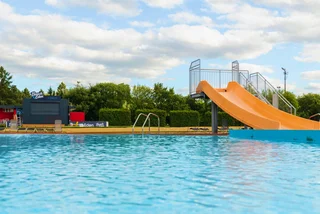
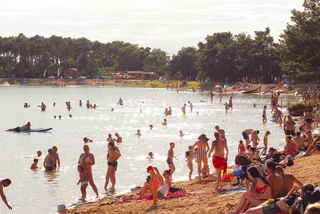
Hygiene authorities have banned swimming at the Džbán reservoir, located in Divoká Šárka in Prague 6, due to high levels of toxic blue-green algae and algal bloom. Hygienists have also advised children and other more vulnerable groups of people to avoid swimming at the nearby Šeberák pond, where lower levels were also recorded.
Regular monitoring. Health authorities regularly monitor the water quality of outdoor bathing sites and natural swimming spots throughout the summer. Although seeing a slight degradation compared to last month, swimming is still permitted in other places across Prague, including at the Motol pond, Braník beach or Hostivař reservoir.
Over 100 more Prague trams to get air conditioning
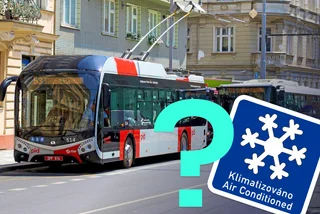
The Prague Transport Authority (DPP) announced it had signed a contract with Polish company Enika to install air conditioning in 123 more Škoda 15T trams in the coming years, Novinky.cz reported. For now, less than 20 percent of Prague's tram flat is equipped with air conditioning.
Not exactly for tomorrow. The upgrades won't happen overnight. "The entire project will take place gradually, one vehicle at a time, so that air conditioning can be installed for at least 20 trams [a year]," said DPP's technical director Jan Šurovský.
POLL RESULTS: We asked readers if they go swimming in natural lakes, reservoirs and ponds in Czechia. About half of respondents said they loved swimming in nature, compared to a little less than a third who prefer swimming pools and other facilities.