 Reading time: 2 minutes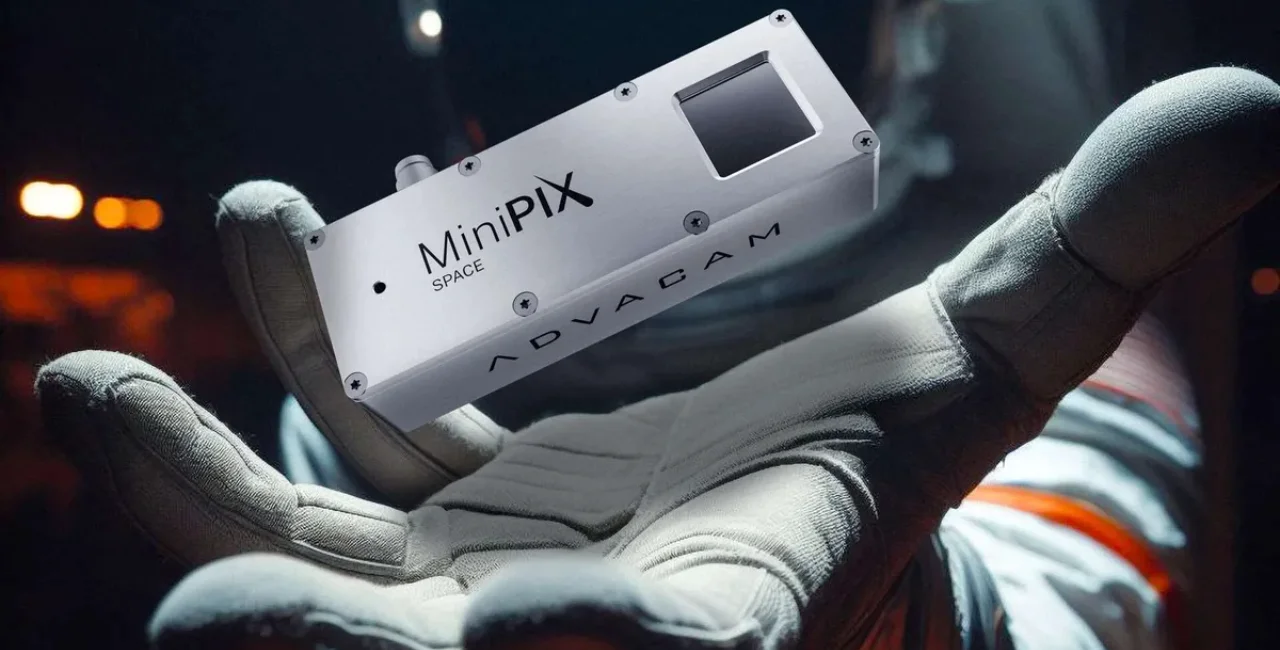

 Summary for: Czech technology is part of humanity's first moon mission in 50 years
Czech-made technology is playing a key role in NASA’s Artemis II mission, which marks humanity’s return to crewed lunar exploration after more than 50 years. Devices developed by Prague-based company ADVACAM are onboard the Orion spacecraft, helping monitor cosmic radiation and protect astronauts during their journey around the Moon.
The ten-day mission, which launched this week, is the first crewed flight in NASA’s Artemis program and a major step towards future lunar landings. While the spacecraft carries astronauts from the United States and Canada, Czech sensors are quietly tracking one of the mission’s biggest risks: space radiation.

Czech technology in deep space
The Orion spacecraft is equipped with radiation sensors developed by ADVACAM, which use advanced pixel-based chips originally designed at CERN. These sensors, known as MiniPix detectors, are capable of tracking individual particles of cosmic radiation in real time.
Radiation exposure is one of the most serious challenges for human spaceflight beyond Earth’s protective magnetic field. The Czech devices measure the type, energy, and direction of incoming particles, helping scientists assess risk levels for the crew.
According to the Czech Association of Aerospace Industries, the system provides detailed data that can be used to evaluate how effectively Orion protects astronauts during deep space travel.
“The Artemis program confirms that Czech industry and talent have a firm place in global space programs,” said association president Jiří Protiva in a press release. He added that Czech firms are increasingly moving beyond subcontracting roles into core technology development.
The technology behind the sensors originates from research at CERN and has already been used in space, including on the International Space Station and Czech satellites. Its adaptability has made it a valuable tool in both scientific and commercial space missions.





ADVACAM’s systems are also expected to support future projects such as NASA’s Gateway lunar space station, as well as upcoming Artemis missions that aim to land humans on the Moon again.
Growing Czech role in space industry
Czech involvement in Artemis II is part of a broader trend of increasing participation in international space programs through both industry and European Space Agency partnerships.
Industry representatives say the country is gradually shifting from a supporting supplier role to one that contributes to key mission technologies. This shift is seen as crucial for the future competitiveness of the Czech aerospace sector.
Education and outreach are also becoming part of this expansion. Five Czech students travelled to Florida to witness the Artemis II launch as part of the “Czech Journey to Space” initiative, reflecting efforts to inspire a new generation of engineers and scientists.
Experts involved in the program say that Artemis is not only about returning to the Moon, but about building a long-term presence in space. That includes developing infrastructure, energy systems, and safety technologies that will support future missions to the lunar surface and beyond.

Beyond radiation monitoring, Czech companies are expanding their ambitions further. Firms such as Stellar Exploration and Stellar Nuclear are developing modular nuclear energy systems designed to power future lunar and Martian bases, where reliable energy supply will be essential for long-term habitation.