



 Reading time: 2 minutes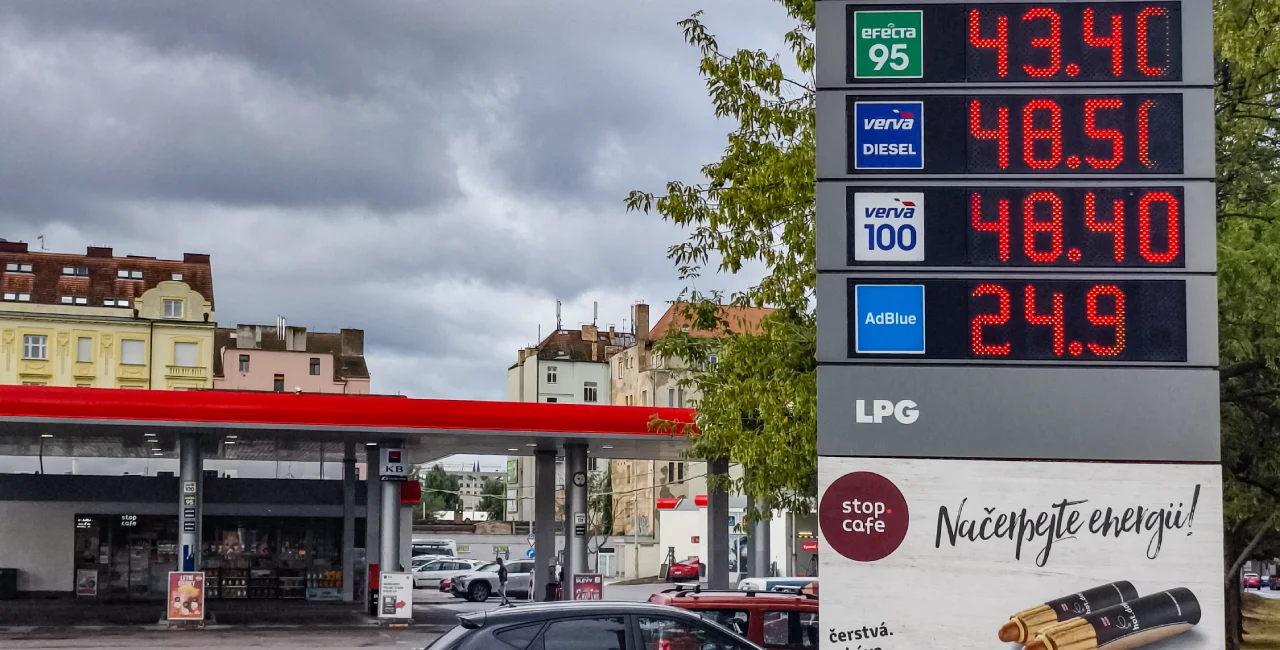

 Summary for: Czech fuel prices hit four-year high: How much higher will they go?
Czech drivers are facing another rise in fuel costs this autumn, with petrol reaching its highest average price in more than four years and analysts warning that both petrol and diesel are likely to become more expensive in the coming weeks.
The average price of Natural 95 petrol jumped CZK 1.88 in a week to CZK 44.22 per liter as of Sept. 9, according to data from fuel-price tracker CCS. Petrol was last more expensive in August 2022. Diesel rose CZK 1.90 to CZK 47.79 per liter, its highest level since April.

Drivers in Prague are paying even more, with petrol averaging CZK 45.05 and diesel CZK 48.86 per liter. Analysts say diesel could soon climb above CZK 48 nationally, while prices at more expensive filling stations may cross the CZK 50 threshold.
Why are Czech fuel prices rising?
The latest increase has been linked partly to developments on global oil markets following renewed escalation in the Middle East, as well as disruptions at refineries. But economists say another factor is increasingly important: unusually high refinery margins.
Economist Lukáš Kovanda told Echo24 on Saturday that recent UBS estimates put gross refining margins at Polish energy group Orlen at around $50 to $55 (CZK 1050 to 1150) per barrel and at Hungary's MOL at close to $50 (CZK 1050). Longer-term levels have often been around $15 to $20 (CZK 315 to CZK 420), he said.
That means Czech fuel prices could continue rising even without a comparable increase in crude oil prices. Orlen operates Czechia's Litvínov and Kralupy refineries, while MOL and its Slovnaft subsidiary are major suppliers to the regional market.
Analysts were already forecasting further increases earlier this week. XTB analyst Jiří Tyleček estimated that diesel had room to rise by roughly another crown per liter toward levels seen in the spring, while petrol could increase by several dozen haléřů.

A substantial decline would likely require an easing of tensions in the Middle East, restoration of shipping through the Strait of Hormuz and the return of idled refinery capacity, Tyleček said.
Could the government intervene again?
The Czech government is monitoring prices but has so far ruled out immediate regulation. Industry and Trade Minister Karel Havlíček said that authorities were checking Czech and neighboring countries' fuel prices daily and had measures ready if intervention became necessary.
The government previously regulated fuel prices from April until mid-July. During that period, maximum prices reached CZK 45.23 per liter for petrol and CZK 49.59 for diesel, while the government also temporarily reduced diesel excise duty.
Fuel prices in Czechia have climbed to their highest levels in years and could rise further in the coming weeks. Have higher fuel prices changed your driving habits?
Havlíček said the government could act again if Czech prices become significantly higher than those in neighboring countries. Fuel is currently cheaper in Poland, while some neighboring states have retained measures designed to limit increases.
Prime Minister Andrej Babiš has meanwhile described refinery margins as extreme and backed discussing possible action at the EU level. EU finance ministers are expected to discuss the issue in Dublin next week, with a windfall tax on oil companies among possible measures.

The increases could have effects beyond motorists. Fuel represents roughly one-third of truckers' costs, according to transport association Česmad Bohemia, which has identified CZK 50 per liter for diesel as a level that would cause problems for a significant share of carriers. Rising fuel costs also contributed to Czech inflation accelerating to 1.9 percent in August.