 Reading time: 2 minutes


 Summary for: Government approves plans to enshrine Czech crown in Constitution
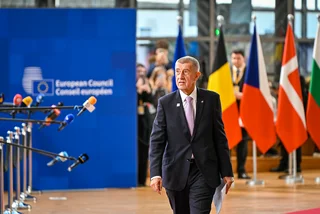
The government of Prime Minister Andrej Babiš gave its go-ahead to a proposal meant to enshrine the Czech crown in the Constitution, Czech Television reported after today’s cabinet meeting.
Motorists and SPD push for constitutional protection
Put forward by Foreign Minister Petr Macinka, Sports Minister Boris Šťastný and Filip Turek – all members of the Motorist Party – along with far-right leader and House Speaker Tomio Okamura, the proposal seeks to include a new article 89 in the Czech Constitution, which would state: “The currency of the Czech Republic is the Czech crown.”

The proposal, which has yet to receive a full cabinet approval and mirrors a similar law adopted in Hungary, is expected to be officially submitted next year.
Based on EU treaties, all member states – including the Czech Republic – are legally bound and technically commit to adopting the euro at some point in the future. There are no specific dates or timeline to do so, however, meaning any member can choose to indefinitely postpone joining the Eurozone.

But according to supporters of the reform, the new provision isn't in violation of EU law as it “does not prohibit the adoption of a common European currency nor does it stipulate that the Czech Republic will not adopt the common currency [euro].”
After Monday’s cabinet meeting, Finance Minister Alena Schillerová (ANO) described the move as a strong political gesture to highlight the current government’s position in favor of the Czech crown and against adopting the euro.
Supermajority in limbo
Enshrining the Czech crown as the country’s currency in the Czech Constitution can only be done through a constitutional amendment – which requires the approval of two-fifths of both chambers of Parliament, a supermajority the current government does not have.

If the amendment is adopted, it also means that any future change in the country’s currency would also have to be approved by a three-fifth constitutional majority of lawmakers, making adopting the euro more difficult for future governments.
Prosazujeme Äeskou korunu do ústavy 🇨🇿 https://t.co/ECwXyVTKCI
— Tomio Okamura (@tomio_cz) October 26, 2026
It’s unclear whether opposition MPs – some of whom have in the past backed such an idea – could provide the government with the necessary extra votes.
“It’s a question of what the future discussions will look like, because most opposition parliamentary groups have already said that they will not help the cabinet with their votes on this topic,” according to Czech Television editor Karolína Jelínková.
“However, the coalition could still find some votes in other groups. For example, some in the [right-wing] ODS did not rule it out,” she added.
In May, Prime Minister Babis already announced that the government would stop preparing an annual report on the country’s readiness to adopt the euro – a document he described as unnecessary considering the current ruling coalition did not plan on joining the Eurozone.


Czech society remains strongly opposed to the euro, with the latest polls showing about two-thirds of Czechs against and just about 30 percent in favor of adopting the common currency.