 Reading time: 5 minutes

 Summary for: Exchanging cash in Prague: How to avoid bad Rates, ATM fees and tourist traps

You’re back in Prague with euros left in your wallet, or heading home for the holidays and need cash in another currency. You pass an exchange office on your way to work. Should you stop there, compare rates elsewhere or leave it until you reach the airport?
Making an informed currency exchange doesn't require specialist financial knowledge if you know which figures matter and ask the right questions before completing the transaction.
It’s easy to put off until you’re packing, but a quick comparison before you go can make a difference to how much you have to spend. DealFin, a currency exchange office in central Prague, shared what to look for on the rate board and what to ask before handing over your cash.
Czech crowns, euros and the truth about zero commission
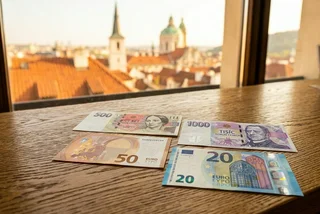
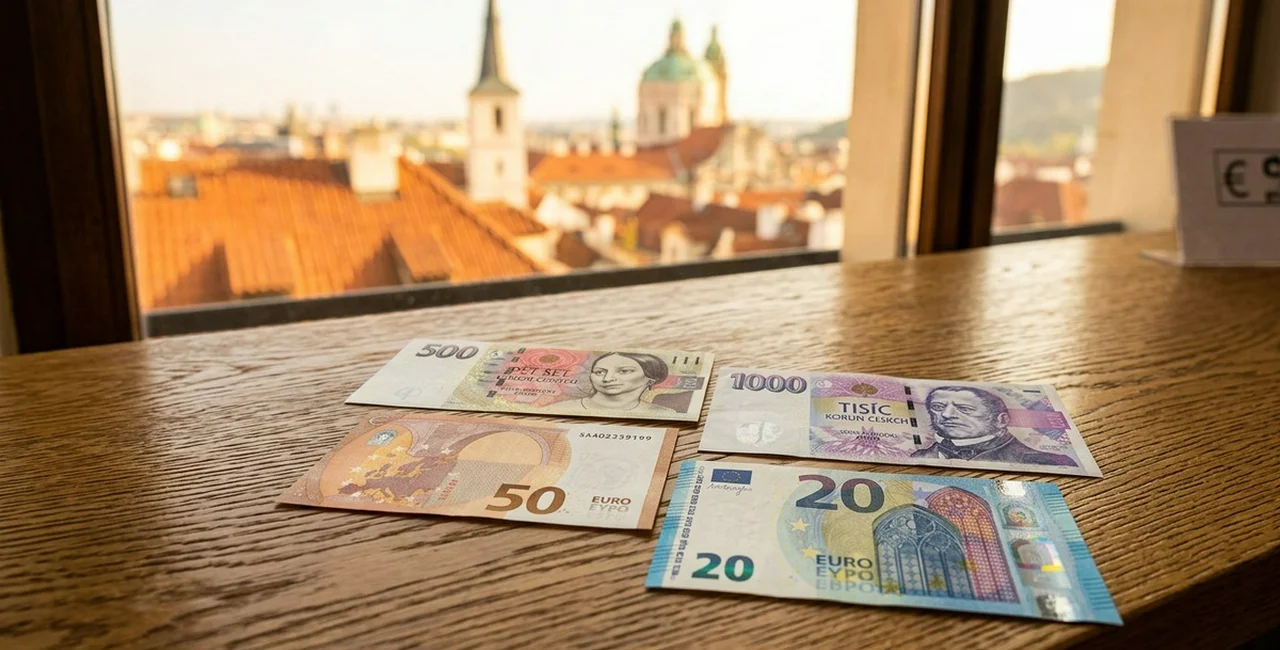
If you’ve recently moved to Czechia, remember that its official currency is the Czech koruna (CZK, Kč), even though the country is part of the European Union. Some restaurants, hotels and tourist shops accept euros, although their conversion rates may be less favorable than those available through a currency exchange office.
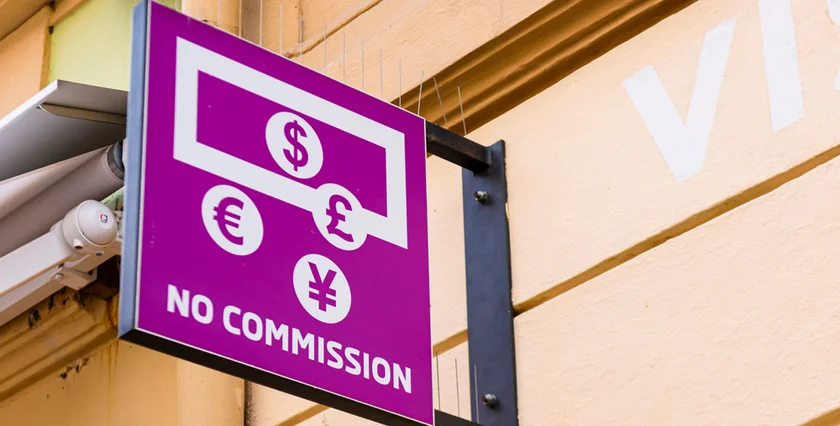
A zero-commission sign doesn’t necessarily mean a good deal. For standard banknote exchanges, zero commission is a legal requirement. “It is prohibited to charge a commission for an exchange transaction,” the Czech National Bank states in its consumer guidance. Limited exceptions include coins and cheques.
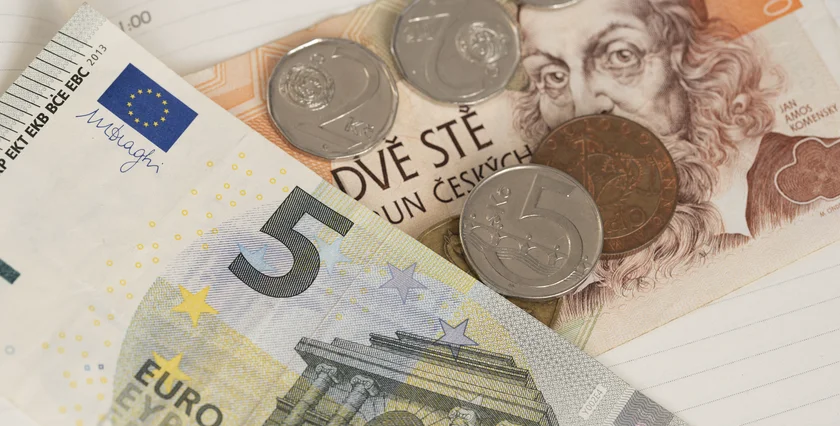
Exchange offices can earn money through the difference between their buying and selling rates, known as the spread.
Two counters may both advertise zero commission but offer different amounts of CZK for the same amount in euros. The better offer is the one that gives you more crowns, regardless of the advertisement.
How to read exchange rates and calculate your payout
Exchange boards usually show “We buy” and “We sell.” These labels describe what the exchange office does, which can easily lead to confusion.
“We buy” means you give euros or dollars and receive Czech crowns. “We sell” means you give Czech crowns and receive euros or dollars.
If you’re exchanging euros left over from a trip for CZK, look at the euro “We buy” rate. If you’re buying euros for travel, check “We sell.” Checking the wrong column can leave you expecting a payout the exchange office never offered.

Before exchanging money, ask how much you’ll receive in the currency you need. For example: “How many Czech crowns will I receive for this amount?”
The calculation is straightforward: Multiply the amount in euros by the cash buying rate to calculate your CZK payout. Online converters often show reference or mid-market rates, which may differ from the rate available when exchanging physical banknotes.
Currency movements can also change your travel budget. Previous reports show that in 2025, the crown had reached its strongest level against the euro in almost a year and had also gained against the dollar and pound. That was a snapshot of the market then.
For an upcoming trip, compare today’s offers rather than relying on an older headline. For larger transactions, ask whether you qualify for a preferential rate and whether you need to book it in advance.
Airports, ATMs and card payments
If you need foreign cash for a trip, compare rates before you reach the airport or railway station. Their exchange counters offer convenience, but checking an offer near home or work gives you a figure to compare.
If you still use a foreign bank card in Prague, ATMs are another way to obtain Czech crowns, although your bank or the machine operator may charge additional fees. Watch for dynamic currency conversion (DCC), where an ATM or card terminal offers to charge you in your card’s currency instead of CZK.
Choosing CZK generally avoids the operator’s conversion, leaving your bank or card provider to handle the exchange. Your provider’s own rates and fees may still apply.
The same applies when paying with a foreign card in a restaurant or shop. Check the currency displayed on the terminal before confirming payment. If you use a Czech-crown account while traveling abroad, the equivalent choice is to pay in the destination’s local currency.

Your rights when exchanging cash in Czechia
Currency exchange offices in Czechia operate under rules supervised by the Czech National Bank (CNB). Customers must be informed about the applicable exchange conditions and receive a receipt after completing the transaction.
One important protection is the right to cancel a standard in-person exchange within three hours, without giving a reason or paying a cancellation fee. For transactions above the equivalent of EUR 1,000, this right applies to the portion up to that amount.
The cancellation request must be made at the same exchange office, and only its public opening hours count toward the three-hour period. Keep your receipt and return promptly if you need to reverse a transaction.
For exchanges exceeding the equivalent of EUR 1,000, the office must provide specified information before the transaction, including the exchange rate, payout and cancellation rights. Before completing an exchange, check that the amount and currency match what you agreed.
How to choose a reliable exchange office in Prague
An attractive rate is no reason to exchange money with a stranger on the street. Reports exist of scammers who gave tourists obsolete Belarusian rubles instead of Czech crowns, and investigators linked incidents near Wenceslas Square and Prague Castle to losses exceeding CZK 30,000. If you have friends or family visiting Prague, remind them to use an established exchange office.
A reliable exchange office should clearly display its rates, explain the amount you’ll receive and provide the required transaction documentation. Look for transparent conditions, a physical address and the opportunity to confirm the payout before handing over cash.
DealFin operates a currency exchange office at Vladislavova 49/9, Prague 1, near Můstek metro station and Wenceslas Square.
Customers can request a rate online before visiting. DealFin offers a 60-minute reservation. Confirm the reservation deadline when booking.
DealFin offers VIP exchange rates for transactions equivalent to EUR 300 or more. Its website states that the advertised rates apply when completing the online booking application. Check the booking conditions and current opening hours before visiting.
DealFin also offers investment gold
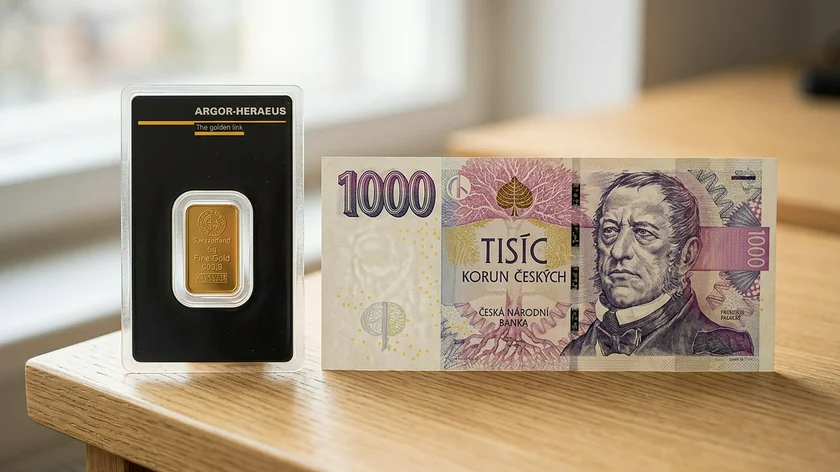
For residents interested in buying physical gold in Prague, DealFin also sells investment bars. This is a separate purchase from exchanging cash, with its own buying, selling and storage costs.
Gold bars differ in weight, purity, manufacturer and price per gram. Smaller bars may offer greater flexibility when selling part of a holding, while larger bars can sometimes have lower premiums per gram.
However, gold prices fluctuate, buying and selling rates differ, and secure storage may involve additional costs. Unlike a savings account, physical gold does not pay interest, and its future value cannot be guaranteed.
Visit DealFin’s website for current exchange rates, reservation options and practical information before visiting.