 Reading time: 2 minutes

 Summary for: A search in a Czech cemetery could bring three Polish WWII soldiers home
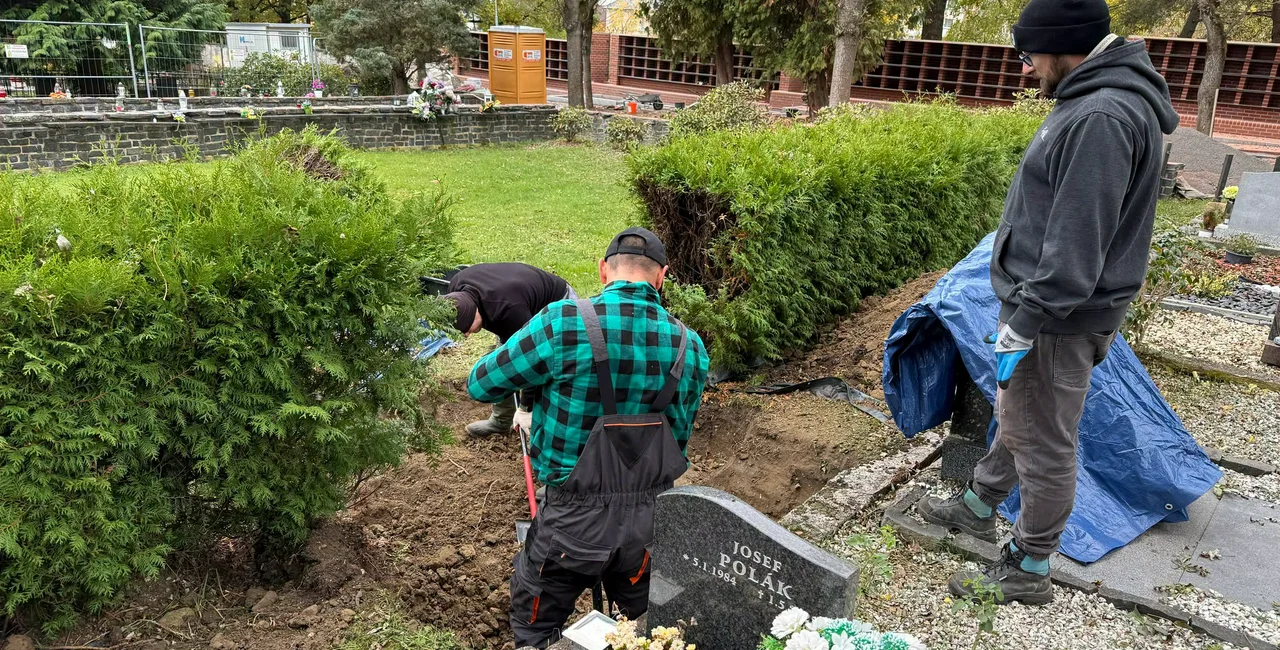
More than 80 years after World War II ended, researchers are searching a cemetery in northern Czechia for three Polish resistance soldiers whose journeys ended far from home.
A team from Poland’s Institute of National Remembrance is working at Česká Lípa’s municipal cemetery to locate their graves and identify their remains. If their identities are confirmed, the institute hopes to arrange their return to Poland for burial with honors.
The search, near the cemetery’s old columbarium and scattering lawn, will continue through the end of October. It is not disrupting normal cemetery operations, city spokeswoman Kristýna Kňákal Brožová said.
An escape west ended in imprisonment
Archival documents identify two of the men as Polish Home Army soldiers Piotr Radziejowski, known by the code name Gwiazda, and Witold Lew, known as Azja.
Both belonged to a unit commanded by Tadeusz Kuncewicz, code-named Podkowa. In 1945, members of the unit attempted to reach the American occupation zone.
After being handed over to Czechoslovak security authorities, they attempted to escape during transport but were recaptured and imprisoned in Česká Lípa.
Radziejowski died in the prison hospital in July 1946. Lew died approximately five months later. Both were buried in the municipal cemetery, according to the archival records.

The third soldier’s identity remains uncertain. Researchers believe he traveled through the Česká Lípa area with a group commanded by Hieronim Dekutowski, known as Zapora, and died from a gunshot wound in October 1945.
Documents record him under different names, making further research necessary before his identity can be established.
A memorial initiated by the city already commemorates him. However, archival material suggests his actual burial place may lie elsewhere within the same cemetery section.
Finding graves—and recovering identities
The immediate task is to establish the precise burial locations, recover any remains and carry out identification.
“If it is confirmed that the remains belong to the Polish soldiers being sought, the institute’s staff want to exhume them and bury them with honors in Poland,” Kňákal Brožová said.

Česká Lípa is cooperating with the institute and the Czech Defense Ministry’s department responsible for war veterans and war graves. Researchers also intend to document and commemorate the soldiers’ lives.
Poland’s Institute of National Remembrance conducts historical research, maintains archives and documents Nazi and communist crimes, alongside work commemorating victims and those who fought for Polish independence.
The Česká Lípa search forms part of wider Czech-Polish cooperation over wartime burial sites. Previous work in Głubczyce, Poland, recovered the remains of Czech victims of the 1938 Liptaň tragedy.
Work is also underway at a cemetery in nearby Racibórz, where Czech resistance members from World War II are buried.
In Česká Lípa, the outcome remains uncertain: the graves must first be found, and any remains identified, before the soldiers can potentially be returned home.